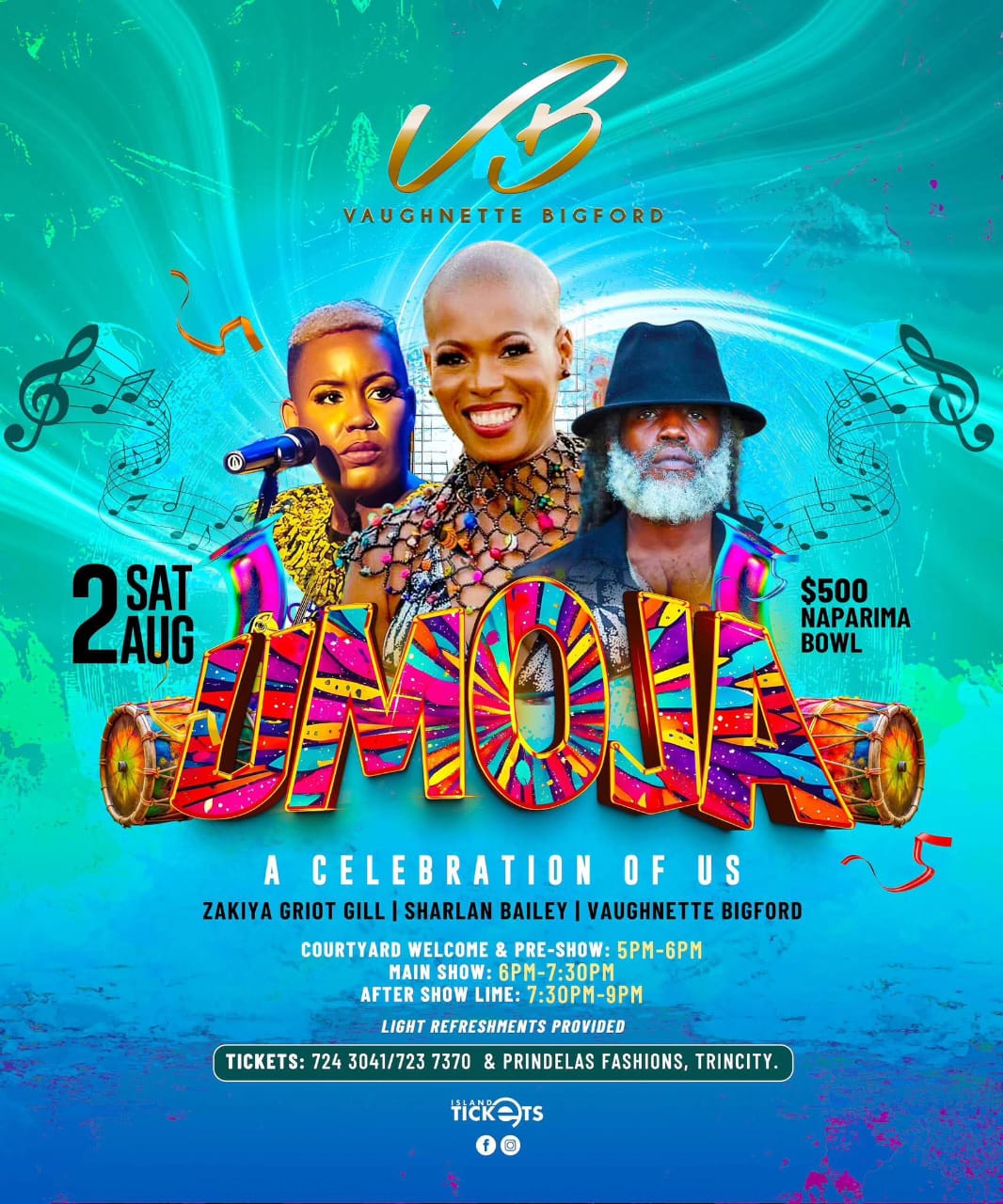
In a cultural climate where “visibility” can feel like a luxury, UMOJA: A Celebration of Us arrives as both a vibrant showcase and an urgent call to remembrance. Curated by powerhouse vocalist and producer Vaughnette Bigford, UMOJA isn’t simply a concert—it’s a statement of unity, reclamation, and joy, rooted unapologetically in Trinbagonian soil.
Ahead of the August 2nd performance at Naparima Bowl, we sat down with Bigford to unpack the layers of intention behind the event—from its Swahili name to the curated line-up of artisans, elders, and emerging stars.

1: UMOJA is described as a “tribute concert in celebration of what and who is ours.” What was the seed of this vision?
“Umoja, just like Isokan and the Freedom Jazz Jam before it, was created because I felt there weren’t enough spaces for us to truly see ourselves—beautifully and fully—outside of the Emancipation Support Committee projects or Emancipation Village. My intention was to curate a new space, a new experience where people could celebrate themselves and share joy.
The concept stays the same, though the name changes every year—first it was The Freedom Jazz Jam, then Isokan. All the names come from African words. Umoja means ‘unity’ in Swahili, and that’s exactly what we’re trying to achieve and project.”
2: What part of the creative process tested you the most—and how did you push through that wall?
“The creative process is always challenging. Over the past three years, many people questioned why I chose this format—why celebrate what some perceive as a particular demographic or group? But the truth is, we’re celebrating US.
The event happens around Emancipation, so naturally it honours that history, but it’s about unity. The hardest part is getting support and sponsorship because some see it as favouring one ethnic group over others. That perception often makes people step back. I don’t understand that because celebrating one group doesn’t exclude others.
We have to push past those challenges. I have a clear vision, and I fight for the purpose and vision to stand firm.”
3: How intentional was the choice to include women vendors and honour cultural icons like Mavis John, Karega Mandela, and Brother Valentino? What do you hope this kind of representation unlocks for the next generation?
“It’s always intentional. Women have been my biggest supporters—95% of my audience are women—so I create spaces where women, especially entrepreneurs and creatives, can shine. It’s not that men aren’t included, but I make a point to uplift women who consistently do important work and need a platform.
As for Mavis John, Karega Mandela, and Brother Valentino—they have all deeply impacted my life as a young creative. When I think of resilience, consistency, and contribution, these names stand out.
I don’t believe in waiting to honour people after they’re gone. We need to celebrate our elders while they are still here—letting them know they’re seen and appreciated.”

4: From steelpan at the welcome to Adrian the Don at the lime, you’ve created a full sensory experience. How do you balance “vibes” with “vision” so neither gets lost?
“We are Trinbagonians. Vibes is in our DNA. You can’t separate vibes from vision and expect people to respond. Our energy is unique—we want to enjoy ourselves, to move our bodies. That’s who we are.
I tell people I don’t do concerts where you just sit and listen. I curate sensory experiences. At Umoja, you see beauty, hear beauty, but most importantly, you feel it. People have to feel something stirring in their spirit.
Creating vibes and energy is essential. We build spaces of joy that people want to come back to. If you don’t bring the vibes, your vision won’t work—people will just stay home and send money. I don’t want their money—I want their presence. I want them to truly experience what I’ve created.”
5: How has that shaped the way you curate events now? Do you think UMOJA is the show younger Vaughnette needed to see?
“Absolutely. Growing up, I didn’t see many people proudly wearing African garb outside of Emancipation Day—and even then, it was done shyly, without confidence. I didn’t see myself reflected in cultural spaces like I wanted to.
Now, I want young people to know that they can step into their heritage and honor who they are, no matter the past. Umoja is definitely the kind of space I would have wanted as a young girl.
That’s why I’m very intentional about inviting young people to the event—so they can see themselves and their beauty centre stage.”

6: What keeps you grounded as a producer and performer in this space? What disciplines, rituals, or philosophies keep you moving when things feel heavy?
“Passion and purpose keep me grounded. It’s not easy being creative here, but what else would I do? I’d rather face the challenges doing something I love than do anything else. So, we just have to do it.”
7: Tell us about the people you’re inviting to attend through this donation option. Why was that inclusion important for you?
“As a self-funded creative, I usually give away tickets to worthy causes, but this year, I couldn’t do it from my own pocket. My friend Jamie suggested letting others chip in, so if someone can’t attend but wants to donate $25 or $75 to help someone else come, they can.
It took off, and we raised enough for people from Serenity Place (a drug rehab centre), No Youth Left Behind, and youth from La Brea—all very deserving individuals—to attend and experience the show. That’s what Umoja is about—community.”
Continued donations are always welcome
Bank Name: Republic Bank

Account Number: 970802697401

Account Name: Vaughnette Bigford Events

Contact: (868) 724-3041

Email: vaughnettebigford@gmail.com
8: When the final note plays on August 2nd and you look around the space—what do you want people to carry home with them?
“I want people to leave feeling joy—seeing joy, seeing themselves. To recognize how resilient and beautiful we are as a people.
Yes, I want them to enjoy the music and the experience, but more importantly, to feel something deep in their spirit—that they are part of a whole, part of a creative, wonderful, resilient people who believe in community, in standing together, sharing space, and supporting each other.
Ultimately, I want them to feel happy—joyful in who they are UMOJA: A Celebration of Us takes place on August 2nd. It is more than a concert. Vaughnette invites us not just to watch, but to feel.
 The Trinidad and Tobago Performing Arts Network