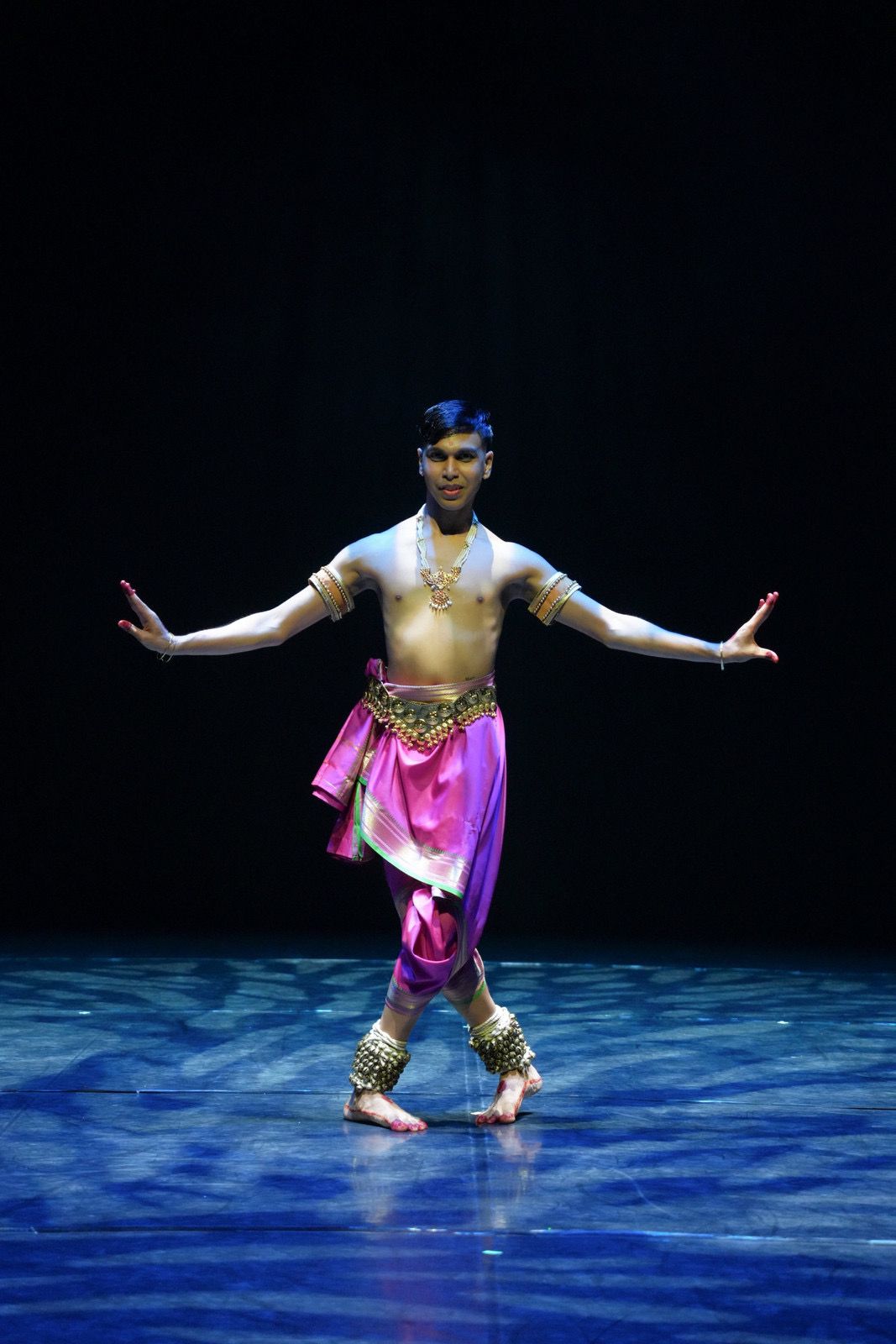
When you watch Zidane Roopnarine dance, you don’t just see movement—you witness a story that bridges continents, cultures, and generations. From his first steps in a Vishnu Boys Hindu College classroom to the stages of Beijing, Zidane has carved a path that is equal parts discipline and daring. A cultural ambassador, choreographer, and lifelong student of the arts, his journey threads Kathak with Caribbean Folk, Ballet with Chinese Folk, tradition with innovation.
Currently, Zidane is based in Beijing, where he is advancing his studies in Ballet and Chinese Folk Dance—particularly Daizu and Tibetan dance—at the prestigious Beijing Dance Academy. He is one of the leading dancers and choreographers within the Academy’s International Department and recently served as Director of its major international production, The Voyage.
We had a wonderful chat with Zidane as we retraced the footsteps of his life’s path whilst intent fully exploring the choreographed movements toward his future.

1. When did movement first feel like language to you—not just performance, but communication? Was there a specific moment or memory where you felt this shift?
Dance first became a true language for me when I started at the University of Trinidad and Tobago [Academy for the Performing Arts] in 2017. This was the beginning of my formal dance journey. At first, it was uncomfortable; I didn’t fully connect to my emotions or my creativity, but over time, I learned to embrace that discomfort, to understand it physically and emotionally, and to see how it shaped my movement and presence. It was in that space, accepting vulnerability and exploring how it translates through my body, that dance transformed from just performance into genuine communication. I began to realize that movement can express what words cannot, and that every gesture carries its own language.
2. What was it like growing up as a dancer in Couva? What kinds of creative challenges did you have to work around?
I actually grew up in Aranguez, not Couva, which was a misunderstanding by journalists who referenced Dai Ailian from Couva while talking about me going to China. From a very young age, music became a place of liberation for me; anytime I heard music or anything rhythmic, it moved my spirit, it created a blissful, freeing experience. As a little boy, I was always passionate about dancing, constantly moving and exploring through rhythm. As I got older, around eight or nine, I would watch my cousins and neighbors dance, seeing how choreographed and well-presented their movements were, and I followed in their footsteps, looking up to their artistry. That was the beginning of my love for dance and my journey as a young dancer.
The real challenges came when I started pursuing my dance degree. My family didn’t fully understand what this path would mean for my future or career, which created uncertainty and pressure. Another challenge was being accepted as a male dancer in Trinidad, because of societal expectations and stereotypes about men in dance. Over time, I realized I couldn’t let others’ opinions define my possibilities, and I chose to follow my passion. It was my love for movement and the determination in my feet that carried me, and even today, I’m amazed at the opportunities that path has brought me.
3. We appreciate the opportunity to be able to support and extend this clarification to our readers.
China must’ve been a whole shift—not just in the studio, but emotionally and culturally. What hit you hardest, and how did it change the way you dance?
The hardest part of adapting to China was navigating the huge cultural difference, especially dealing with the loneliness of being in a country where I was a person of color, a foreigner, and unable to speak the language. I often had to manage everything on my own, which was incredibly challenging. On top of that, I faced difficulties in the studio, sometimes not being taught or corrected by certain teachers, and often feeling unseen or undervalued in class. Most of the time, I felt as if I didn’t belong, almost like a ghost in those spaces. Another hard reality was not having friends during those times, because people often saw me as just a foreigner, rather than as an individual to connect with.
Going through this period changed the way I dance, because I had to understand what it truly means to feel like a student, not just in the general sense, but in the depth of being unseen, unvalued, and unappreciated. Eventually, stepping into the roles of teacher and choreographer, I learned to value, see, and understand my students more. As I always say, what I wouldn’t want for myself, I wouldn’t do to others. Navigating these challenges ultimately shaped the way I move, strengthened my resilience, and deepened the emotional honesty in my dance.

4. While adapting to a whole new world in Beijing, how did you stay connected to your Caribbean roots?
Fortunately, I had many opportunities to represent my culture, being from Trinidad and Tobago, and to share it with the Chinese community. Beyond performing our cultural dances and presenting our music, I also had the chance to choreograph and teach our cultural dances within the academy. This allowed me to bring my identity deliberately into my work and stay deeply connected to my roots, even while adapting to a completely new environment.
5. What’s one thing the Beijing Dance Academy taught you that completely changed how you think about dance?
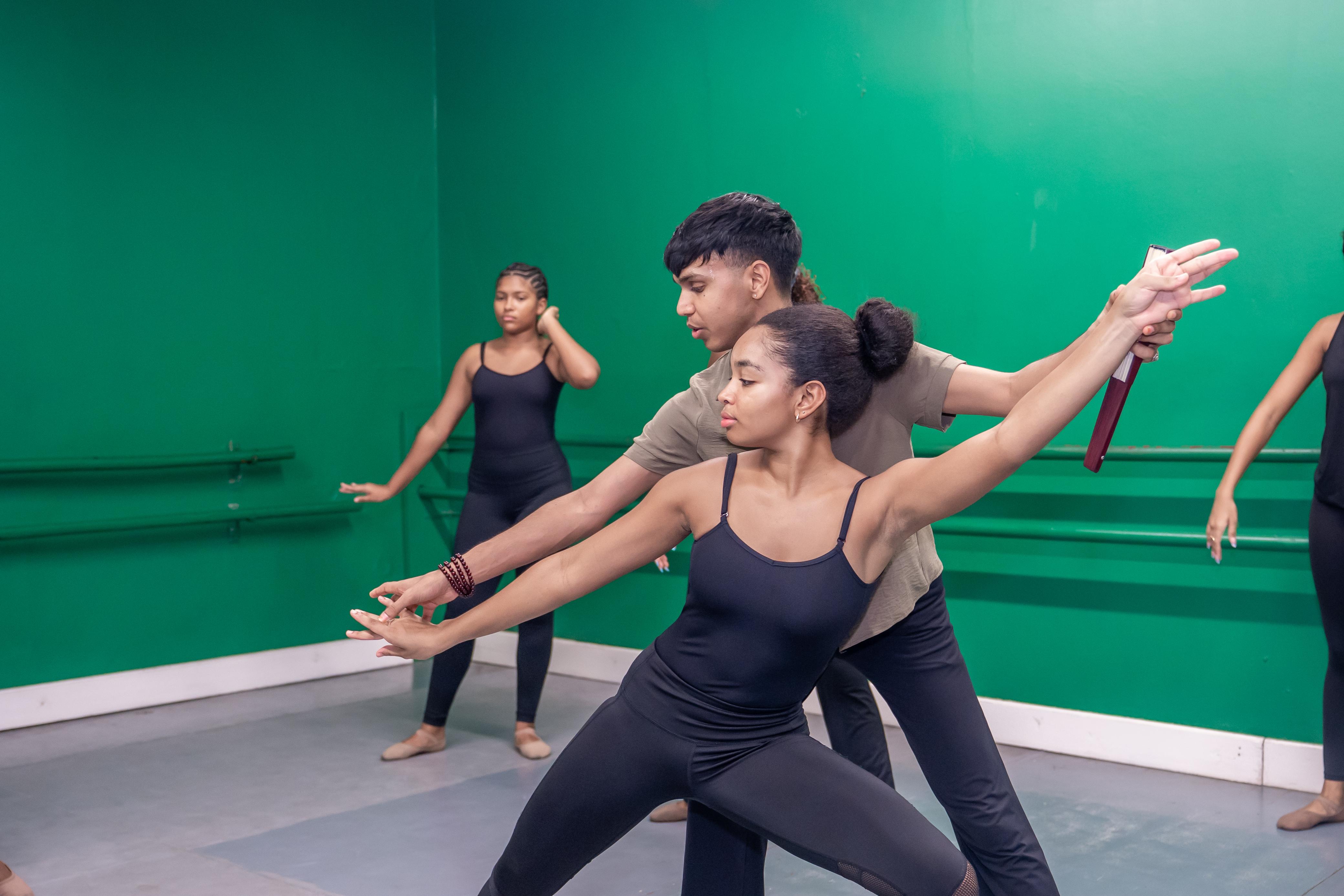
One thing the Beijing Dance Academy taught me was the level of discipline, readiness, and mindset required to pursue something truly great. It also showed me that dance starts from the person. What I mean by that is, in order for dance to truly be expressive and move an audience, it has to be felt within yourself first. You have to connect with the feeling internally before you can convey it to anyone else. This understanding allowed me to be more accepting of myself as a creative, especially as a teacher and choreographer. It taught me to see my worth, to recognize my talent, and to acknowledge that I am enough. Many times, I doubted myself and my abilities, but the Beijing Dance Academy affirmed that I am where I need to be within myself. One of my teachers, Chi Dong Dong, also told me that the process of learning never ends, it never stops, and that is something I carry with me all the time.
6. Tell us about one moment that humbled you—and one that made you feel proud to say, “Yeah, I’m from Trinidad.”
One moment that truly humbled me was realizing the level of dance outside of the Caribbean and recognizing where I stood in comparison. It made me see how much growth and learning is possible, and it grounded me in humility. One of the proudest moments for me was being appointed Director of the International Production at the Beijing Dance Academy in 2025. Representing my roots and culture in that role was incredibly meaningful because I choreographed for that production and it was one of my best works, and seeing it well received by the Chinese audience made me deeply proud to say, “I’m Trinidadian”
7. You’re not just a student anymore—you’re a representative. How do you handle the weight of being seen as an ambassador?
For many years, I’ve learned to separate my personal life from my professional life. Being a representative and carrying the weight of being seen as an ambassador for my country was undoubtedly one of the most respectful honors, allowing me to share our culture and arts internationally. I felt comfortable in this role because I understand the distinction between personal and professional appearances, and I know the morals, values, and standards required to be on these platforms. When I speak or dance, I’m not doing it just for myself, I’m doing it for us as a people.
8. As a performer who’s lived through intense cultural immersion, what new rituals or mindsets have you brought back with you to Trinidad?
One of the key things I brought back from this experience is a heightened sense of discipline, especially in mindset, readiness, and passion. I want to lead by example and share this with my future students and the companies I choreograph for, so they understand that to be professional dancers and achieve international recognition, it must come from discipline and a clear understanding of what you want for yourself. This has become a central principle in my life, and I am very intentional about maintaining it.

9.What do you now understand about longevity, not just in dance, but in a creative career? How has that shifted your goals moving forward?
When it comes to longevity, I’ve come to realize that it’s not just about performing on stage. There will be a time when I will no longer be dancing professionally, so I am focusing on developing other aspects of my career, particularly choreography and teaching. Understanding this has shifted my goals, encouraging me to invest in skills and experiences that allow me to sustain a lifelong connection to dance, even beyond performing.
10. When you imagine the version of yourself five years from now—how does he move? What kind of work is he creating or sharing?
My vision for the next five years is largely a personal journey of understanding myself, and I prefer to keep much of that private. However, I do see myself continuing to dance, choreograph, and teach. I hope to continue standing for discipline and readiness, while making a meaningful impact in the dance community here in Trinidad and Tobago.
11. If you had the power to build the ultimate support system for Caribbean dancers, what’s the first thing you’d put in place?
If I had the power to build the ultimate support system for Caribbean dancers, it would start with funding. This could include establishing my own foundation to provide scholarship opportunities for dancers, and working with governments to secure the necessary support to preserve, maintain, and expand opportunities for the arts community.
12. What would you say to the 16-year-old dancer in San Fernando or Arima who doesn’t feel seen or “trained enough”? What does your journey say to them?
I would tell them that I completely resonate with how they feel, especially because I’ve been through that experience myself. However, life also teaches us that we must be brave, strong for ourselves, and willing to face the unpredictable challenges that come our way. If we continue living in fear, disbelief, or discomfort, we cannot truly recognize who we are as individuals or be able to experience our life and dream, we wouldn’t know until we try.

13. When it’s all said and done, what kind of impact do you want your story to leave behind?
The impact I want my story to leave behind is a reminder that life is becoming increasingly mechanical, and we need to reconnect with what it truly means to be human. We must stay in touch with our emotions, our dreams, and our aspirations. I hope to inspire others to keep reaching for their goals, never give up, challenge themselves, and remain humble. At the same time, we should be content with every achievement, no matter how small, and trust in the universe and in life itself.

 The Trinidad and Tobago Performing Arts Network