From her early days as a student at the Caribbean School of Dancing (CSD) to now serving as its principal, Bridgette Wilson’s journey is a full-circle story rooted in home, heritage, and the unwavering belief that dance can shape communities. Trained at York University and Trinity Laban, Bridgette blends global technique with unmistakable Trinidadian soul, creating work that is honest, culturally textured, and emotionally resonant.
As a choreographer, educator, and entrepreneur, she has become one of T&T’s most influential dance voices—leading Caribbean School of Dancing with both discipline and compassion, expanding creative opportunities for young dancers, and reimagining what Caribbean storytelling looks like on the world stage.
In this Spotlight feature, we explore her evolution, her leadership, and the vision behind groundbreaking work like The CoconutCracker—a production redefining tradition through a proudly local lens.
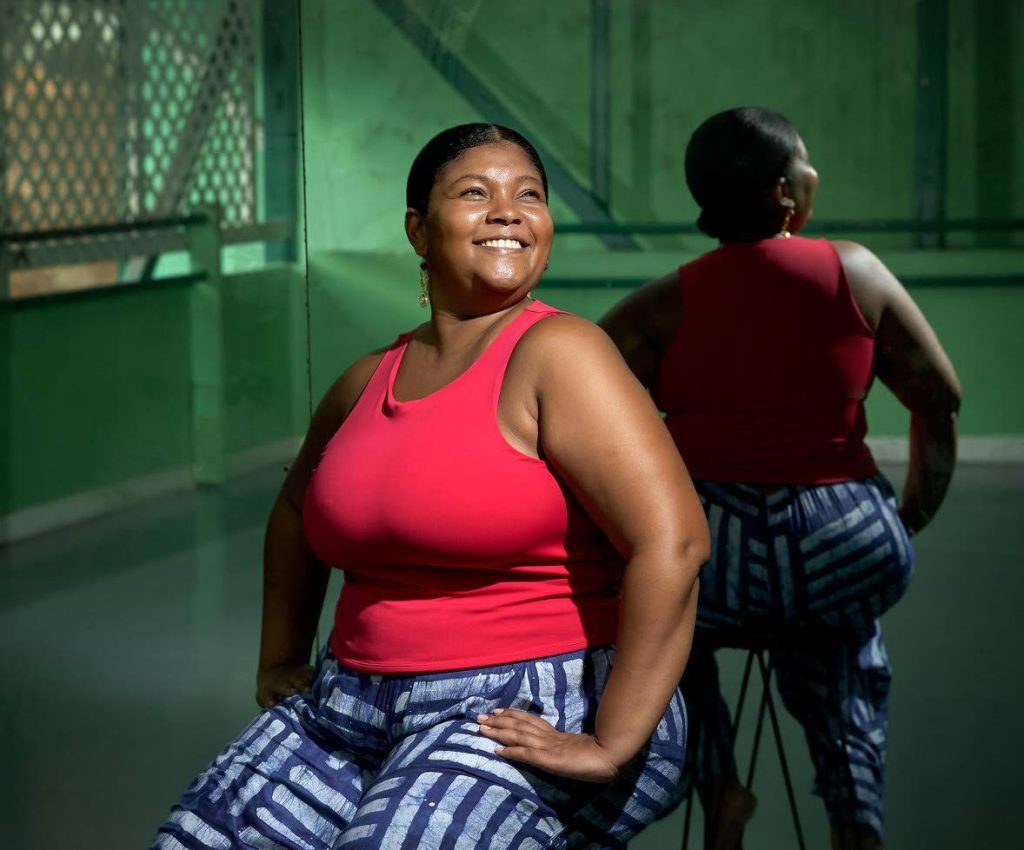
1. You began dancing at the Caribbean School of Dancing as a child, and returned years later as principal in 2017. At what moment did you realize that you weren’t just a dancer—you were a steward of an institution and a builder of community?
It’s difficult to pinpoint a particular moment that would bring about this realization. Even in reading the question, I feel a weight on my shoulder knowing that I am thought of in this way by others. Very often when I am introduced to strangers as the principal of Caribbean School of Dancing, I am met with responses that reflect people in awe of my position that hold a deep respect for the institution that is Caribbean School of Dancing.
The magnitude of the school’s significance in the cultural landscape of Trinidad and Tobago and the region is never lost on me and it is truly an honour and a privilege to be trusted with this role by those who have come before, that who appointed me and those who continue to allow their children to be under my guidance.
Our community is the community that helped me find myself as a child for it is within the walls of Caribbean School of Dancing that I always felt most at home and so, taking on this role always felt like taking care of home. From the very beginning I knew what home meant for me and knew that I was now responsible for sharing my home by building a new home for the current students and families.

2. Your choreography often draws from personal experience, carnival, and your Trinidad roots. How do you translate those cultural textures into works that speak both locally and internationally?
I think that personal experience is one of the most honest ways of creating. For me it is a blend of personal experience through life’s ups and downs, personal experiences through my culture or exploring different cultures and personal experiences based on what the body naturally produces or finds comfort in when moving.
I always tell my dancers “if you don’t believe what you’re doing, then the audience won’t believe you either.” This is usually the case in my personal work done choreographed for Metamorphosis Dance Company where I have always had the freedom to create based on my mood or my most recent interest, versus choreographing for Carnival, its related events and other external projects that require following a specific theme.
I’d be lying if I said I knew for sure what my work possesses that allows it to resonate in the way it does with others, but my intent is always to be honest with the message I am trying to send. The honesty starts by being clear to the dancers what is being portrayed and working with them to channel this to the audience.
3. In today’s creative economy, artists are not just performers—they’re cultural exporters. How do you see your work travelling beyond Trinidad & Tobago—not just in performance, but in influence, education, and the export of culture?
I struggled with this question a bit as I am never certain of the reach my work has and have to pull myself out of the mindset that travel is only related to the physical work being performed outside of Trinidad and Tobago, or me being able to physically travel to teach or mount new or existing work on companies beyond our shores.
While the latter is a true dream of mine that I hope to see come to fruition, and is the most hands on approach to sharing experiences and exporting culture, I guess I too am unsure and interested to see how my current work has influenced other local artists and if it’s valued to the point of pushing a change in how we present local stories.
It is hard to separate my thought process at the moment from The CoconutCracker to think more clearly about my range of work as I am still so deeply a part of it and it is difficult at this stage in my process to even remotely remove myself from it.
That being said, I think the CoconutCracker has the potential to influence how we can redefine how Trinidad and Tobago can be presented both locally and internationally. I feel as though I am still developing The CoconutCracker so as we approach opening night, there’s things I think are great just the way it is and things that I already know I would revisit.
I am not usually one to revisit choreography, but this is more than a 7 minute work. It is a full production that I aim to continue reworking until it has reached its peak and be representative of Trinidad and Tobago for global audiences.
4. As principal, you lead CSD’s competition team and oversee training, syllabus, and performance opportunities. What is your guiding principle when you think about “excellence with integrity” in dance here in T&T?
“Excellence with integrity” can mean different things for everyone depending on their view of integrity. Being responsible for the hundreds of children in my care over the years, I always act with their innocence in mind when it comes to making decisions for the school. Do we take on a project supporting something my principles may not align with because it pays well or do I turn it down to stand firm on my principles?
In a more personal approach in terms of communicating with staff, students and their parents, I believe in being down to earth and honest. My reputation within the field is often tied to being strict and demanding high standards from my students no matter their age, this demand comes from a place of discipline and is extended to parents as well.
Those who I teach however, know that I am soft, caring and fun-loving and believe in balancing both sides of my personality to produce students who themselves learn to act with integrity without compromising themselves either through their personality or their principles.
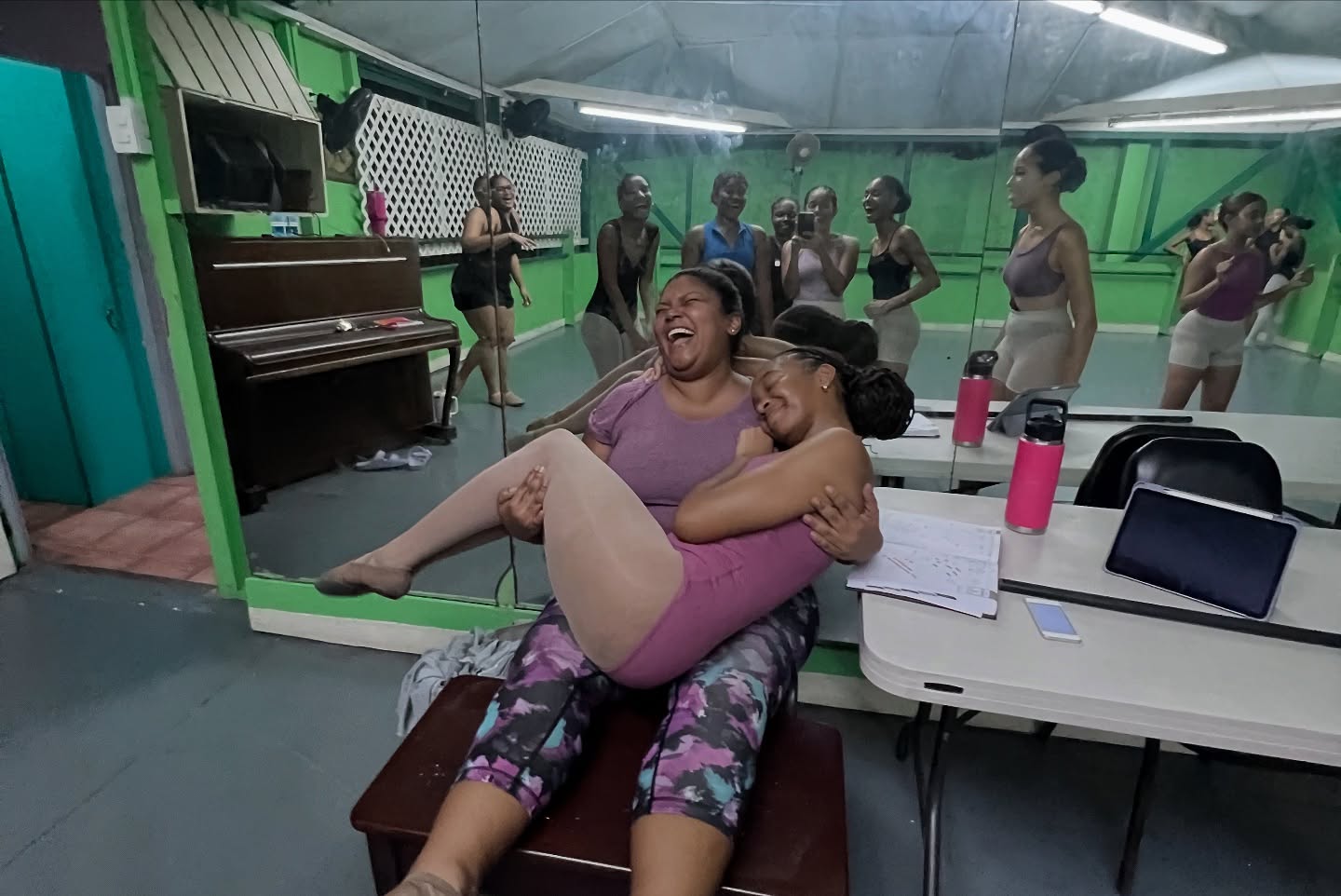
5. CSD’s recent success on international stages like All Dance America reflected a clear evolution in the school’s system. What structural or mindset shifts did you implement to create that kind of leap in performance quality and results?
While the school’s success in All Dance America and other competitions within the brand’s range of competitions has been a great one, the mindset in terms of performance quality has not shifted from the school’s origins. We are still primarily a ballet school and our governing principle is based on the notion that a strong foundation in ballet technique can support easy adaptability to succeeding in other styles of dance.
All competition team students were expected to attend their regular technique classes in addition to classes and rehearsals in the specific genre of competition. I don’t consider it a mindset shift but rather an addition to the foundation that we are built, that helps us maintain favorable results no matter where we focus our attention within our field.
Structurally, we train our students in ballet under the Royal Academy of Dance (RAD) syllabus and modern and tap dance under the Imperial Society of Teachers of Dancing. We have maintained and wish to always maintain our annual exam entry with the RAD which pushes students to new technical levels with each new grade or level entered.
It is this training that supports their flexibility and adaptability in different styles and any ventures outside of this are done in addition to our existing structure.
6. Your academic background bridges both hemispheres—a BFA from York University and an MA in Choreography from Trinity Laban—yet your work remains deeply rooted in the Caribbean. How do you balance the global vocabulary of dance with the local idiom and soul of Trinidad & Tobago?
Dance is a universal vocabulary or as Martha Graham describes it, “the hidden language of the soul.” To me, no matter your cultural background or your formal training, the vocabulary of dance can be easily understood by people of all ages, all backgrounds and all levels of literacy.
It is in understanding how to blend a movement with an emotion versus choosing a movement from a particular place whether technical or cultural. I tend to draw a lot from movement vocabulary and imagery inspired by Graham technique with local vocabulary and folk technique and merge that with my classical ballet background to best depict the stories of ideas in my head.
The work I consider most genuinely and earnestly mine are the ones I create from personal experience or musical inspiration and not necessarily those that are developed for the Carnival stage. While the work I do for Carnival is still mine and I value it equally, it doesn’t always feel fully my own as it aims to fit a criteria to portray a theme or a vision by Val (in relation to Lost Tribe) or the event or song I am working with.
I actually sometimes wonder if my work is Caribbean or Trinidadian enough so it is great to know that it is considered to be deeply rooted in the Caribbean despite my formal training; I guess that is part of my natural lived experience.
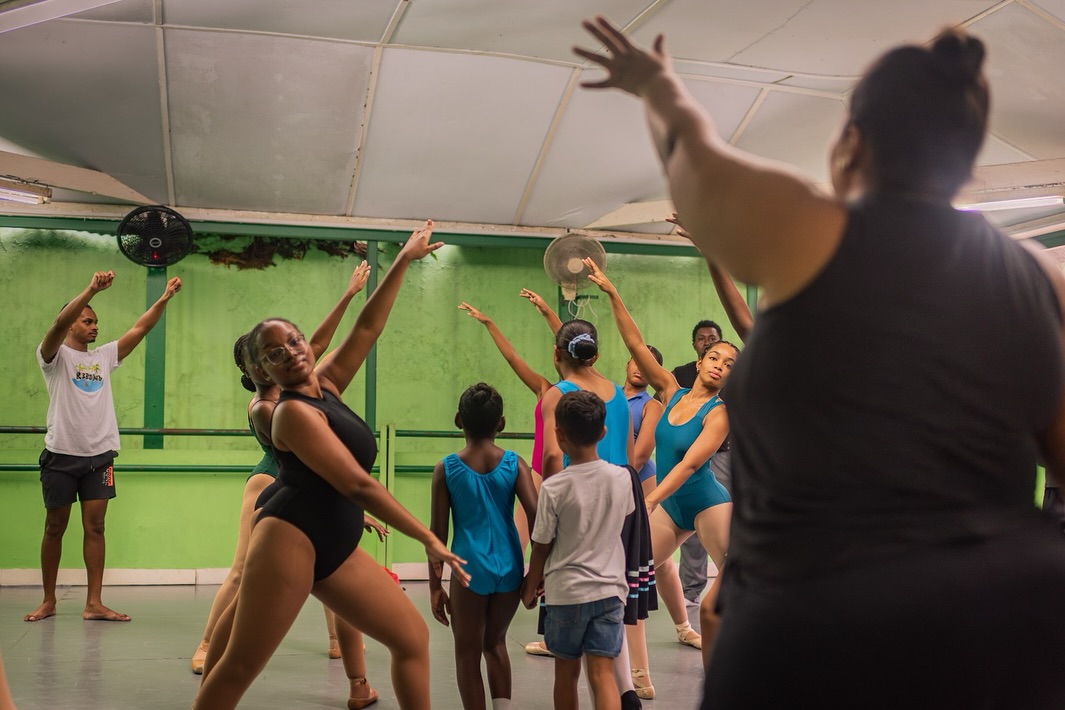
7. You’ve expanded your artistic identity beyond choreography through your BWILSONCHOREO dancewear line. What inspired that entrepreneurial leap, and how does building your personal brand strengthen or shift the reach of your creative work?
The BWILSONCHOREO dancewear line was launched as a celebration of 10 years in the dance industry. Beyond celebrating myself, it was a moment to celebrate some of the dancers that were the pillars of my earliest works. They best experienced me learning to find my own creative voice and in many ways are the blueprint for how certain trademark moves in my choreography are meant to be executed. They were with me through a lot of experimentation and have grown to become some of my closest friends and supporters in literally everything I do both within and outside of dance.
I owe a lot of my success to my dancers. My ideas stand on their own, but the execution of them to the level of which they have been done is owed entirely to the commitment and talent of these dancers.
In all honesty, I haven’t had the time to dedicate to the continued development of my dancewear line and although I hope to return to it soon, identifying myself as an individual within the dance space has afforded me more independent opportunities. Yes, I am the principal of Caribbean School of Dancing. Yes, I served as the rehearsal director for Metamorphosis Dance Company for 15 years. But these are not my identity, these are things that I am fully committed to as a part of my career as a choreographer and teacher, but I am so much more than these things and being able to separate myself from these things allows me more creative freedom.
Opportunities like choreographing the CARIB CPL Halftime show in Guyana in 2025 as a part of the Ultimate Events team is an example of this. While I will always aim to have my personal identity within the field, my heart is always in supporting the school and by extension the company, whenever independent opportunities align in this way.
8. CSD’s 2025 production, “The CoconutCracker”, reimagines a classic ballet through a local lens. What inspired you to reinterpret this story, and what does the theme represent for both the school and the national dance community?
The CoconutCracker is born out of a deep, long-lasting love I have for George Balanchine’s The Nutcracker. This is the version of the ballet that I feel in love with and that I attribute my love of the corps de ballet (the larger body of dancers) over solos and smaller groups to. In particular the Waltz of the Snowflakes and the Waltz of the Flowers always stood out to me for the use of space, use of canons and changes in direction punctuated by moments of perfect unison and precision. I believe I am best known for my group work and my spatial patterns through movement and if I am not, then I am not doing a good enough of job at the thing I love to choreograph most!
When I decided in 2024 that I wanted the school to move away from its recent longstanding re-enactments of Disney movies and do a fully locally focused show for 2025, it wasn’t yet clear how it would happen. The idea of doing a Nutcracker was something I felt to be impossible and unreachable but in a quiet moment of chaos while watching a YouTube version of the New York City Ballet’s 2011 production, the spark lit up and the idea for doing an interpretation of The Nutcracker to live pan came about.
The Nutcracker is done annually by some of the world’s biggest ballet companies but it is also done on a smaller scale by dance studios just like us around the world. Having witnessed live performances of The Nutcracker performed by The English National Ballet, The Royal Ballet and The New York City Ballet, there is a sense of grandeur backed by significant donors and contributors of the arts, that makes the production feel unreachable when you sit back and take in the magnificence of the sets, the prop, the costumes, the lighting and stagecraft and the music.
Seeing much smaller scale versions in Germany and Miami and of course of my annual YouTube watching sprees, it put into perspective for me that there are reachable ways of putting the nutcracker on stage and ways that I could develop my own twist on the story to make it more relatable to a local audience. Although we brainstormed many versions of the name and the story, The CoconutCracker in its current form feels like a starting point for the Caribbean School of Dancing to continue to develop this local rendition of the classic and get additional funding to allow the production to reach its peak.
Many have commented that the bold take by myself and my team is a move they support in the decolonization of ballet. This is not the erasure of ballet as it is the foundation of our school’s training and a deep love of mine, but rather an invitation to blend ballet with local themes, forms of movement, aesthetics and culture.

Our senior students in particular are very proud to be wearing skin coloured ballet tights, ballet shoes and pointe shoes throughout the show and in their regular training and exams and have mostly done away with pink tights and shoes. This is a significant change in how people of colour are represented in a euro-centric field that is grounded on the discipline of its traditions and its colonial past. Our aim in our regular training is to make skin toned attire the norm and not the very rare exception and we have slowly been seeing the change happen within our upper school.
The development of The CoconutCracker to further distort how ballet is represented with things like the inclusion of our Moko jumbies amongst a sea of dancers en pointe allows, first and foremost, our students to see how their local culture can be adapted to fit and be included in various spaces. It encourages them to take a deeper look at what Trinidad and Tobago has to offer and gain a deeper appreciation for the many talents that surround them.
For the creative community and the audience, it is an invitation to keep pushing the envelope of what we think we can do and the limits that have been placed on us. I hope this production opens the door to more collaborations that celebrate our identity and how we can show up for ourselves in different spaces.
The CoconutCracker also seems to have followed a quietly developing trend in 2025 as we discovered that a similar production called the Afro-Caribbean Nutcracker is taking place in Jamaica, and the famous Carlos Acosta’s The Nutcracker in Havana is currently touring. I would love to see these takes on The Nutcracker but I am beyond proud to stand up and have this develop as Trinidad’s Nutcracker!
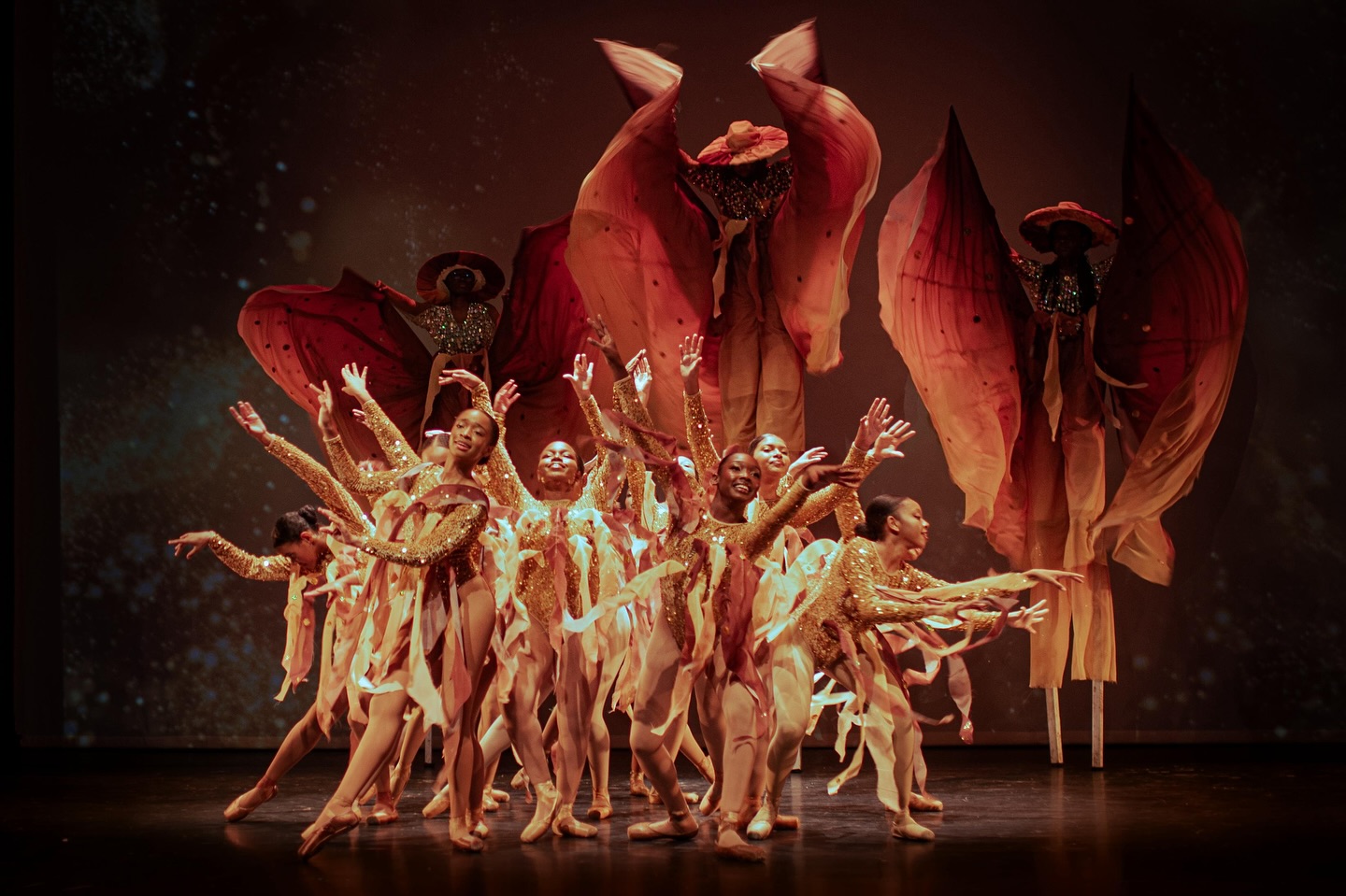
9. For many students, this is a major performance milestone. What specific developmental goals—technical, artistic, and professional—do you hope your students achieve through this experience?
Our students have grown tremendously between the start of rehearsals in July to now, four months later in November. For our junior school students ages 3.5 – 9 we have seen a better understanding of staging and theatre terminology, increased spatial awareness and a growing love of movement and performance.
Our middle school students at the grade 4 level (age 10 -11) have been making a name for themselves with their knack for performance and stage presence gaining four of them solo roles in the production as Anansi in Anansi and the Magic Shell and as Junior and Kyara in The CoconutCracker. We’ve seen tremendous growth in their understanding of technique and have seen their personalities really start to shine uniquely in their performances.

Our upper school students cover a wider band of age groups with the younger crop stepping into solo roles for the first time as they support the junior school in Anansi. Outside of the technical growth, this is where we easily identify those who have the gift of teaching as we see them naturally answer to the call in guiding and caring for the very young dancers during the long rehearsal days.
We have seen them step up to help younger students with remembering their dances, correcting their technique, fixing their uniforms and hair or simply sharing a light moment with them during the breaks and creating bonds amongst themselves as well as between themselves and the junior school.
Our “super seniors” as I sometimes call them, the top of the school, are our most advanced dancers most of whom make up the school’s company, Metamorphosis Dance Company. The entire student body looks up to them and they carry themselves with the knowledge that all eyes are on them and very carefully know to lead by example in their attire, their appearance and their work ethic.

They themselves have come through the school as juniors and middle schoolers and now stand proudly but with the weight of knowing that they are the “top of the school” and must present themselves in this way both on and off the stage. Their professionalism bleeds down to the rest of the school while their humble, down-to-earth personalities allows them to be reachable and relatable to the younger students as they assist them backstage and in the studio, guide them as necessary and set good examples.
There isn’t much more one can ask of the student body during such a long and exhausting rehearsal period. This is where the lifelong bonds made within the walls of Caribbean School of Dancing begin and it is why we have such a deep sense of community over our long history.
In terms of the artistry, preparing for a show brings that out in people, some of it truly cannot be taught. From the first day on stage we saw the natural performers come to life in a way that can only happen when one hits the stage, we saw an elevated energy burst open when the first note of the steel pan play and the students realized the magnitude of what they are embarking on.
Everything they have learnt over the last four months will stay with forever and will be the foundation that pushes them forward in any field they wish to pursue.

10. You once said a turning point for you was thinking, “Imagine if we planned it properly.” How are you cultivating a culture of preparation, professionalism, and excellence among your students and peers?
I think my partners at CSD are probably fed up by now of my emails and my Google forms and my schedules and schedules and schedules. But it is all part of structure and discipline and setting yourself up for success in the smallest of ways. A successful day for me is being able to complete the items on my to-do list, and if you’re ever seen my to-do lists you would know that sometimes, it seems impossible!
Even within my friend group I am known as the Calendar Boss and the super planner in anything from a Christmas lime to a trip abroad. I absolutely hate last minute things that are last minute for no reason. I understand adapting to change or things not going as planned or having to make a snap decision in the moment but the obsession of Trinidadians to activate on something that they have had ample time to prepare for is something that bothers me to my core.
Having one foot very deeply planted in the Carnival industry it is something I struggle with annually as something about our society seems to thrive on last minute planning and executions. But I am always left to wonder how much more we could achieve in our creative executions if we really took the time to plan and develop before executing and not attempting to do a 10 week job in the space of 3 days. A huge part of it is money, I know, because for 10 weeks of rehearsal vs 2 days of rehearsal makes a big difference but still, it devalues what we are capable of and we need to do better for ourselves.

My students know I am the most laid back strict person ever or at least that is what I think I am. We can laugh and smile and have a great time as long as you’re doing what you need to do. Arrive early for class, not on time, and once you’ve arrived start warming yourself up.
Sometimes I am busy and might still be in the office when I am meant to be in class and I cannot explain the pride I feel when I get to the studio and dancers are either warming up, working together to go over exercises or dances and in some cases watching the rehearsal or syllabus footage online to go over corrections or take notes on areas needing attention. That is a DREAM and I am so grateful that they have understood the importance of taking responsibility for their bodies and their work.
I was once openly “bashed” for having my students show up to an event representing their country in Panama in CSD branded uniforms and wondered if I was meant to be offended for being spoken down on for teaching my students how to proudly represent their school and their country. Discipline comes in many forms and taking pride in one’s appearance is a form of discipline that we strongly enforce at CSD.
For me it is a simple matter of planning and executing. Planning ahead takes times because it means knowing what you want to do in advance but it also means easing everyone else’s anxiety and giving people enough time to execute without unnecessary stress.
My students also know, although sometimes we battle it out in this department lol, communication is key. Poor communication is a pet peeve of mine. Absences, tardiness, early departures, injuries, sickness, personal problems; all of it has to be communicated because it helps me plan and it helps me understand what each dancer needs, especially with the seniors that I spend a lot of time with.
They learn to take accountability from an early age and this helps them in their professional lives. I know sometimes I appear harsh in this aspect but it is always with the dancer’s best interest at heart so that when they leave my care, they can fully function in the outside world.
11. Many young dancers struggle with belonging and confidence. If a 14-year-old student feels uncertain about her place in the dance world, what message would you want her to hear from you?
I try to tailor my messages and words of advice to each individual. What one needs to hear is not necessarily what the other needs at that time. Is the struggle based on being unsure of herself? Her body image? The styles of dance she would like to do? If she even wants to dance? It’s hard for me to answer that question without more context because I know too well that the issues surrounded 14 year old are more complex and more layered and probably take several conversations to get to the root of before any real advice can be given. The good thing though is that my students feel comfortable enough to come to me in of need and know that they can look to me for support whenever needed.
12. When you’re not choreographing or directing, how do you reset and recharge? What keeps your creativity—and your joy—alive??
I love to travel! I don’t always have the money for it, but a good little runway to experience something new in the world is always a great way to escape and find new inspiration. When travelling isn’t possible, anything involving surrounding myself with a body of water is the best reset for me. The beach, the pool, down the islands, I need it! In fact, I need it right now and cannot wait to have some downtime soon to refill my cup. I think my reputation as a limer is also well known and in all honesty, some lime time with my friends or family always gives me an extra burst of energy but when I am really tired at the end of months of work for production like this, the first thing I do to decompress is sleep! Long long hours of sleep and ignoring calls and messages. It’s post production hibernation and it is very necessary for my survival.

 The Trinidad and Tobago Performing Arts Network