There is an island at the root of the Antilles, where its people glimmer with the magic of storytelling. An island that serves as the wellspring of passion, of tenacity in the face of adversity, and brims with the fruits of dedication, merriment and pure love. And its name is Tobago.
On Saturday 1st July, 2023 The Tobago Performing Arts Company (TPAC) concluded their flagship production of Once On This Island, and what an incredibly apt characterization ‘flagship’ is. As if taken straight from the pages of the Miriam-Webster dictionary, this was one of the finest, largest, and most important pieces of musical theatre I’ve seen on our twin island shores. Quite literally in fact, as the production was staged at the Pigeon Point Heritage Park Pavilion, located on the southwest coast of Tobago.

Once On This Island, with book and lyrics by Lynn Ahrens, and music by Stephen Flaherty, is a storybook telling of a peasant girl, Ti Moune, who, puppeteered by the mischievous and pompous musings of the gods, undertakes an arduous journey to find love. Ti Moune, orphaned by a mighty flood brought about by the god of water, is washed into the lives of Mama Euralie and Tonton Julian, who adopt her and show her the ways of the island. When ill fortune befalls a wealthy boy from the other side of the island, Ti Moune dedicates herself to rescuing him, eventually falling in love, against the wishes of her parents and the rest of the villagers.
Before I get into it, let me preface my thoughts by saying this: black box theatre has to be one of my favorite forms of theatre craft, and I say this is after seeing everything from primary school Nativity pageants to large scale Broadway productions like The Lion King and Hamilton. TPAC’s production of Once On This Island is pushing its way to the top ranks. When the only resources available to actors are a few wooden blocks, sticks, leaves, an unadorned stage, and an unending amount of heart, the only limitation present is that of the imagination. TPAC’s production was such an incredible experience in immersive theatre, and to have set this piece at the literal ocean shore added layers I don’t think even the Broadway revival could entwine.
From the moment I walked through the double doors of the Pavilion I was awestruck. What Rayshawn Pierre-Kerr (the director and set designer) and her team created was something that was truly magical. An ordinary nondescript ballroom, was transformed into a remote island locale; palm trees, ferns, dried branches, bushes, and vibrantly painted backdrops fashioned a cool atmosphere placing us at the heart of the story. As the lights dimmed and the first note rang out I knew the audience and I were in capable hands. With such masterful music direction and orchestration by Ojay Richards, a wave of cohesive and expertly crafted symphony washed over the room. The musical company was definitely well rehearsed. I dare say what Richards created was a sound that many an orchestra on our brother island find elusive, and could even rival that of international companies.
The first cast of characters to make their onstage appearance were the gods – avatars of the elements, in extravagant makeup and beautifully constructed costumes. Costume and makeup designers Akimo Sandy and Shurnecia Walker flexed their knowledge of folklore and contemporary fashion to create these visually stunning masterpieces, giving us infusions of the Midnight Robber and Pierrot Grenade, silhouettes of bélé and layers of the Dame Lorraine. In doing so, they communicated that this story is firstly as much, if not foremost, a tale of our legends, before it is a product of American theatre.
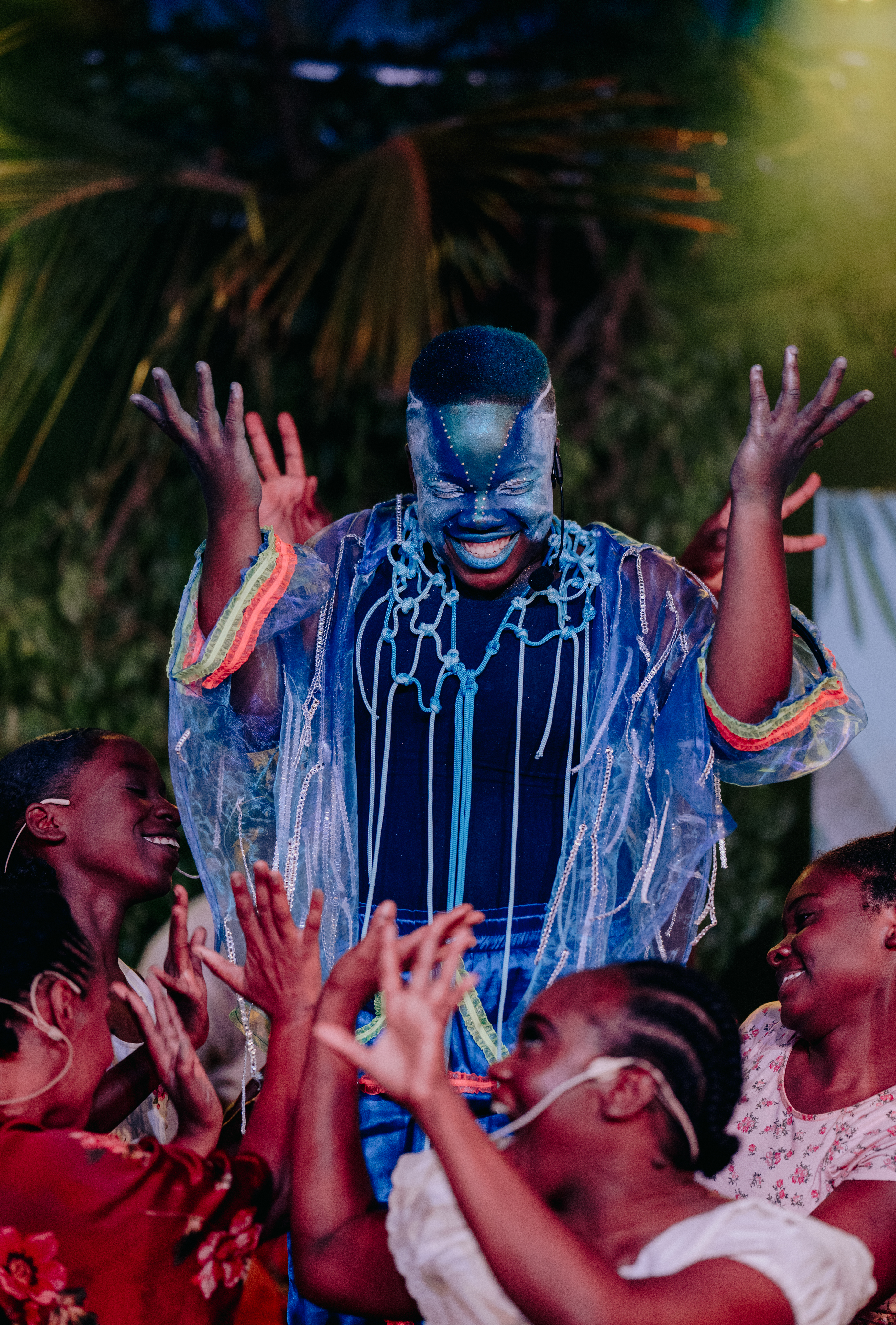
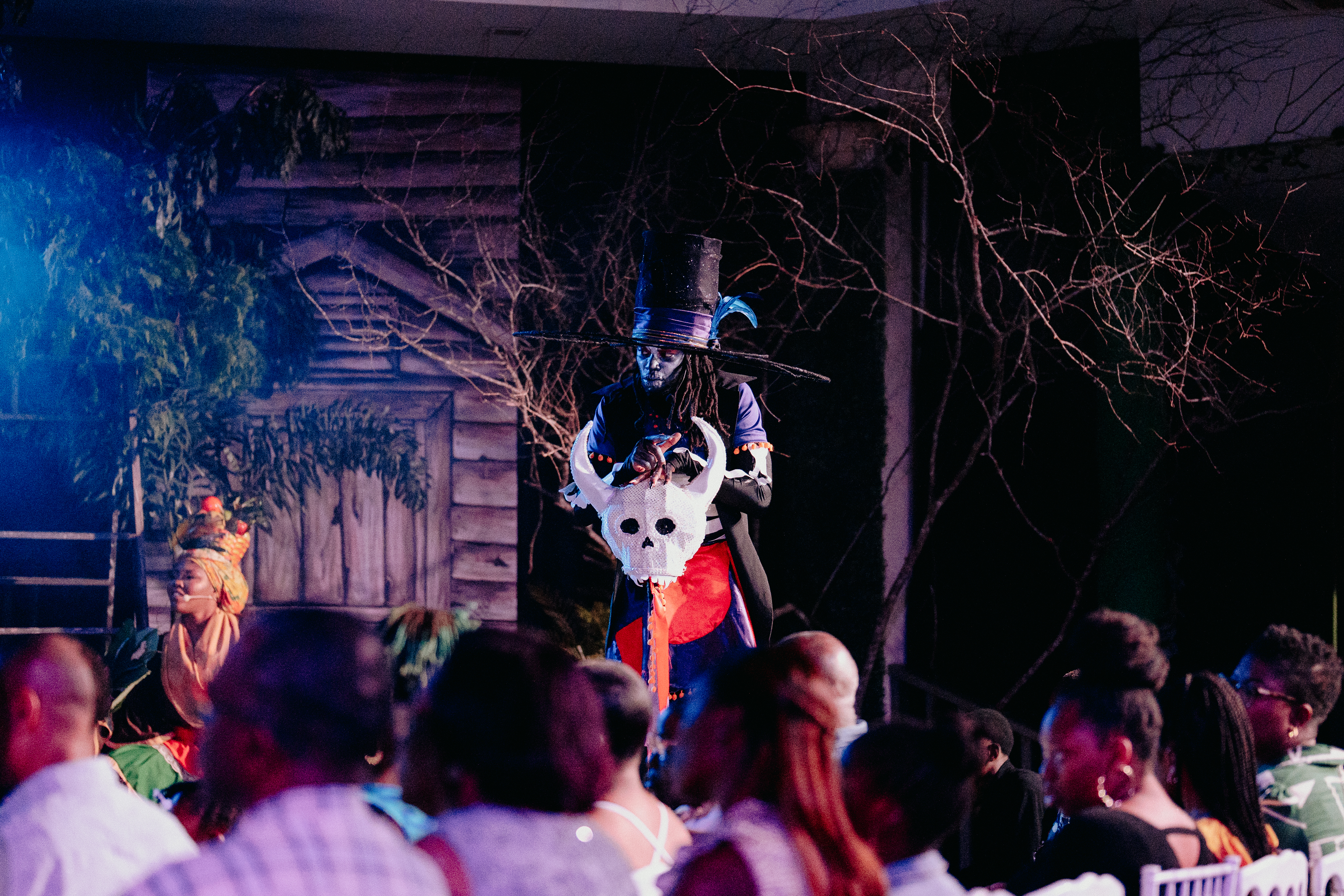
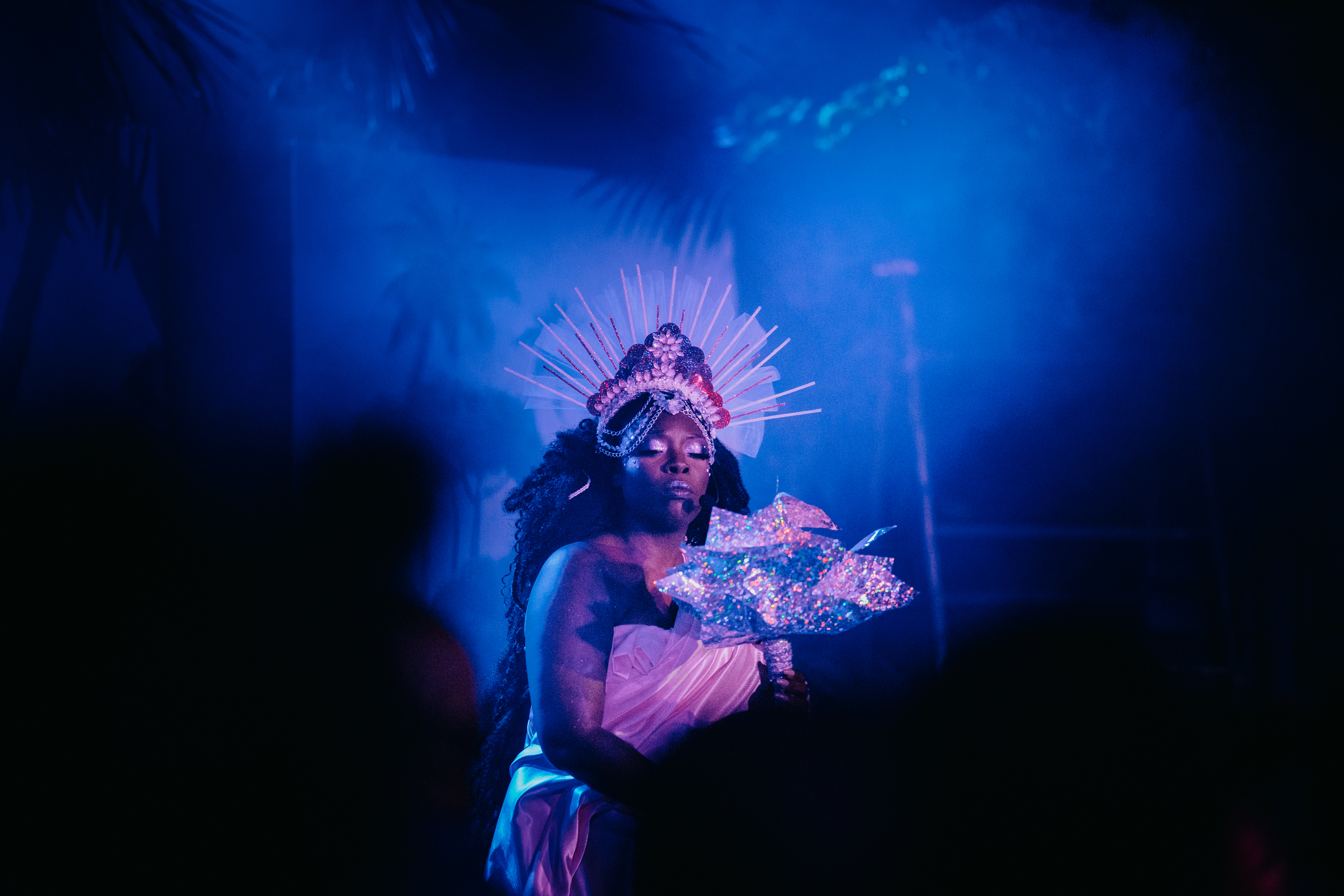
Costume and makeup designers Akimo Sandy and Shurnecia Walker flexed their knowledge of folklore and contemporary fashion | Photos courtesy: TPAC
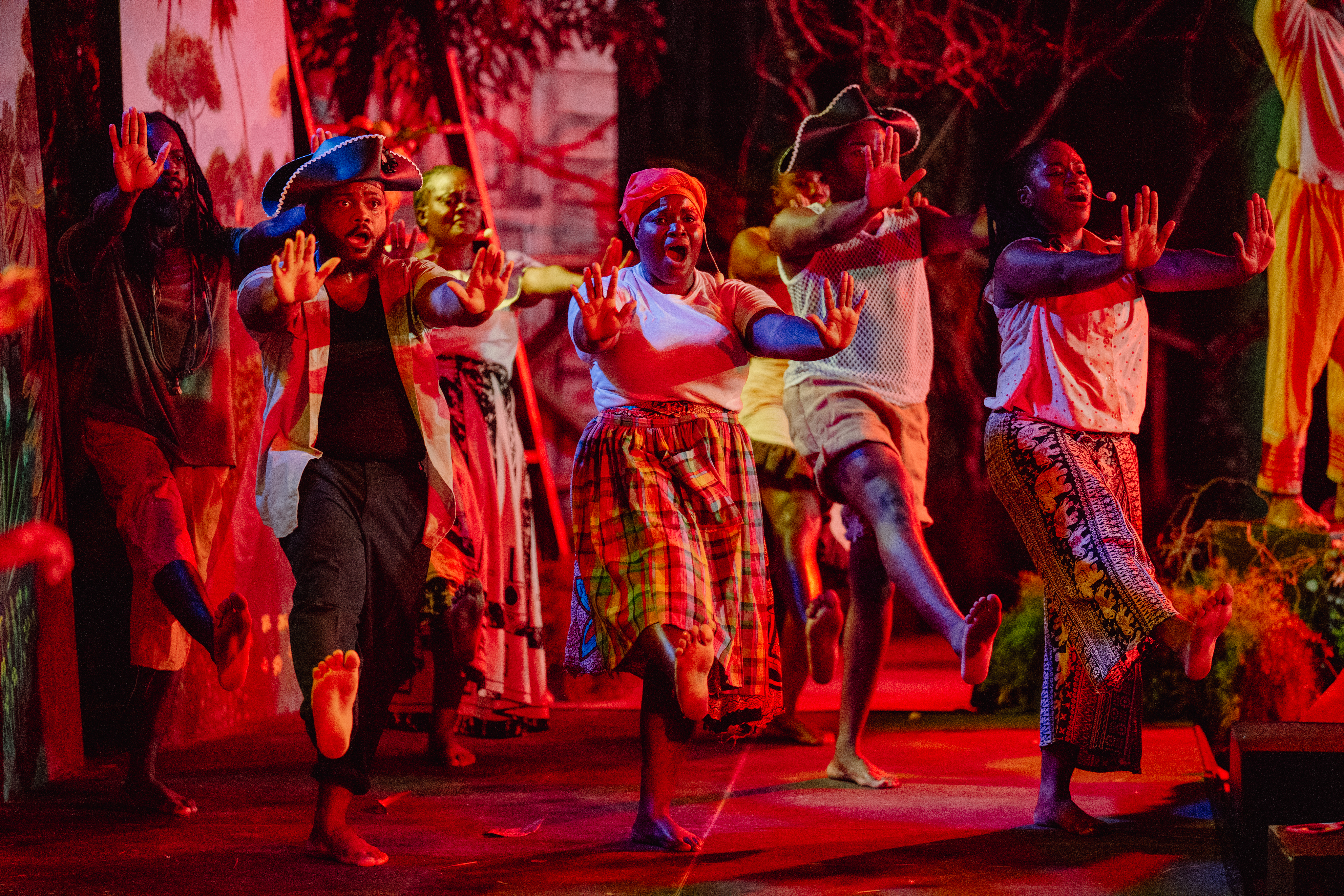
As the opening number built, the rest of the company made their way to the stage with gusto and song… and this company was not for a lack of full voices. As they went about their business like a village just waking up with the sunrise, harmonies blended and grooved, breathing life and giving body to the melodies of the original composer. The company was also not for a lack of dance skill either, making the explosive and incredibly technical choreography of Shakeil Jones feel as easy and as pleasant as an island breeze. And the storytelling! Each character had a purpose, a personality, and a passion. This wasn’t surprising; after all, if there is one region with a deep tie to storytelling, it’s ours.

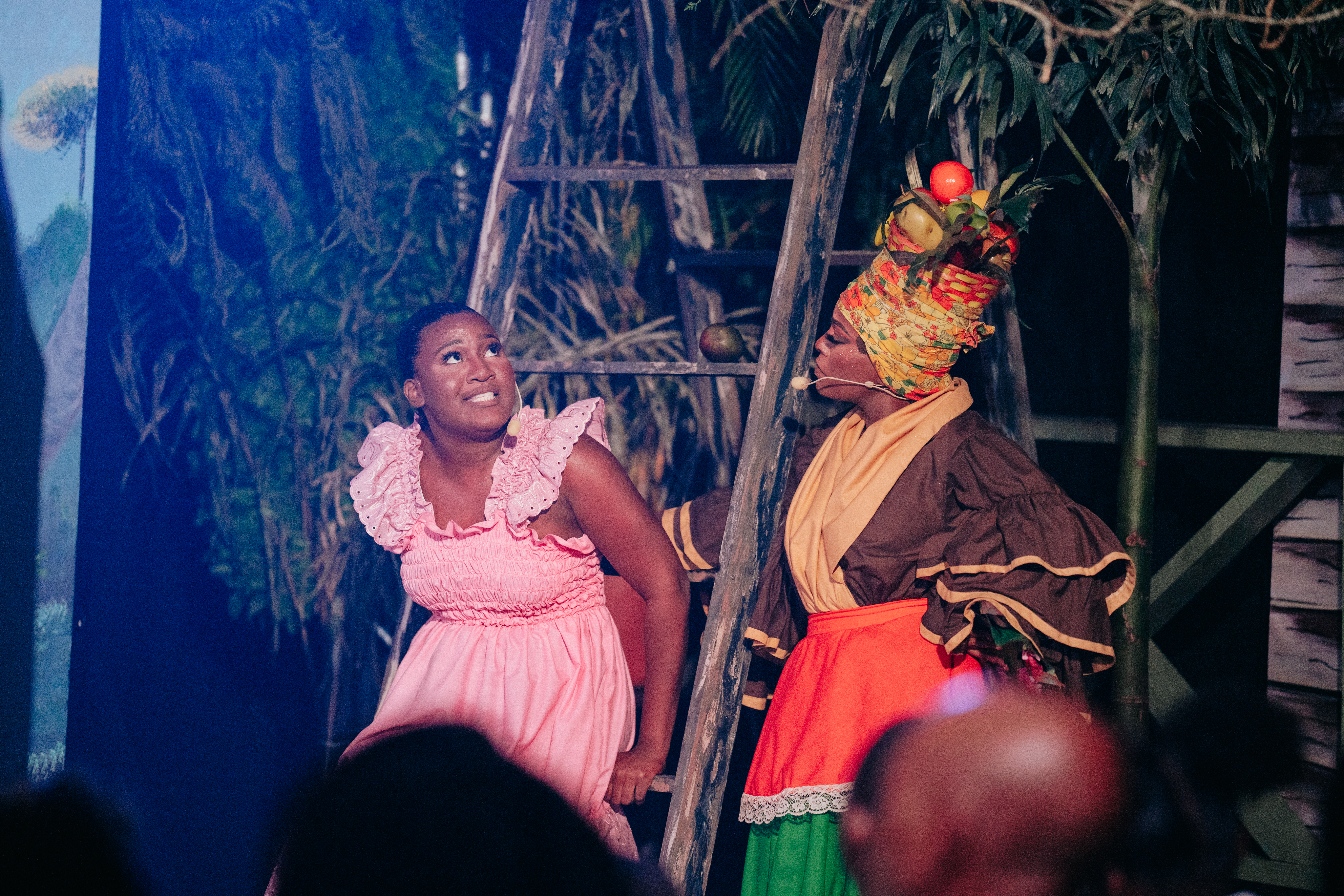
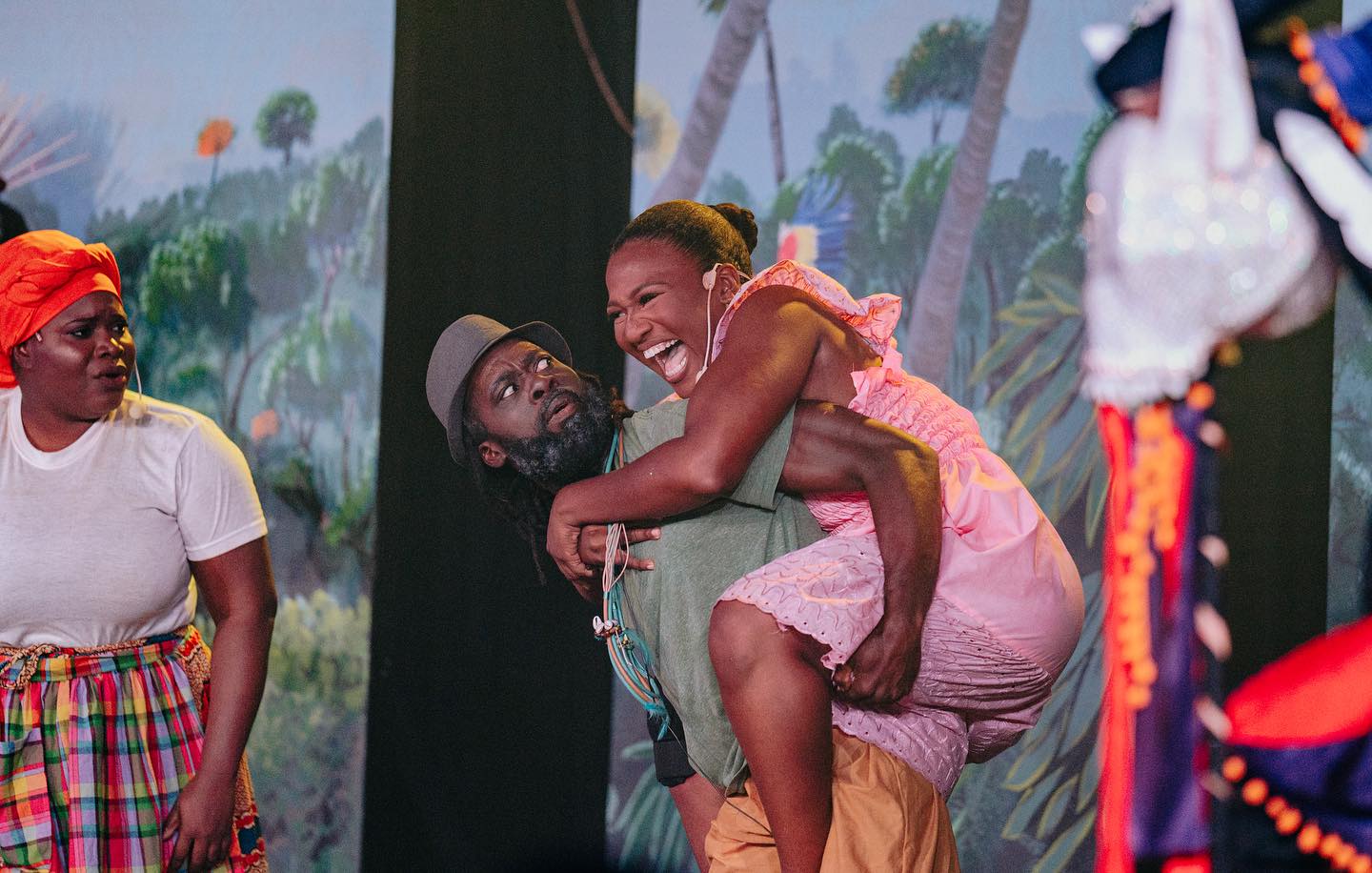
Kudos have to be given to Adeisha Pierre who played our bright-eyed protagonist Ti Moune. She commanded the near 90 minutes on stage with soaring vocals and a child-like wonder, turning around to give the heavier scenes an emotional gravitas. One such scene was at the turning point of the musical opposite her adoptive parents Tonton Julian (Zari Kerr) and Mama Euralie (Leighanne Charles). Kerr and Charles both gave endearing performances, living fully in that uncomfortable space of wanting to protect your only child and realizing the need for them to forge their own path.
The gods as well, Asaka (Cherysh La Touche), Agwe (Kedisha Thomas), Erzulie (Christelle London-Douglas) and Papa Ge (Dwayne White Jr), all commanded the stage with a mix of blasé, gentle, insecure, and temperamental energy (each a similar mix but in varying balances) that separated them as the arbiters of human fate. One detail I enjoyed was the genderblind casting of Agwe, a role that is traditionally played by a male actor. This follows in the footsteps of the 2017 Broadway Revival Company where Asaka was played by a non-binary actor (understudied by women) and Papa Ge by a female actor (understudied by men). It added another layer to the androgynous nature of the gods. This casting decision however was not without its drawbacks. As Agwe’s solo “Rain” was originally written for a lower voice, and the vocal lines in this production weren’t adjusted for the liberties taken in casting, a lot of the power in Thomas’ performance of this number was lost.
Side note: I’d like to commend the cast for their commitment. There was an especially rowdy patron who kept hurling outbursts as though it were a daytime soap opera. Still, the company was able to soldier on through what was an incredibly disruptive and disrespectful occurrence. Applause to you all. Now back to the review.
With all the incredible elements of this spectacular production, Once On This Island was not without its faults, and a lot of them were unfortunately technical. The sound system was evidently engineered for speaking arrangements and small gatherings as opposed to the multiple moving parts of a large-scale musical. Many times the leads were competing with various combinations of ill-fitted mics, a tide of music from a full orchestra, and a surge of voices from the ensemble, making it hard for the audience to hear dialogue. Had a little more attention been paid to the vocal dynamics of the ensemble, it would have served the production tremendously in this regard. In doing so, the soloists would have received more support from the company, rather than be overpowered by them.
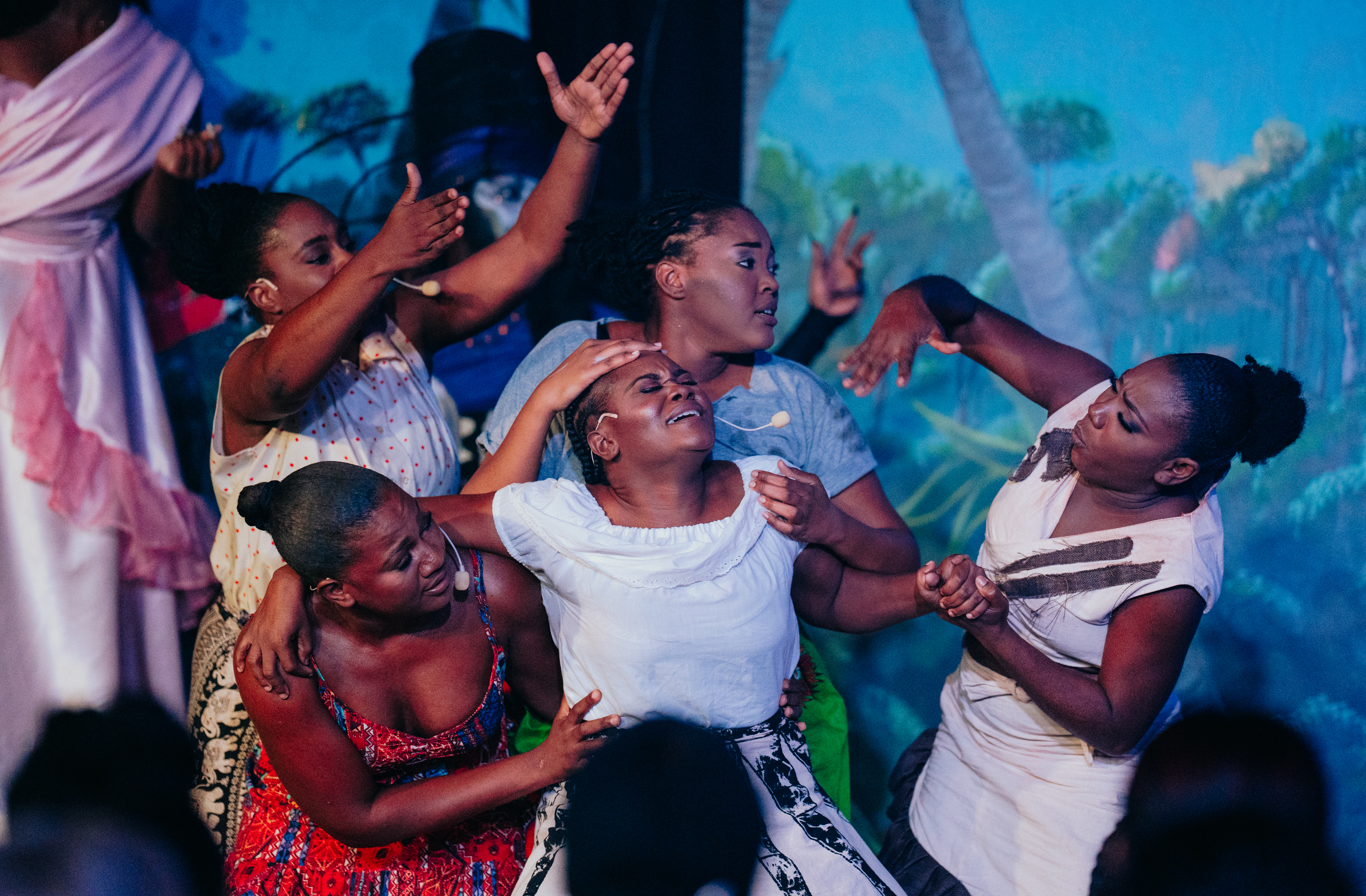
Consequently, as the leads had to compete with such a full sound throughout the show, it felt as though not much space was afforded to explore the nuances and subtleties in vocal and acting choices. If being heard is a concern, then the ability to relax into a performance will suffer. In this vein, at times there was also a murkiness in the performers’ intentions. While there was no lack of passion, sometimes that passion overruled a certain groundedness in acting. There is power in stillness; intensity isn’t always loud. To be able to captivate an audience with silence is one of the most powerful tools an actor possesses. This production was already high intensity and the counter of direct and specific intentions could have been investigated a little more; a fine tuning of the passion into a sharper blade.
Another technical issue the production suffered from was a lack of physical space. Again, the venue was configured for banquet-style events. Trying to accommodate an influx of patrons meant performance space suffered, and a cast of twenty animated actors soon made the stage cramped. Even as the company was able to work adeptly within this constraint, the show desperately needed room to breathe. There were a couple of missed musical entrances, and sometimes the movement of props felt burdensome and pulled focus from the story.
Finally, aside from Agwe’s casting as mentioned before, and how it impacted the performance we the audience would eventually experience, I believe there is another shortfall in the area of casting that is worth mentioning. It was once that diminished the layers of the story being told, not in terms of talent, but rather the inclusion (or lack thereof) of people of a lighter skin color. I realize that saying this may seem regressive, especially when in international spaces casting suffers from disparities in opportunities for people of a darker complexion. Make no mistake, this is not a criticism of love interest Daniel Beauxhomme (played by Daniel Baptiste) or any of the actors portraying nobles. In fact, Baptise infused Beauxhomme with a loveable charm and swagger that won me over and made me loathe him for eventually breaking Ti Moune’s heart (the bastard). For the purposes of this production however, where the entire story (as stated in the text) hinges on the dynamics between the lowly darker skinned peasants and their lighter-skinned compatriots, relying on the words of the librettist is not enough. A topic as critical as colorism, one that unfortunately still plagues our twin island republic and other teritories in our region, needed to be addressed unequivocally. Once On This Island, using the engine of unrequited love, is a parable of the effects that the insidious tendrils of colonialism has on a people. At no point should someone think this was “just a love story”.

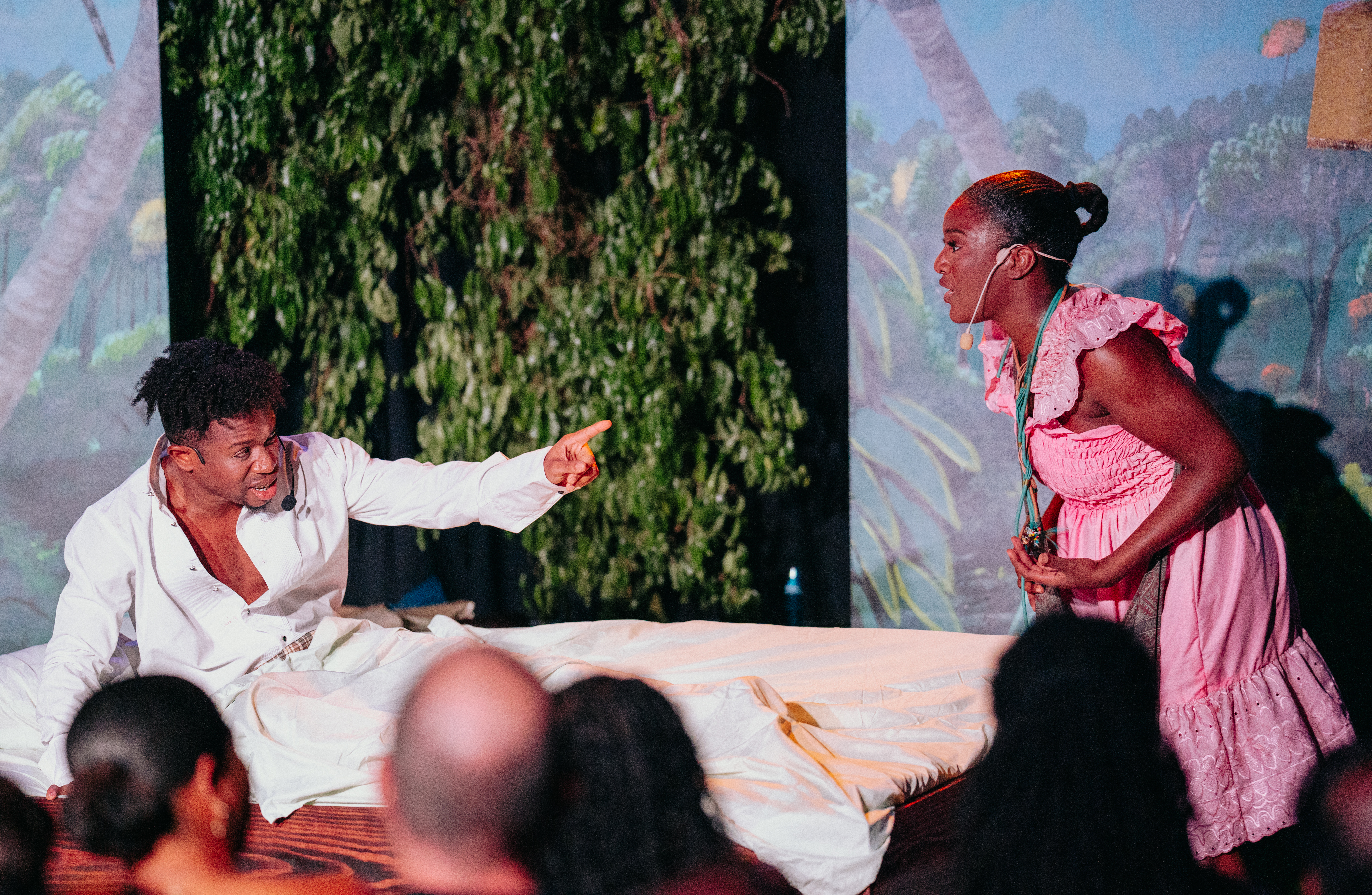
On the whole, Once On This Island was such a delight to witness and a magically entertaining night. The effervescence of TPAC’s joy and love for the craft left me on a theatrical high, and a pride in what can be accomplished in our local stage performances. I can’t tell you how many times I’ve listened to that cast recording since. If TPAC were to mount this musical again I would without hesitation take the next ferry over to see it. More than that, I’d advise any entity, government or otherwise, that it would be ludicrous to not bring TPAC over to Trinidad to have more audiences experience it for themselves… with a bigger stage more fit for their immense talents of course. The Tobago Performing Arts Company is definitely a band of dedicated storytellers who gave everything to their craft that night and enchanted their audiences. They didn’t take the opportunity to play for granted. And that is why they tell the story.
Note: Reviews are editorially independent and reflect the informed perspective of the assigned writer. Submissions may be edited for clarity, coherence, and publication standards without altering the reviewer’s original viewpoint.
ABOUT THE AUTHOR

Isaiah is a graduate of The American Musical and Dramatic Academy and The New School where he holds an Bachelor’s Degree in Musical Theatre and a minor in Screenwriting. He’s performed extensively both locally and internationally. Credits include; Doubles with Slight Pepper (dir. Ian Harinarine); Back to Freeport (dir. Jian Hennings); The Little Mermaid, West Side Story (Fireside Dinner Theatre); Julius Caesar (dir. Michaelian Taylor); Chicago (Potsdam Music Theatre).
 The Trinidad and Tobago Performing Arts Network