In the dim glow of the theatre, as the curtain ascends, the stage transforms into a powerful mirror reflecting the complexities of human existence. It bursts with characters who echo your joys, struggles, deepest fears, and unspoken dreams. There, in this intimate convergence of art and reality is where theatre draws its power—a sobering reflection that provides a profound commentary on societal norms, individual struggles, and the universal human condition. Such was the experience on June 8th, at Iere Theatre Productions’ stage adaptation of Michael Anthony’s “Green Days by the River”, which had the audience at The Southern Academy for the Performing Arts looking into the proverbial looking glass.

Anthony’s novel, of which the play is based, is a seminal work of Caribbean literature that poignantly explores adolescence within the rich cultural fabric of Trinidad. Set in 1952, the story follows fifteen year old Shellie, and his adjustment to the relocation of his impoverished family to the fictional village of Pierre Hill in Mayaro. His father’s deteriorating illness prematurely accelerates his transition into manhood, replacing cashew-pelting boy days with manual labour. He acquires a surrogate father figure in the wealthy plantation owner Mr. Gidharee and finds himself torn between Gidharee’s charming dougla1 daughter Rosalie and the more down to earth Joan. The unfolding narrative delves into Shellie’s personal, emotional and psychological development as he navigates the complexities of love and familial obligations.
If you are familiar with the author’s work, you may note that a signature component of his writing is its simplicity and vivid imagery, capturing the essence of Trinidad’s natural beauty and the rhythms of village life. The lush hills and valleys of vegetation, meandering waterways, and abundance of fauna creates the basis for his world building. Narad Mahabir’s scenic design was nothing short of impressive, capturing the essence and functionality of multiple settings and weaving them together in an almost tetris-like manner. In his design, what appeared to be one installation, consisted of and functioned as Shellie’s humble wooden home, the treacherous path to Mr. Gidharee’s plantation, the recreational cashew tree, to name a few. There were also five points of entry/exit – by my count – that added a level of refreshing dynamism, and reduced the need for numerous blackouts (more on that later), for the set to be changed, which would have undoubtedly been a cumbersome endeavour. With the stage set, the story unfolded.

The central theme of this narrative, and a necessary and inevitable characteristic of life, is growth – primarily conveyed through Shellie. Cast in this leading role was relative newcomer – Bakari Akowe, who was sublime in his major theatrical debut. It was Akowe’s newness that proved his greatest strength, and this production offered a rare opportunity where the audience was privy to witness the blossoming of actor and character, simultaneously. Here we have a character placed in an unfamiliar environment, forced to navigate situations and relationships with the very people that depend on him, played by an actor granted his first mammoth role with the spotlight shone directly on him. Art and reality became one. Akowe embodied Shellie with a believability rooted in sheer raw talent evolving, like his character, from strength to strength as the story progressed. From the subtle nuances in tone and delivery to his thrashing and writhing in violent scenes, Akwoe’s range is brilliant.

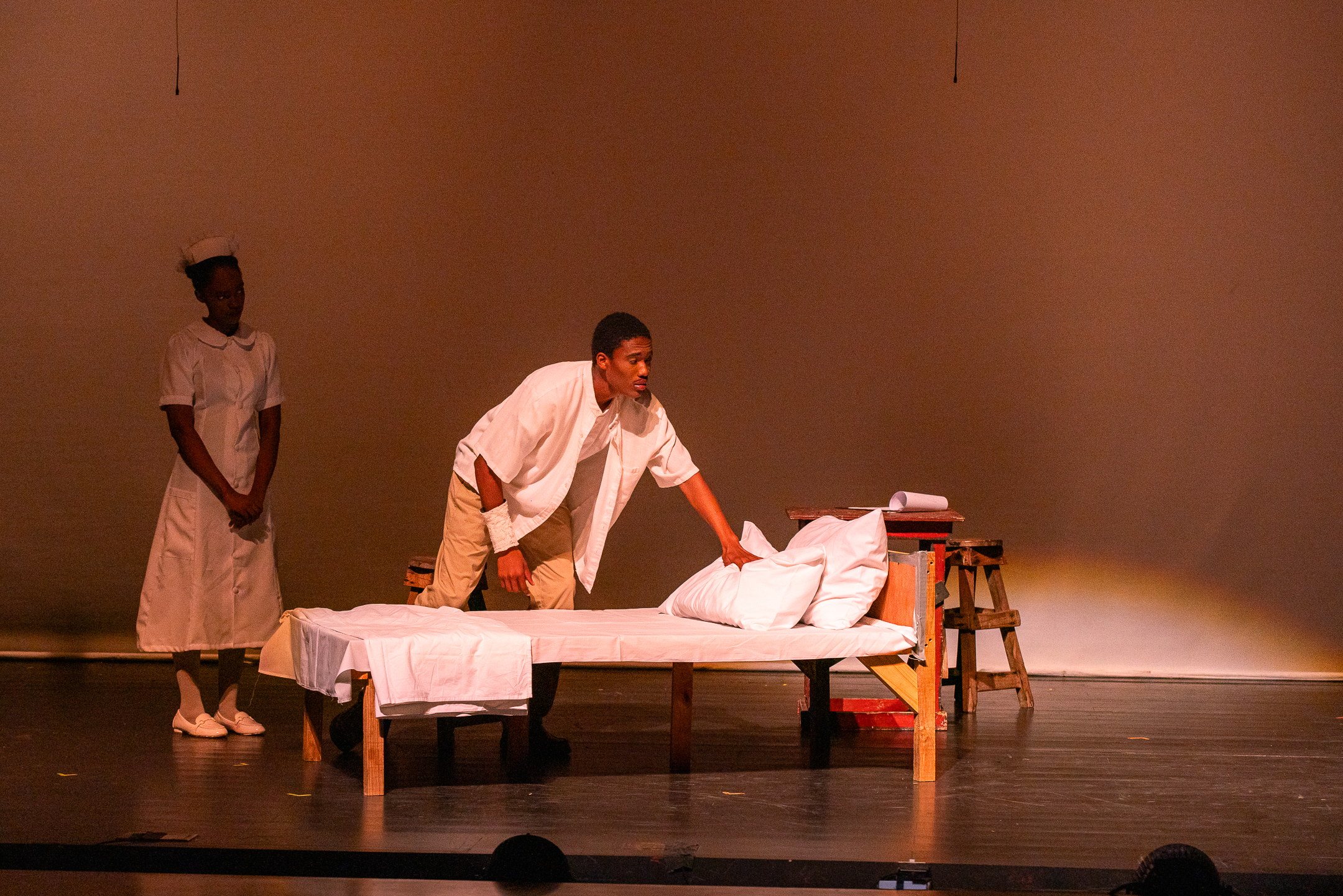
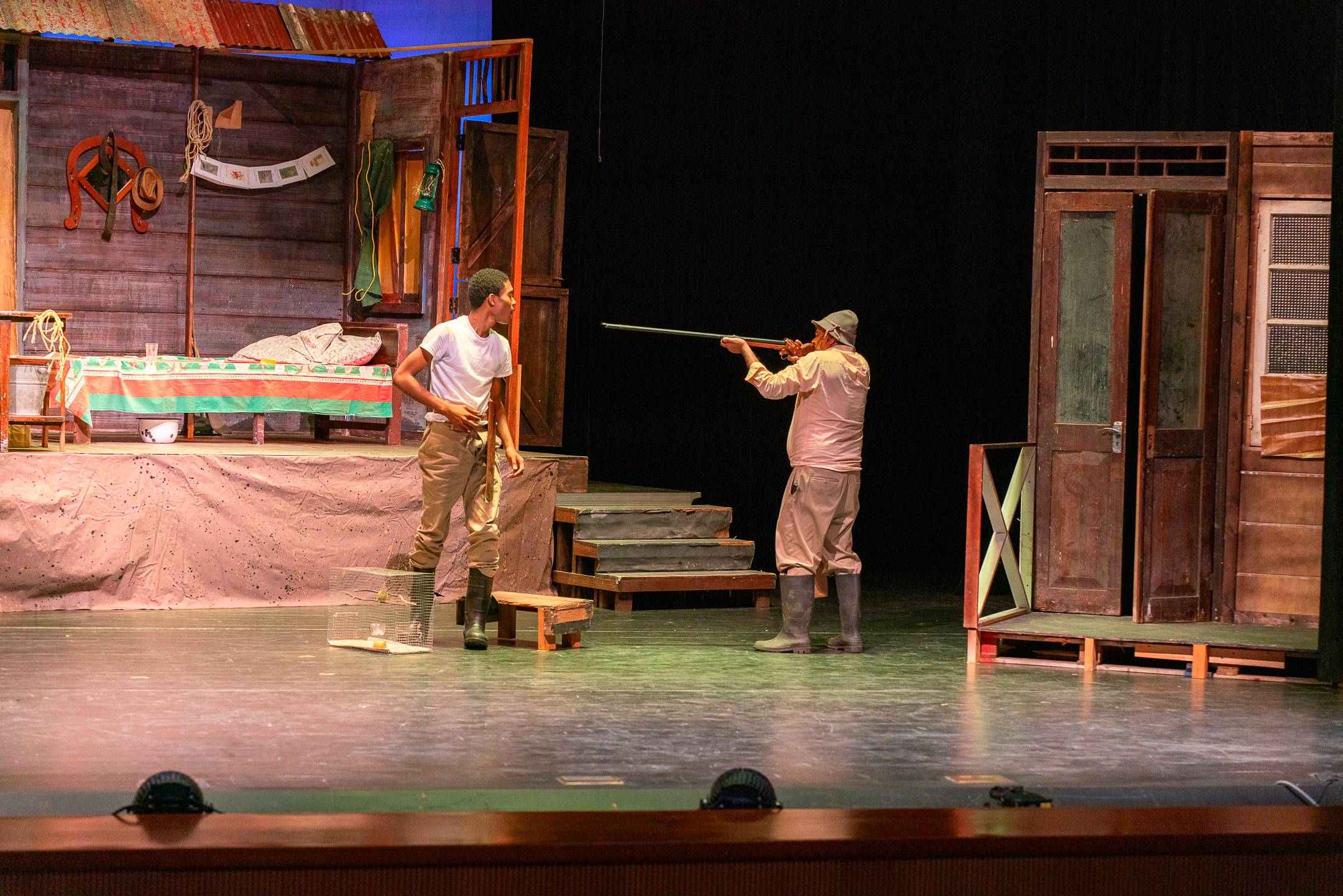
Just as no man is an island, so too, Akwoe would not be able to shine without his fellow actors bringing their A Game. Chandrabhan Ramnarace’s portrayal of Mr. Gidharee captured his authoritative and precariously aggressive essence, tempered by sombering glimpses of a parent willing to go to lengths to protect his child and legacy. Though at times Ramnarace’s delivery felt like he was shouting the dialogue, his portrayal of Mr. Gidharee was successful as the layered, symbolic character Anthony intended.
Representing the temptations of Shellie’s fleeting adolescence is Jessica Joseph’s alluring, but increasingly aggressive Rosalie and Khayisel Perry’s girl next door, out of town Joan. Both young actors hit the mark. Special mention must be made to Omare Jihan Asson’s Pa Lammie – Shellie’s deteriorating, emasculated father. This wholesome father-son relationship played a crucial role in the psychological journey towards manhood for Shellie. Asson embodied this character so convincingly that the line between performance and reality blurred, allowing the audience to see themselves in the narrative and believe in the authenticity of the portrayed emotions and experiences.

Jessica Joseph (right) as the alluring, but increasingly aggressive Rosalie | Photo credit: Stephen Dalchan 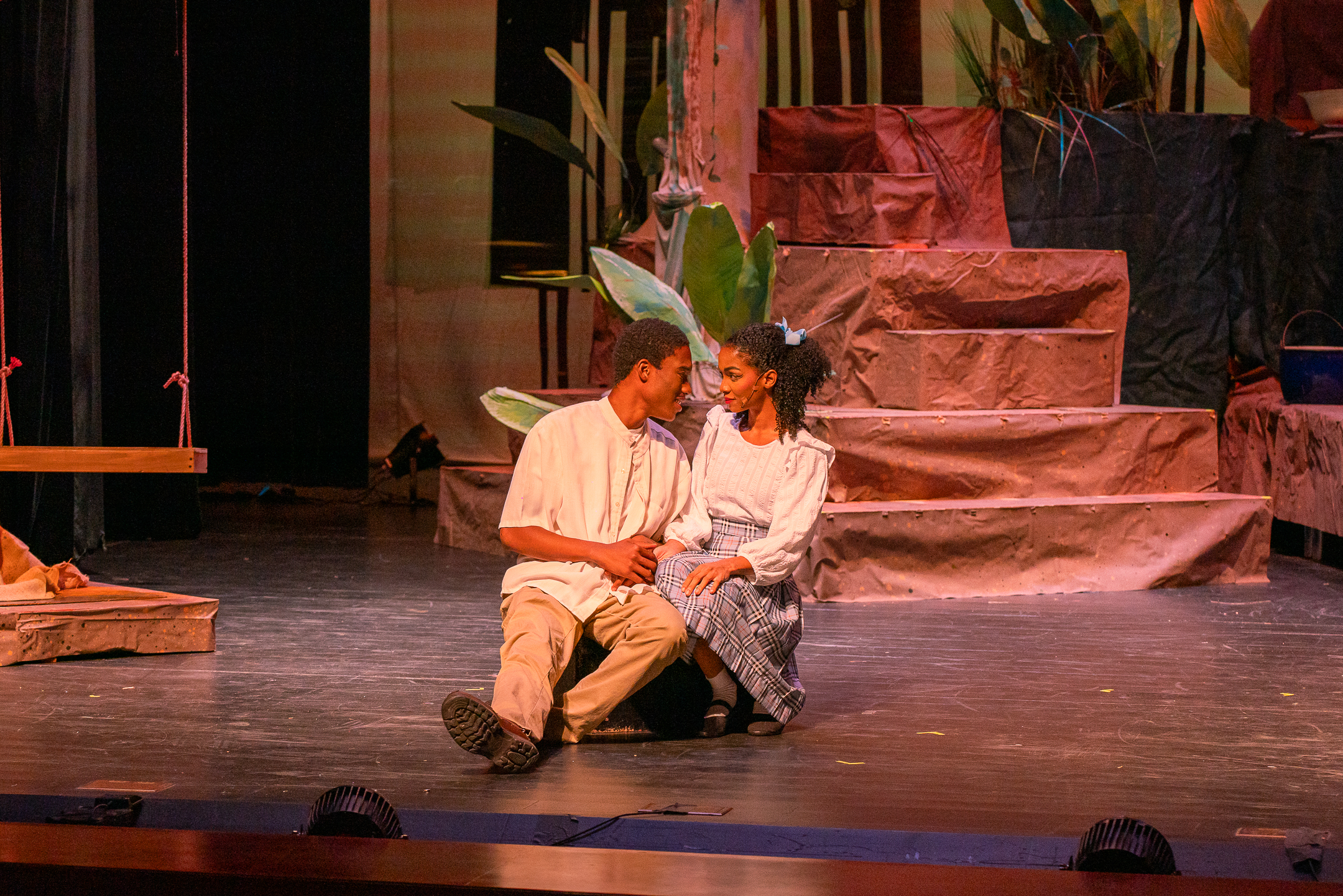
Khayisel Perry (right) plays Joan | Photo credit: Stephen Dalchan 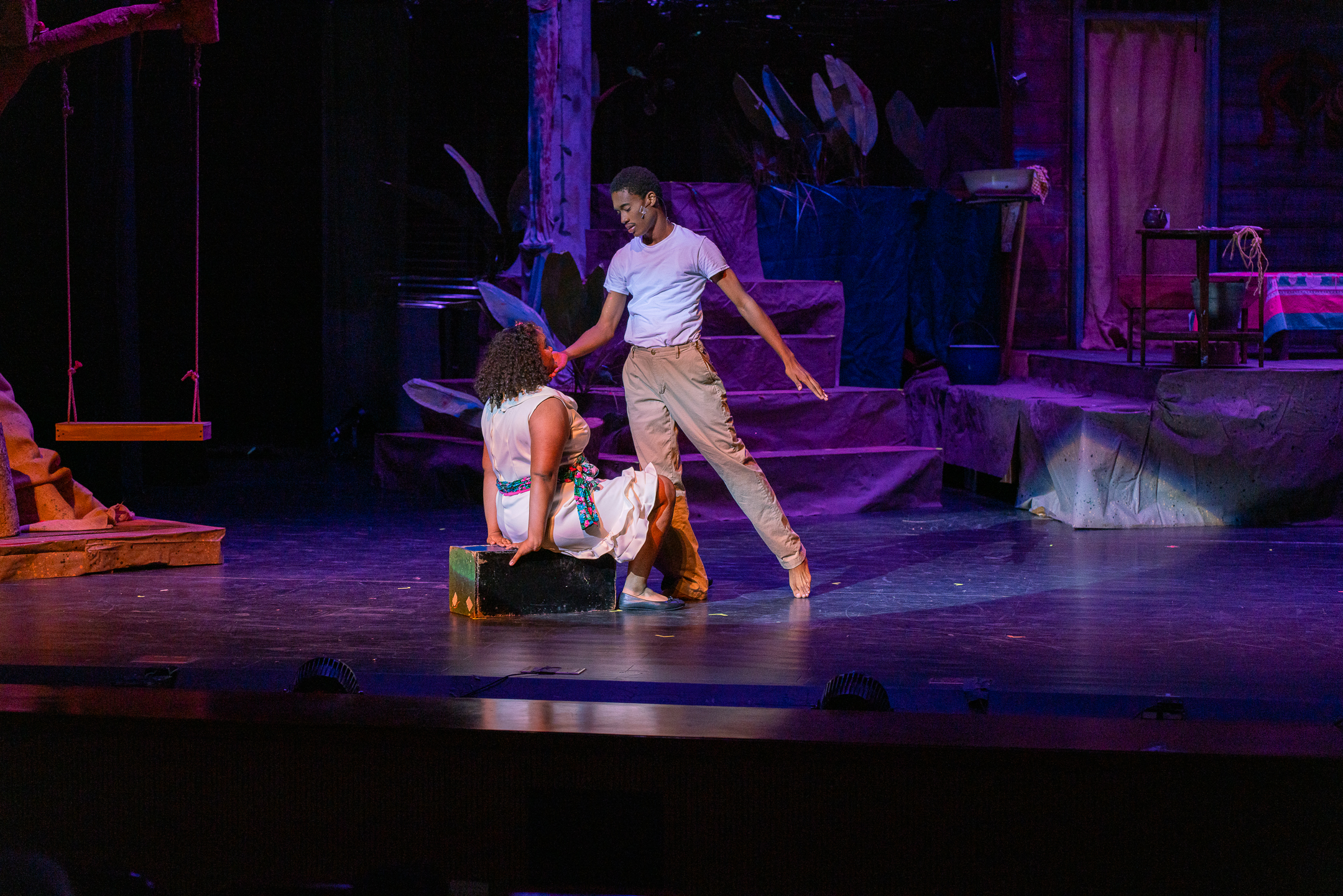
The temptations of Shellie’s fleeting adolescence | Photo credit: Stephen Dalchan 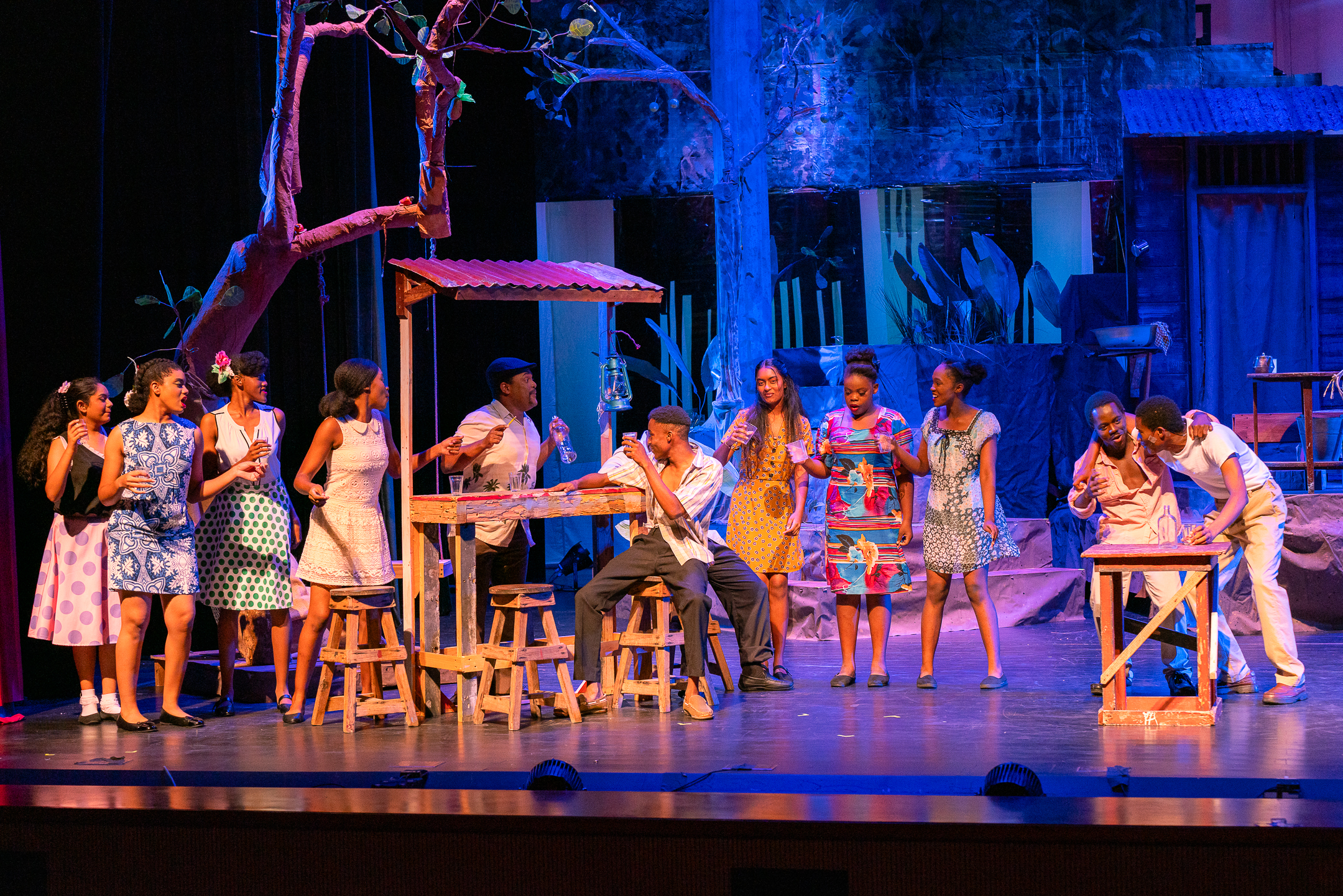
A scene from Iere Theatre Productions’ stage adaptation of Michael Anthony’s “Green Days by the River” | Photo Credit: Stephen Dalchan 
Omare Jihan Asson (middle) as Pa Lammie | Photo credit: Stephen Dalchan 
This wholesome father-son relationship played a crucial role | Photo credit: Stephen Dalchan 
A scene from Iere Theatre Productions’ stage adaptation of Michael Anthony’s “Green Days by the River” | Photo Credit: Stephen Dalchan 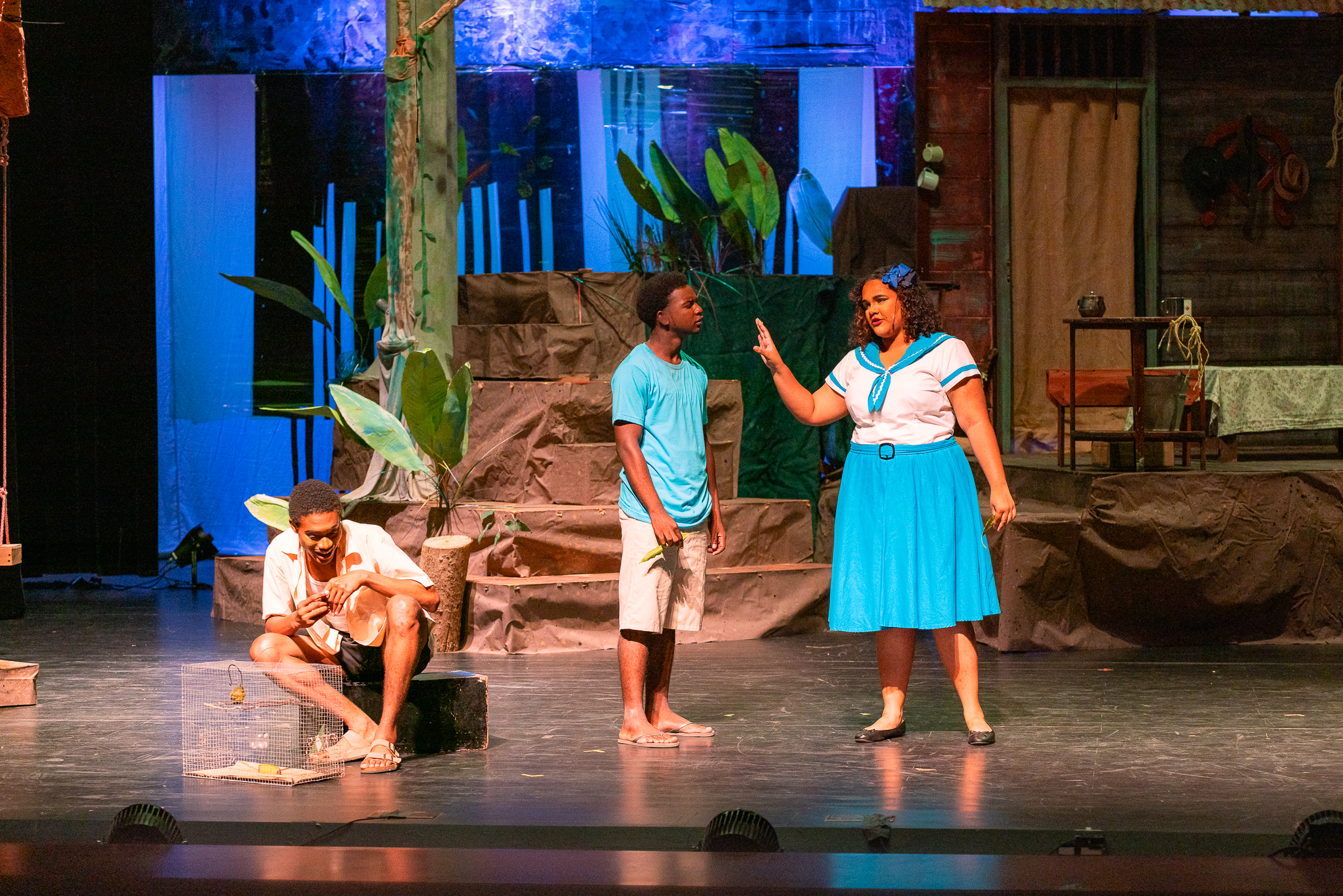
A scene from Iere Theatre Productions’ stage adaptation of Michael Anthony’s “Green Days by the River” | Photo Credit: Stephen Dalchan 
A scene from Iere Theatre Productions’ stage adaptation of Michael Anthony’s “Green Days by the River” | Photo Credit: Stephen Dalchan 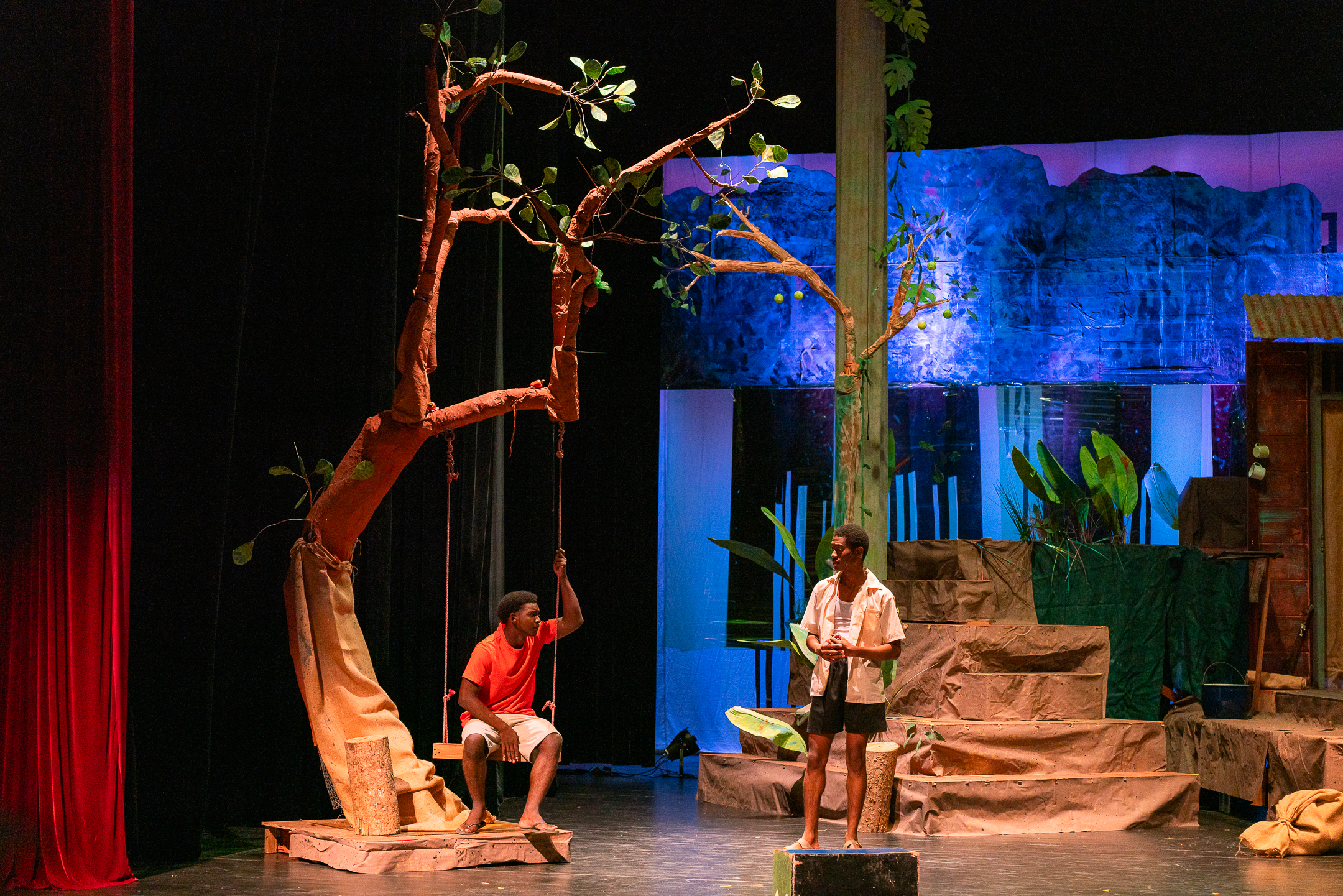
A scene from Iere Theatre Productions’ stage adaptation of Michael Anthony’s “Green Days by the River” | Photo Credit: Stephen Dalchan
Fortifying the carefree nature and lightheartedness of adolescence was Musical Director Joseph “Joey” Rivers’ and Choreographer Beverly Hinds-George. Music and movement walked the line between age and period appropriateness and resulted in a joyful expression of nostalgic rhythm. The inclusion of the song “Rose of Mayaro” written by Anthony was the cherry (or cashew) on top. The duo’s harmonious blend of music and dance breathed life into the stage and created a vivid tapestry that not only enhanced world-building, but also mirrored the rhythms, struggles, and celebrations of Pierre Hill.
This rhythm was interrupted only by the production’s faux pas with pacing. Though aware of the challenges to condense the source material while maintaining the integrity of the narrative, the series of short scenes while establishing conflict did not achieve its desired effect. Instead of an increasing rhythm to the rising action, there was a waxing and waning that felt inharmonious. The frequent blackouts in the second half after a few lines of dialogue appeared to be a rushed effort to include as much source material as possible. Pacing is crucial as it dictates the rhythm and flow of the performance, ensuring that the narrative unfolds in a way that maintains engagement, heightens emotional impact, and effectively builds tension and resolution.
The page to stage process in and of itself poses a myriad of challenges. However, the successful adaptation of a critically acclaimed, well known novel that captures the Caribbean experience without restraint?…that is the sweetest cashew of them all. For Director and Founder of Iere Theatre Productions Victor Edwards, it is one he savoured.
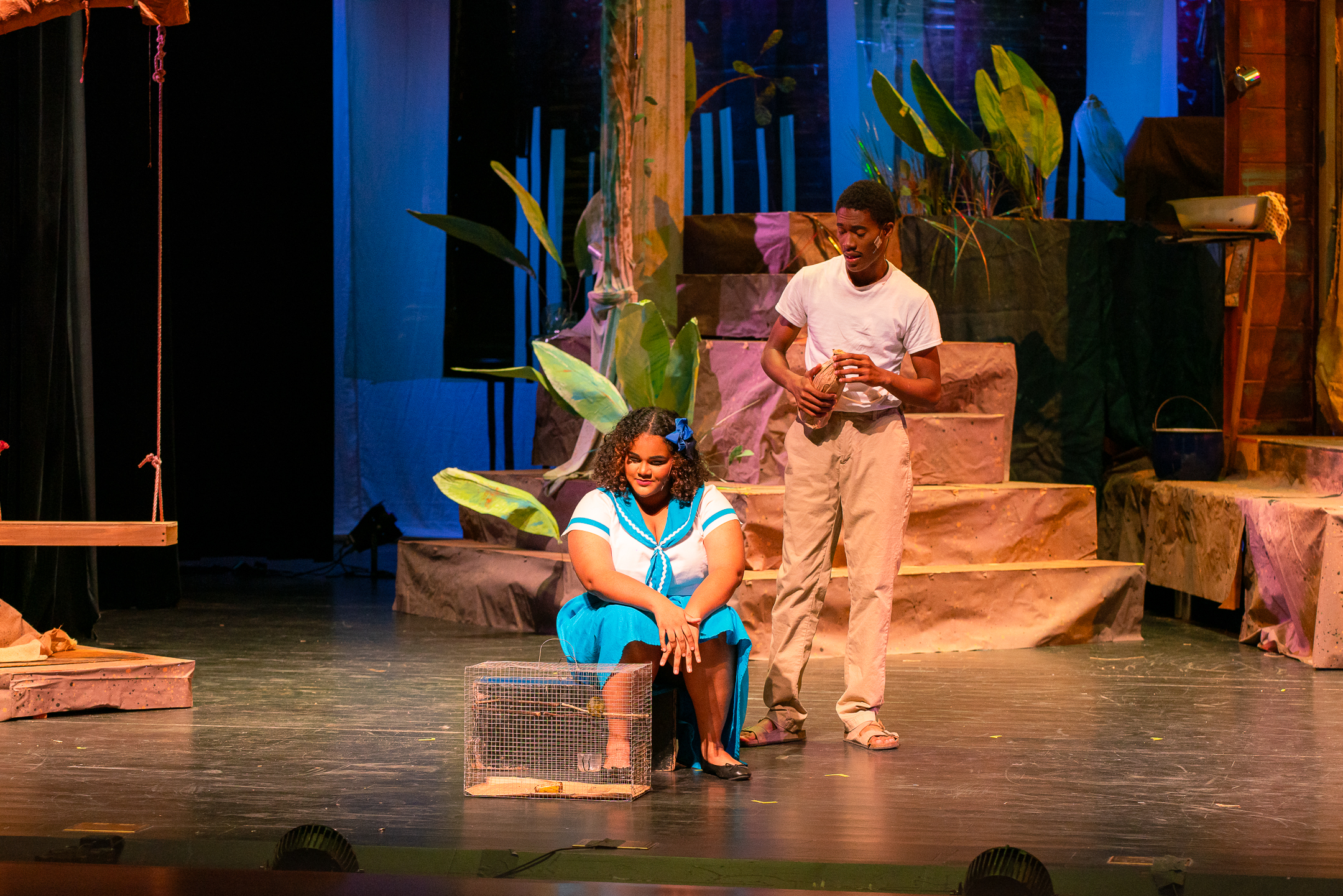
Each of Edward’s Directorial choices were a well calculated aim at the proverbial cashew, in his attempt to bridge the gap between art and reality. The result was a meticulously crafted performance that resonated authentically with audiences, and brought the narrative to life with depth, emotion, and relevance. His ability to focus on elements that could have been easily overlooked, and make them central to the plot, highlights his attention to detail and proficiency in his craft. The masterful use of the cashew tree swing of childhood, juxtaposed by the caged bird unmistakably reflected Shellie’s impending confinement of manhood and subconsciously reinforced the conflict.
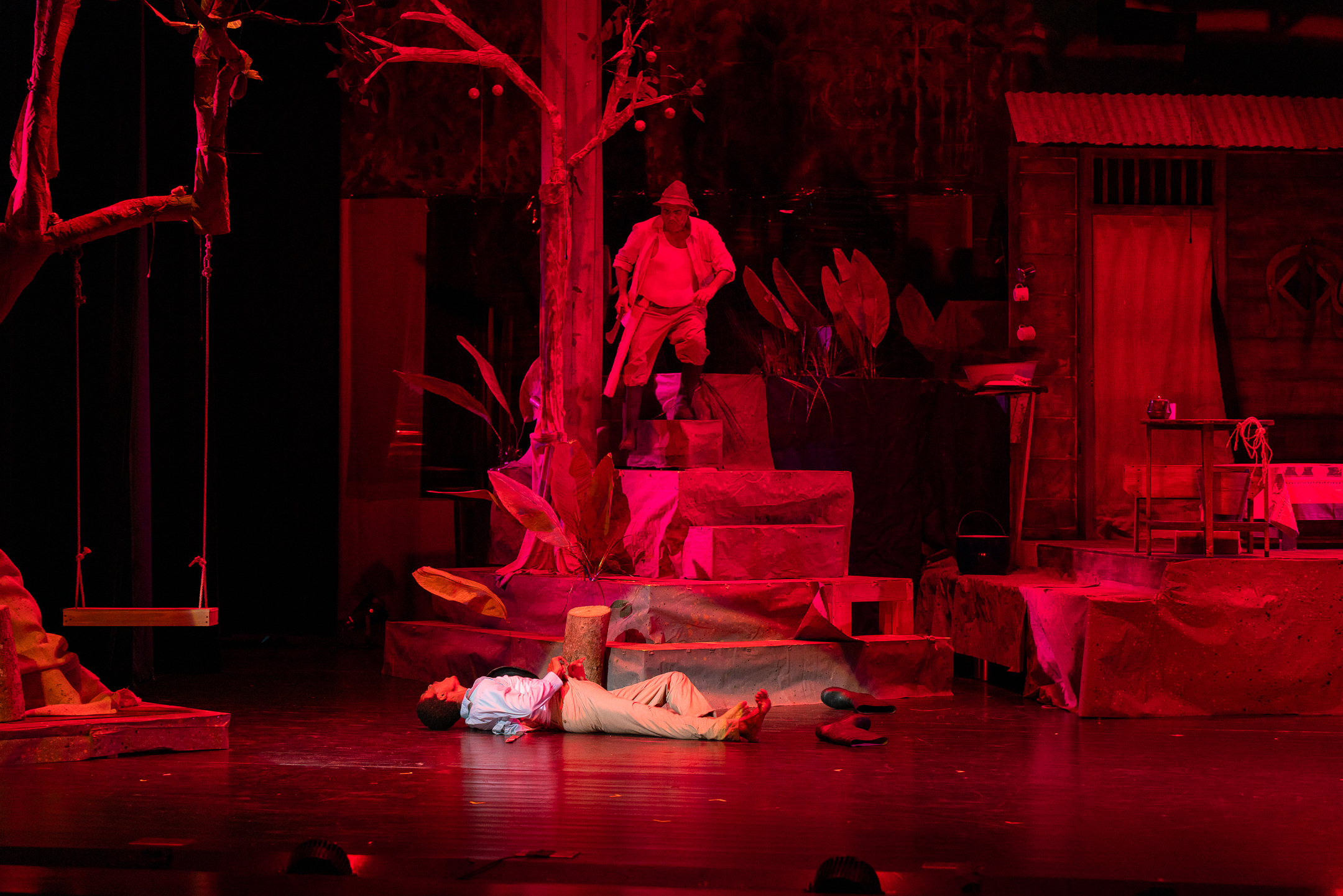
Edward’s treatment of Mr. Gidharee’s attack on Shellie is also worthy of high praise. For context, in this scene Mr. Gidharee felt betrayed by Shellie’s recent romantic involvement with Joan, while simultaneously being involved with his daughter Rosalie. Now a man scorned, he unleashed his hunting dogs – hellhounds if you will – upon Shellie, and left him for dead. The non-existent dogs lunged, their barks and Shellie’s blood curdling screams echoed as the stage was bathed in red light. This was by far the most powerful scene of the production. Mr. Gidharee’s violent reaction was fueled by his protective instinct towards his daughter, reflecting the intense emotions and cultural expectations surrounding family honour and relationships in their rural Trinidadian community. This pivotal scene marked a dramatic turning point for Shellie, shattering his sense of security and trust, which propelled him further into the harsh realities of adulthood. It was one that was executed brilliantly.
Through the vivid portrayal of Shellie’s coming-of-age journey, “Green Days by the River” mirrors the complexities of Trinidadian rural life, capturing the cultural, familial, and social pressures that shape individual identities. The elements in this production – encompassing Set Design, successful characterization and acting, movement and music – breathed Anthony’s novel to life through compelling artistic expression. Iere Theatre Productions set its aim on the highest fruit of the Caribbean literary tree and relished on its sweetness.
It is lucidly clear that Iere Theatre Productions, under the helm of Victor Edwards along with its proficient technical team and promising actors seek to and are succeeding in raising the bar of theatre in Trinidad and Tobago. It is a rare occasion to witness and genuinely be moved by the sheer talent of budding practitioners and future masters of their craft. If this generation is the next torch bearers of the performing arts, then we are headed in the right direction.
Note: Reviews are editorially independent and reflect the informed perspective of the assigned writer. Submissions may be edited for clarity, coherence, and publication standards without altering the reviewer’s original viewpoint.

- Dougla – Caribbean people who are of mixed African and Indian descent. ↩︎
ABOUT THE AUTHOR

Hi! I’m Anil and I wear many hats: entrepreneur, digital story-teller, content creator and Casting Executive with the T&T Performing Arts Network to name a few. My fascination with written text and it’s evocative nature began as a teen, and eventually led me to pursue a B.A in Literature and Linguistics with a minor in Education at The University of the West Indies.
While I am a full time Cake Artist, the Arts will always be my first passion. I’ve been fortunate enough recently to delve into the magical realm of theatre and share my experiences with others. When I’m not grinding I’m often found on some adventure near or far, or tucked away in a cozy coffeeshop buried in a book, updating my blog – Knock About Trini, or trying to become a self taught badass polyglot.
 The Trinidad and Tobago Performing Arts Network