What does it mean to find your voice in a country already tuned into a different frequency? This is the question that reverberated behind every moment of Iere Theatre Productions’ “Sundar: The Story Behind the Music” on Saturday 7th June at The Naparima Bowl. More than a powerful tribute to the life and legacy of Sundar Popo, this production was a reflection of a nation wrestling with class, race, and itself, grappling with who gets to be seen, heard and what it means to be a Trinbagonian. It is the re-telling of a personal story that acts as a microcosm of the Indo-Trinidadian struggle for visibility and cultural legitimacy within a national space, revealing how cultural expression has long been both a site of contestation and a pathway to belonging.
Born in Bararackpore, Trinidad, Sundarlal Popo Bahora (1943 – 2000) was a groundbreaking Indo-Trinidadian songwriter, vocalist and musician, popularly credited as the father of chutney music. In a time when Indo-Trinidadian cultural expression was confined to religious settings, family gatherings and rural communities, Popo dared to merge traditional Indian folk melodies with popular West Indian genres like calypso and reggae. This groundbreaking fusion not only gave rise to the chutney music we know today, but also helped elevate it to international recognition. His songs reflected the joys, struggles and the everyday experiences of Indo-Trinidadian life, offering an authentically rare voice in a national space where East Indian narratives were marginalized. His introduction of chutney music to mainstream audiences marked a cultural shift in the nation’s musical history, paving the way for generations of Chutney and Chutney-Soca artists, transforming the genre into a staple of Caribbean music.
Written and directed by National Awardee Victor Edwards, “Sundar” is set against the backdrop of some of Trinidad and Tobago’s most turbulent decades: the Black Power Revolution in 1970, the sugar workers’ protest and riot in 1975, the death of Dr. Eric Williams in 1981, and the cultural conflicts between the African and East Indian communities. Edwards masterfully stitches one man’s rise to stardom into the broader tapestry of a nation in flux, illustrating how personal ambition and national identity crises inevitably intersect.
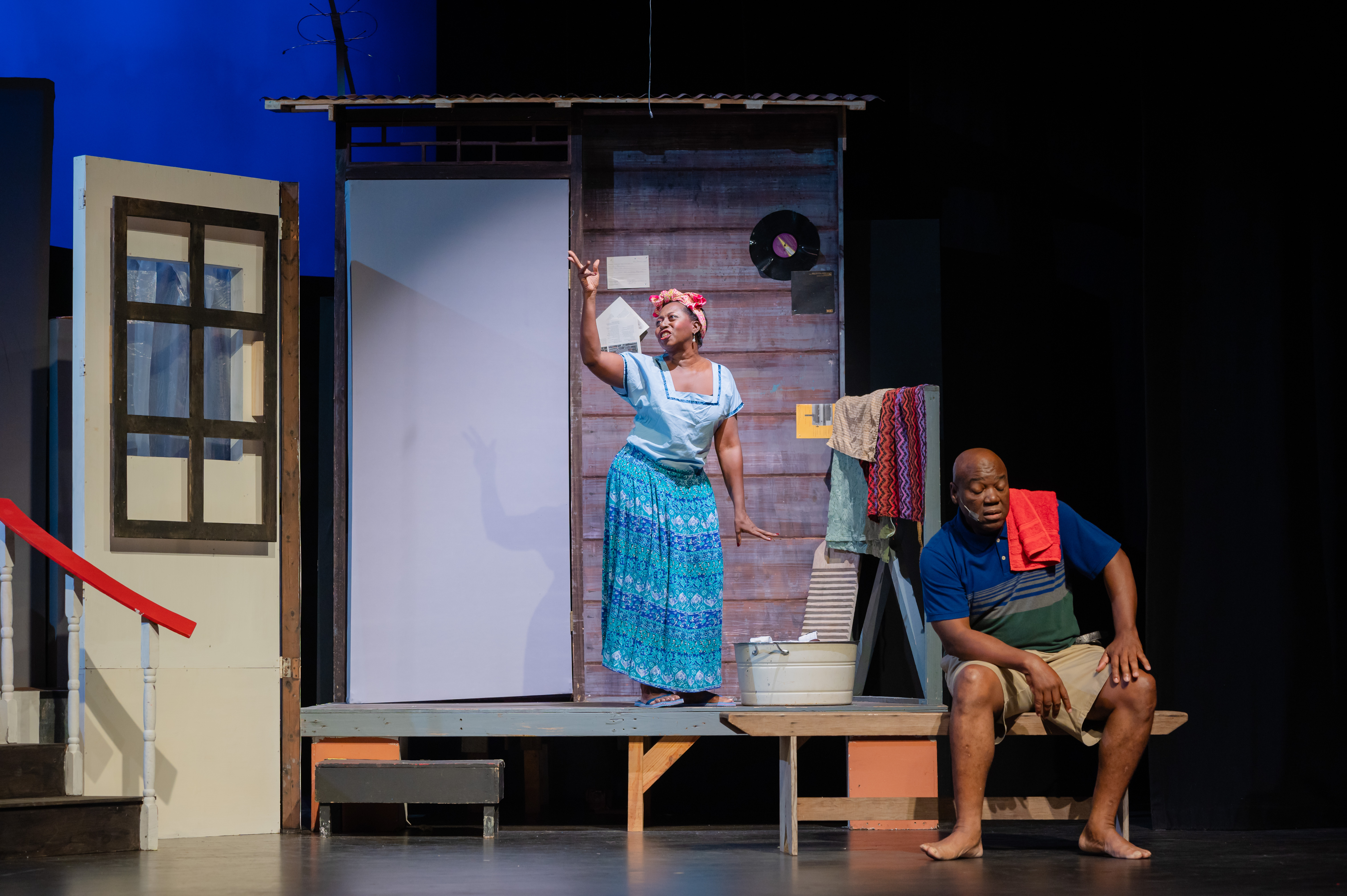
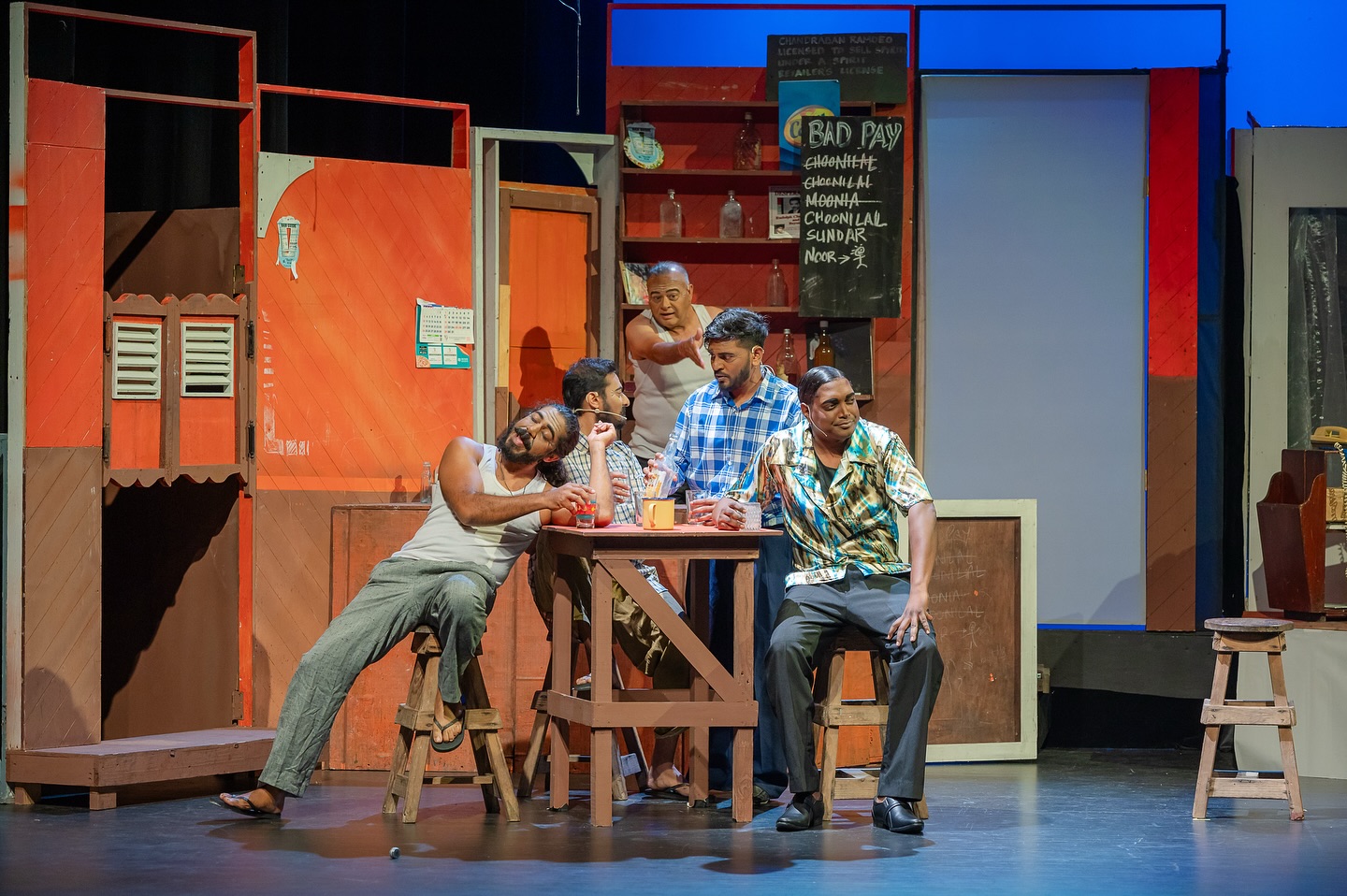
Complementing the narrative is the evocative and symbolic set design by Narad Mahabir which does far more than just dress the stage. On one end sits a rum shop where East Indian men trade stories, familiar and rich with memory and conversation. On the other, a humble wooden house belonging to an African couple stands in proud and dignified contrast. Between them lies a multi-purpose central space that transforms seamlessly throughout the play: a park where Sundar meets his second wife, his lavish home where life unfolds, and the performance stage where he earns his title. This spatial arrangement isn’t accidental. It mirrors the opposing and negotiated terrain of Trinidad and Tobago itself where identities intersect, where tensions simmer, and where through art, reconciliation becomes possible. Popo’s life unfolds in this in-between, navigating personal and cultural frontiers.
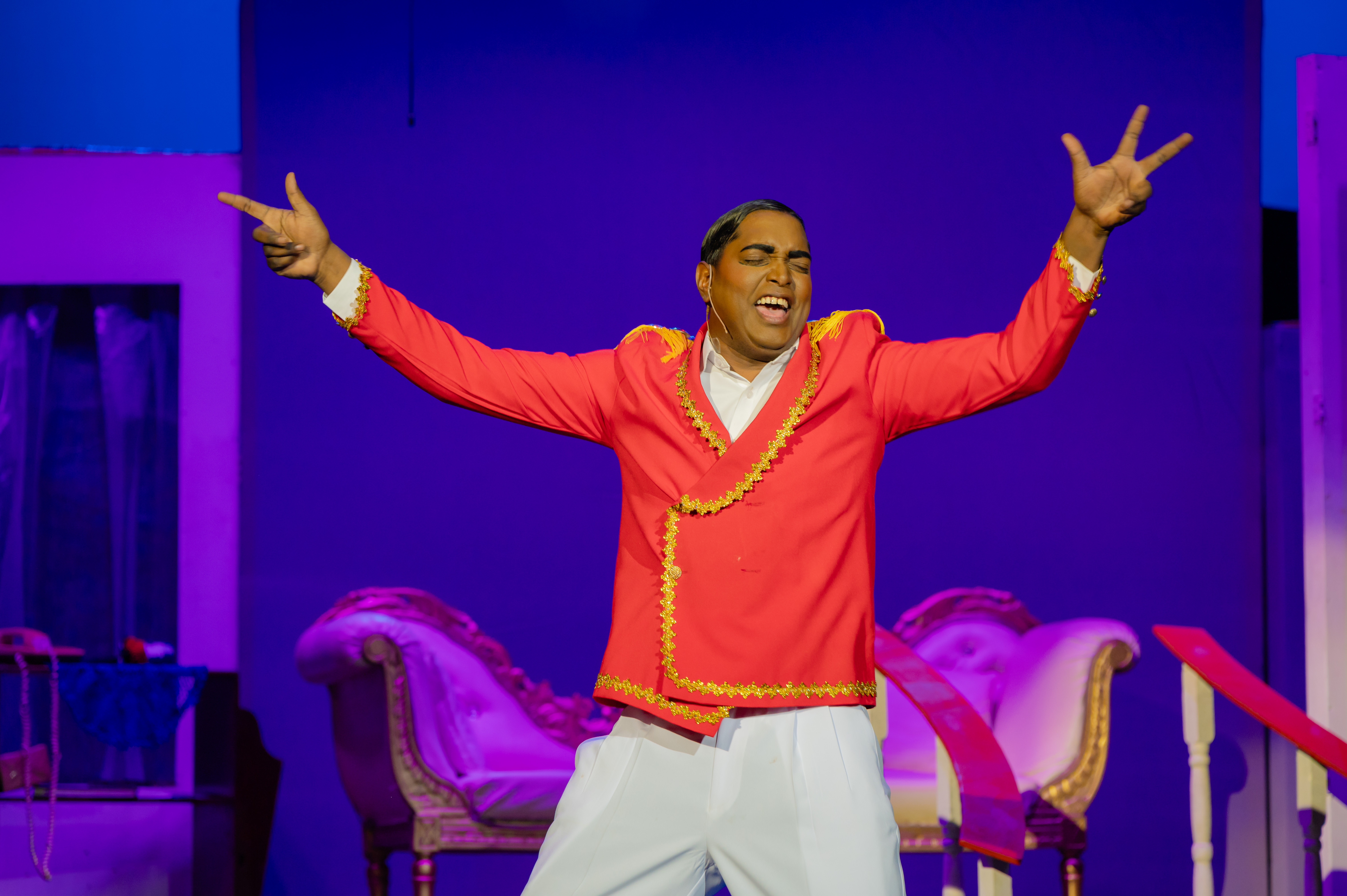
In the titular role, Shabir Mohammed did not just portray Popo, he embodied him. With a background in music himself, Mohammed captured the subtle mannerisms, vocal intonations, and emotional nuances that revealed the complexity of a man navigating public adoration and his private turmoil. These moments were so precise and vocally seamless that I genuinely questioned whether I was hearing live vocals or recorded tracks – it was, in fact, live. Mohammed’s command of Popo’s distinctive cadence and delivery grounded the narrative in an authenticity and believability that provided the emotional anchor necessary for the audience’s connection to this tragic hero. Much like Popo’s relentless quest to carve his voice into the nation’s cultural soundscape, so too did Mohammed carve his presence into this role, delivering a performance of sheer, unforgettable brilliance.
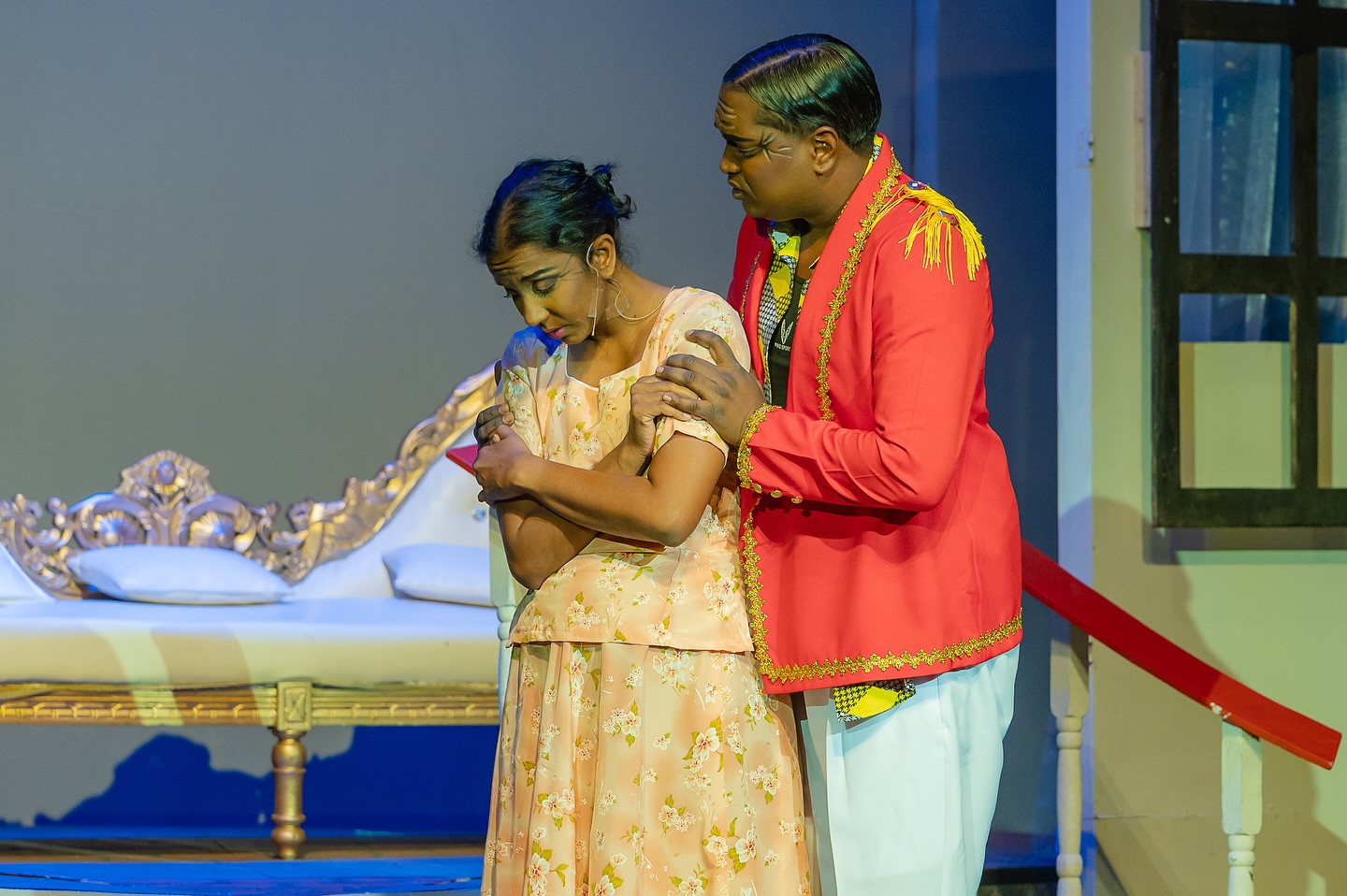
Popo’s relationship with his second wife, Suraji, portrayed by Reanna Edwards-Paul, offered an intimate glimpse into the personal life of the legend. Their interactions were laced with moments of quiet vulnerability that humanised Popo beyond the public persona, thanks in no small part to Edwards-Paul’s thoughtful performance. Her portrayal of the devoted wife was both tender and grounded, adding emotional depth to the narrative. One of the production’s most affecting moments came through her haunting rendition of “Tears In My Eyes”, a performance that not only foreshadowed Popo’s death but also showcased Edwards-Paul’s remarkable ability to treat the role with the care, restraint, and compassion it demanded.
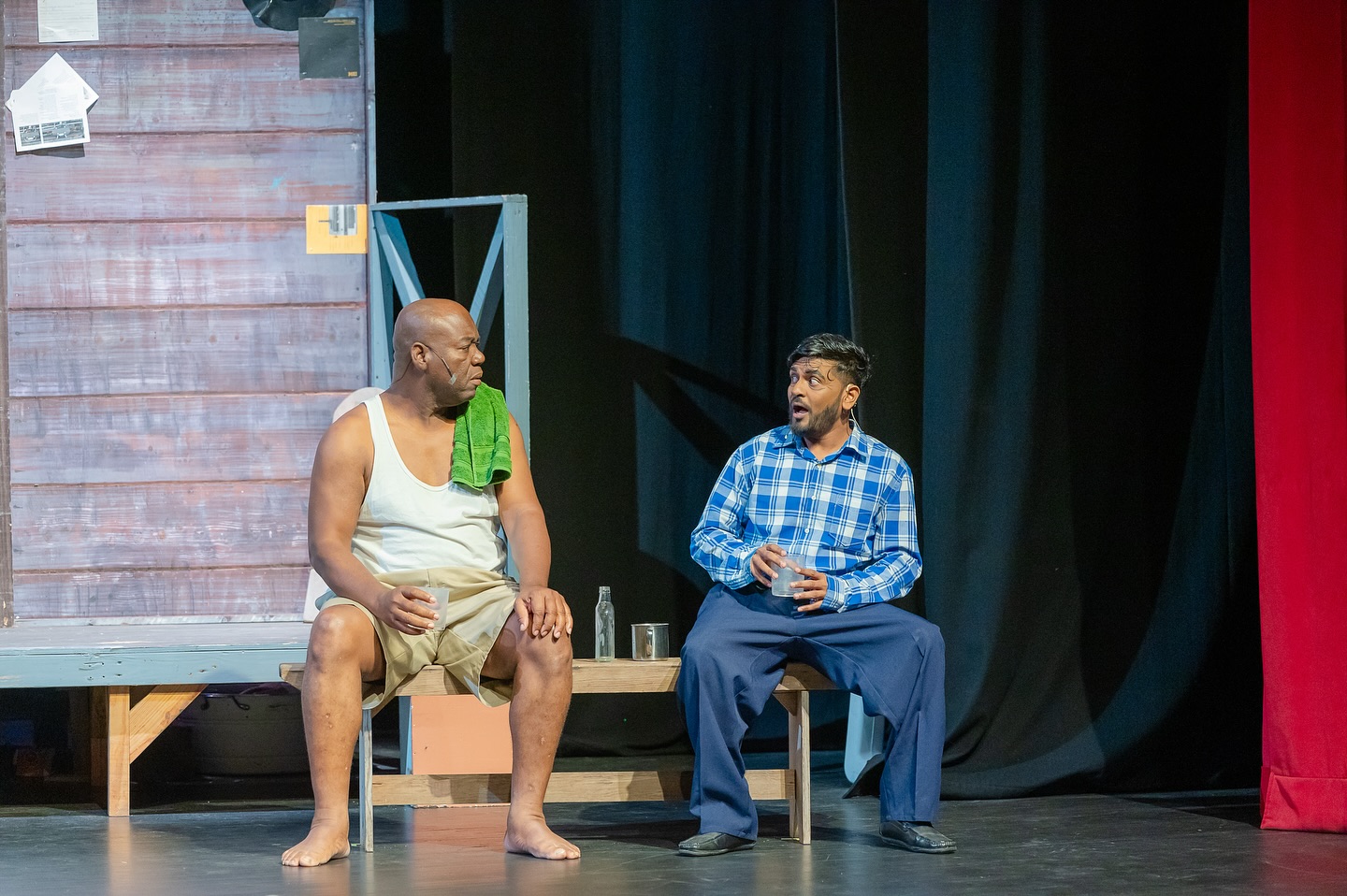
Veteran actor Kurtis Gross delivered a compelling performance as Fenton, a character that provided the crucial socio-political framing for the play. Representing the voice of mainstream Afro-Trinidadian society, Fenton’s views mirrored the attitudes of a nation grappling with cultural ownership. For him, calypso was “we” music, the heartbeat of Trinidad’s identity, while the rise of chutney music felt like an intrusion into a space traditionally reserved for Afro-Caribbean expression. His perspective reflected the unspoken cultural hierarchy that for decades positioned Indo-Trinidadian artforms as peripheral to the national narrative. Counterbalancing him was his wife Mavis, played by the brilliant Denise Dickson-Cunningham. Her character’s progressive views challenged Fenton’s rigid outlook. Mavis welcomed the rise of chutney music, urging her husband to recognise that any artform within this nation’s borders, shaped by its people’s lived experiences, inherently belongs to the national identity. Their dynamic exchanges brought to life the very tensions the play sought to confront, offering a nuanced, human portrayal of how cultural legitimacy is negotiated in everyday spaces, not just on stages.
Providing balance to the production’s weightier themes were the rum shop regulars Choonilal (Narad Mahabir), Noor (Devon Singh), Moonia (Bashiruddin Hosien), and Ramdeo (Chandrabhan Ramnarace) who delivered much of “Sundar’s” exceptional comic relief. Their banter and typical bar conversations captured the social climate of the period with a sense of natural ease and everyday familiarity. While the thick, stereotypical Indo-Trinidadian village intonation occasionally created moments of enunciation difficulty, the quartet remained a crowd favourite. Mahabir’s impeccable comedic timing was especially noteworthy, standing out as one of the production’s high points. Yet beyond the laughter, these characters offered valuable insight into village life and, by extension, the Indo-Trinidadian community’s reverence for Popo.
Central to any musical’s success is the thoughtful treatment of its music, and Musical Director Joseph “Joey” Rivers did not disappoint. He elevated the already impressive talent within this production, as music was not merely an embellishment but as an essential narrative device. As a millennial Indo-Trinidadian, Sundar Popo’s music formed the backdrop of much of my childhood – a familiar soundtrack that, over time, faded into the margins of my cultural memory. Yet, in this staging I found myself deeply moved by the careful and intentional treatment of the musical numbers. Iconic songs like “You Falling From A Plane” and “A Mother’s Love”, rooted in Popo’s real life experiences, unfolded with pore raising poignancy, and elicited a nostalgic, emotional response that was impossible to resist. In doing so, Iere Theatre Productions not only reinforced the enduring significance of chutney music but, in many ways, revived its spirit for a new generation of audiences as a vital expression of Indo-Trinidadian cultural legitimacy.
The second half of “Sundar”, however, felt noticeably disjointed from the carefully woven storytelling of the first. The intermission ended with a lively wedding scene, as a tassa ensemble and full procession emerged from the audience, breaking the fourth wall and inviting patrons onto the stage to join the festivities. While this interactive moment successfully re-immersed the audience, what followed disrupted the established world-building. Performances by Rikki Jai (Kendall Jaggernauth), Black Stalin (Kurt Alleyne), Brother Marvin (Omare Asson), and Drupatee Ramgoonai (as herself) highlighted Popo’s undeniable influence on the music industry through key songs of the era. Yet, unlike the first half where music was seamlessly integrated as dialogue and plot device, these performances leaned heavily on spectacle. Though enjoyable, they felt disconnected from the narrative arc and interrupted the production’s pacing and emotional momentum.


Shining a literal and symbolic light on the production’s talent was Lighting Engineer Rondelle Alleyne. The play opened with striking silhouettes of East Indian dancers and Sundar Popo projected behind glowing lightboxes, accompanied by live renditions of his iconic songs and the resonant sounds of dholaks and dhantals.This striking image captured both reverence and critique, symbolising the talent and cultural potential trapped within the boxes society built around it. Alleyne’s lighting design reached its most affecting moment in the production’s closing scene. Popo’s death was marked not by spectacle, but by a single empty rum glass, placed centre stage on a stool beneath a solitary, somber spotlight. It was a stark, poetic symbol of both the vice that undid him and the deeper generational reliance on alcohol as a coping mechanism within Indo-Trinidadian communities.

Iere Theatre Productions’ “Sundar: The Story Behind The Music” is a production that demands to be told and retold for generations to come. It masterfully intertwines the personal and professional life of Sundar Popo within the era’s socio-political climate, revealing how the rise of chutney music was far more than artistic innovation but an act of cultural defiance, resilience, and survival in a nation wrestling with race, class, and identity politics. The production’s careful attention to historical context, bold visual symbolism, and emotionally grounded performances made for a theatrical experience both poignant and necessary. “Sundar” is more than a biography, it’s a reclamation of space, sound, and story.

Note: Reviews are editorially independent and reflect the informed perspective of the assigned writer. Submissions may be edited for clarity, coherence, and publication standards without altering the reviewer’s original viewpoint.
ABOUT THE AUTHOR

Hey there! I’m a cultural worker and creative strategist, blending storytelling, the performing arts, and digital magic to celebrate Caribbean identity. Whether I’m behind the scenes or in front of the screen, I’m all about keeping our stories bold, rooted, and real.
With a BA in Literature and Linguistics, I am the Public Relations Officer of The National Drama Association of Trinidad and Tobago, Editor-In-Chief of On Cue magazine, and a Casting Executive and Content Writer at the Trinidad and Tobago Performing Arts Network.
 The Trinidad and Tobago Performing Arts Network