Rhea-Simone Auguste — better known by her stage name Simmy De Trini — is not just a comedian. She’s a storyteller, a truth-teller, a disruptor. Beginning her career as a journalist before stepping behind a mic in 2017, she transformed adversity into authenticity and laughter.
Her comedy reflects lived experience: balancing single motherhood, media careers, and the challenges of invisibility. Through intimate tours, public commentary, and performances across Trinidad and Tobago, she uses humor to place undercurrents—power, gender, identity—into the spotlight.
This month, we put our #SpotlightOn Simmy De Trini — to trace her evolution, share her voice, and celebrate how she turns bold truth into shared laughter.
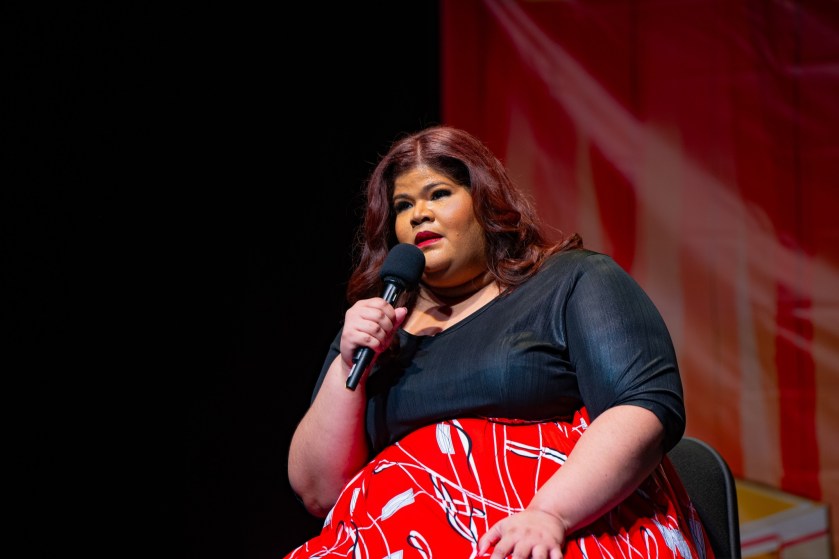
1. When did “Simmy” shift from just a nickname to a whole mission?
“Simmy” was never a nickname I grew up with or anything. It was a name I chose which came with a mission from day one. It’s actually a play on the words “See Me” as I created this split personality as a coping mechanism during one of the most trying times in my life where I felt like I had become invisible in a sense.
I was emotionally, physically and financially drained doing the most for everyone around me, but nothing for myself. So I decided to go to an open mic and test some thoughts I wrote down as comedy bits, and perform as an outlet to process that feeling. In that first moment and in many instances since – comedy saved my life. I stopped feeling like I was drowning and invisible and felt….heard and seen. Not as a dutiful daughter to a dying parent. Not as an overworked single mother with two busy boys. Not as a burnt out employee trying to hold on to a job that was going nowhere. I was finally being seen as a human being and that impacted my self-esteem and self worth.
2. Do you remember the first joke that truly sounded like you—not borrowed, not “safe,” but your real voice?
I’ve always approached comedy as more of a storyteller with the jokes built into the stories. And the stories I tell aren’t borrowed or safe – they come from a life well-lived and full of absurdity and silly moments. I can’t say there is any joke per se that answers your question, but there is one story I share[d] and the first time I did, it was a beautiful Ah ha moment for me, and a relatable moment for a lot of women, as I chronicled how I found out I was being cheated on in a relationship and walking through my then partner’s suspicious behaviour. That moment connected the dots – women loved it, men groaned but they laughed too, and I was being honest and authentic to how I felt, and the way I reacted.
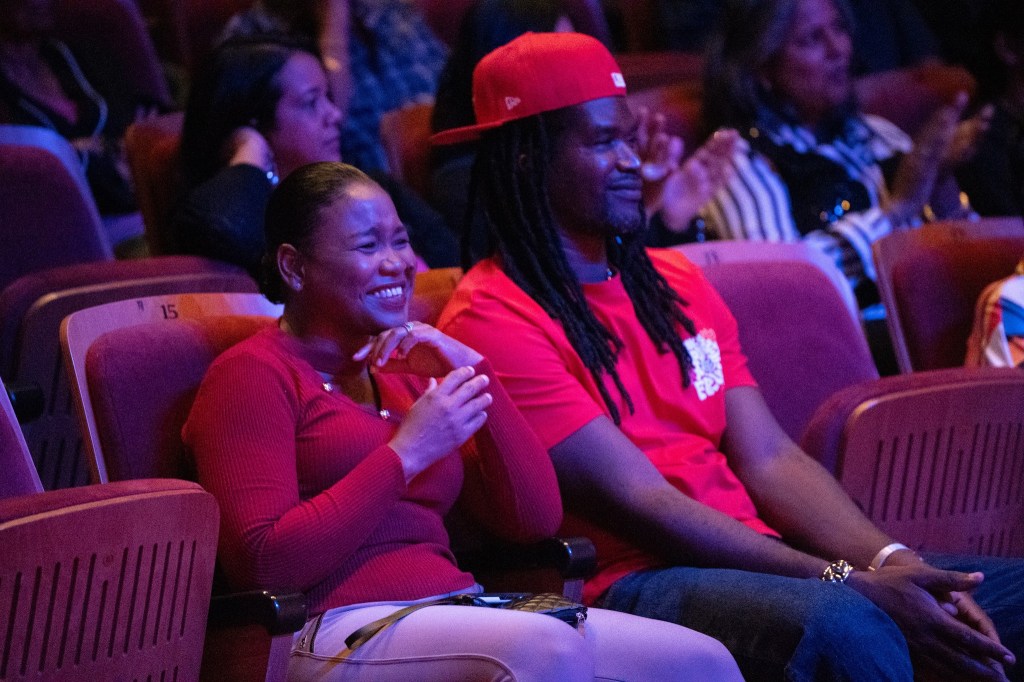
3. You’ve held your own alongside some of T&T’s comedy heavyweights, while building your own lane. What values keep you grounded when the industry gets noisy?
Just as you put it. Focusing on staying in my own lane. Any time I stop to look at other people’s lanes and what they are doing or how much further ahead they are, it lands on comparisons and that is a thief of joy.
I have a lot of love and respect for all the other comedians. Thing is – humor is subjective. And different comedians appeal to different demographics and markets.
I try not to pay too much attention to who is doing what and when and where and stick to my own timelines. And I let my vibe attract my tribe so those who are drawn to my style and my energy are the ones I do shows for. I work to make my village laugh.
4. You juggle comedian, host, creator, entrepreneur. How do you decide what gets your energy this month—and what waits for later?
This is a tough question. I am still not yet a millionaire 🙃 and very much a single mom so my children get my energy first and I work around their schedules. And business is business, if I am booked for gigs. I have a duty to show up for those. If I am hired for things, I have a responsibility to ensure I meet my deadlines. So in deciding what gets my energy now and what I do later – it comes down to what is needed to meet my financial goals and provide for my family. I have a tight calendar and some shows and events are on that calendar a year in advance or more.
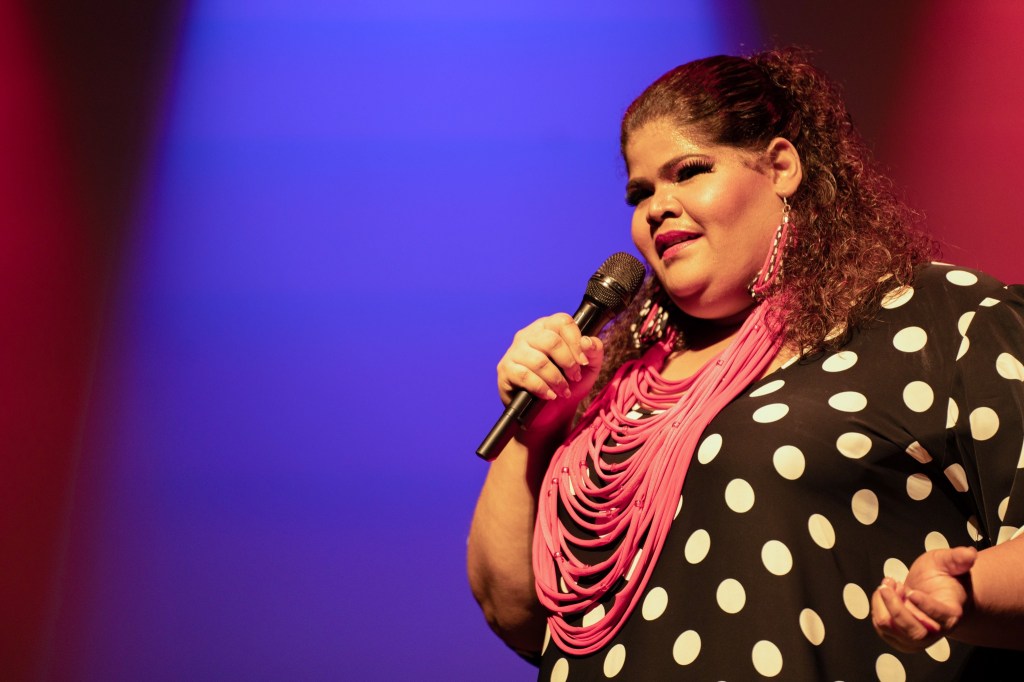
5. On stage, what’s one stereotype about “women in comedy” you’re rewriting every time you grab the mic?
That women aren’t funny. This comes from the idea that comedy = male bravado, and women are just there to laugh at men’s jokes. It still lingers in some audiences and there are some gatekeepers professionally as a result.
We are funny but we are also policed harder for our material and how we look and if our jokes are too vulgar. I used to be stressed out about my material and walking on eggshells because I didn’t want to lose out on possible money from sponsors or companies hiring for MC jobs. But it was stifling the comedy and censoring me as a person with real life experiences. So now I allow myself the freedom to tell my jokes and my stories the way I want to, and it’s made me stronger comedically and arguably funnier over time.
6. Why a Backyard Comedy Tour? What made you step away from big houses to smaller, close-up spaces? And how does that shift your timing, material, and care for the audience?
It was strategic. I needed more filmed clips and content for social media. I’m not a skits-and-sketches person like Jr. Lee, Certified Sampson, or Ro’dey. My strength is live performance.
The big shows are expensive to produce, so the tour allowed and allows me to work smaller crowds, deliver more intimate material, and capture it on film. The more clips I share online, the higher my chances of being noticed regionally and internationally.
I don’t want to be known for skits. I want to be booked and working as a performing comic and The Backyard Tour is my way of letting people see more of me so that when I do the bigger shows, they’d be excited to come.
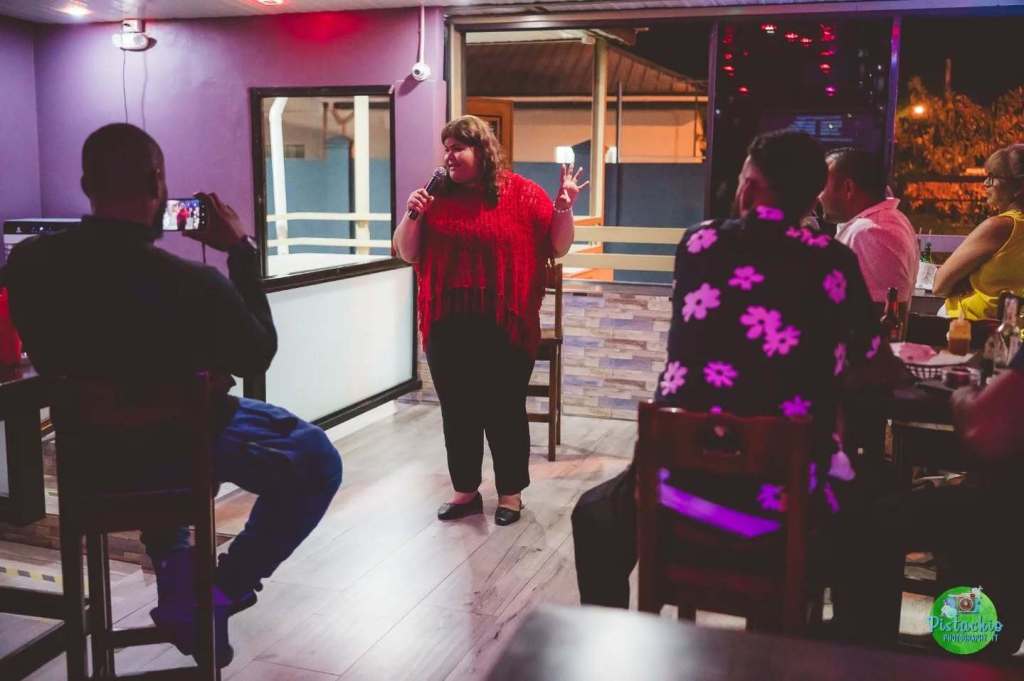
7. Your promise was “Come for the comedy… stay for the lime.” What did that lime look like on your ideal night?
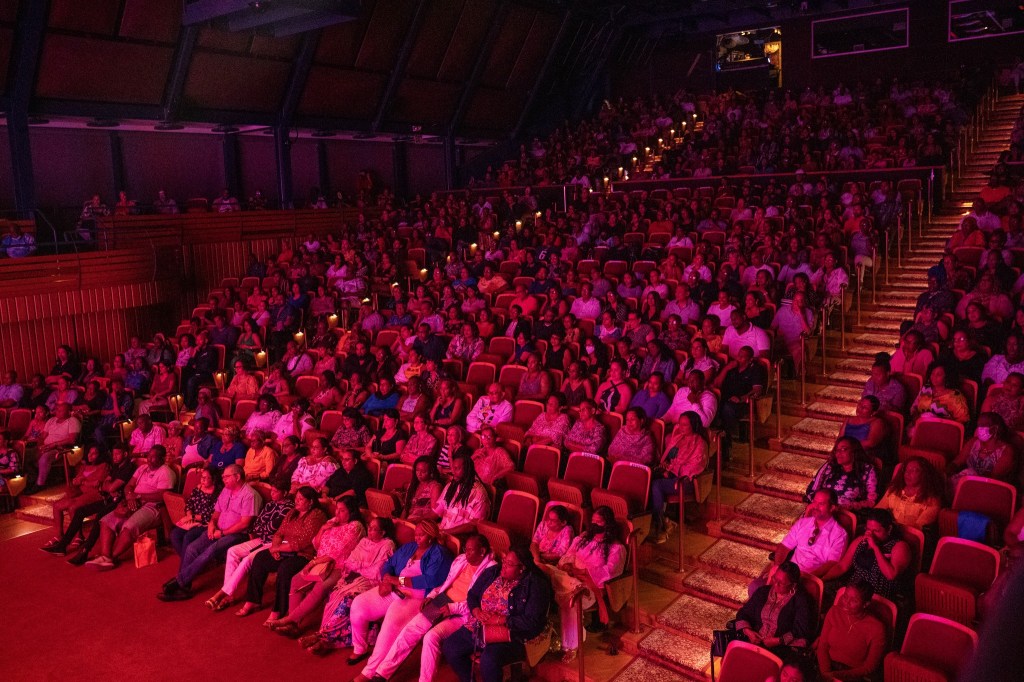
Those shows felt different from NAPA or SAPA. In restaurants, the vibe was relaxed. After performing, I stuck around. I had a drink, sat at tables with patrons, and talked. It felt less like “celebrity and audience” and more like friends liming together. That closeness made the shows special.
8. Walk us through your pre-show ritual when the “stage” is a patio, a café, or a backyard instead of a proscenium.
So…. Over the last few months, my pre-show ritual has found me in guest houses the night before shows. Nothing fancy. Just somewhere super clean and super quiet – away from my home and my boys and the noise. I actually need complete silence to “hear” my ideas and prune my jokes. Sometimes I stand in front of a mirror and look at myself while delivering a story to see if I can add a body language element that would add humor to it. I always have a nice salad with some healthy protein. lots of water and a good night’s sleep to round it out.
Show days are usually hectic with hair and makeup and wardrobe and on the road so I have come to treasure my night before ritual to ensure I have that last bit of quiet and self-care.
9. Intimate rooms come with their own etiquette. What’s your safety or “house rules” brief—phones, heckling, boundaries—so it stays fun and respectful?
You know…. I never really have to do a brief of any kind. My crowd is more mature and they are paying their money so they typically know not to have phones ringing out and hecklers have only happened at free shows in public spaces. Nobody is paying good money to come out and be removed by security for disrupting other people’s experience. At least, not in my shows.
10. You’ve played formal stages like Queen’s Hall with full specials. What lessons from those big rooms are you now bringing into the backyard setting?
Whether it’s an intimate venue or a major stage, I’m intentional about choosing spaces with the right vibe and energy to elevate the performance. let’s be clear: starting on time is non-negotiable. Just because a ticket is at a lower price point doesn’t mean the quality drops. My performance is never “an anyhow kinda thing.” This is a business its real work, It’s my craft, and I treat it with the respect it deserves. I’m beyond grateful that people are enjoying the tour—it means everything. And I’m hopeful that this run builds momentum so the next one is even easier to roll out. I believe when you do it right, they come back.
11. You’ve been clear about being self-employed and self-funded. What’s one business practice that helps keep your art sustainable?
Customer feedback matters. After every show. I talk to patrons to hear what they liked or didn’t like about venues and other performers and my performance. I am fussy about how patrons are treated so I talk to Restaurant managers and let them know customer service is part of the patrons experience and while I cannot control elements like food and beverage, I can opt not to return to a venue if patrons have a bad experience.
Even in the bigger venues. I brief everyone from my ticket manager at the door to ushers — their attitude towards patrons reflects on me and the experience I sold them on. Happy patrons are repeat patrons, and repeat patrons bring friends and help [to market] shows by word of mouth, which makes advertising less of a hard sell. Sometimes now I can drop a show with one week notice and people show up and they know it’s at a certain level.

12. You’ve spoken openly about personal boundaries and community support. How do you manage the many asks that come your way, while still staying generous?
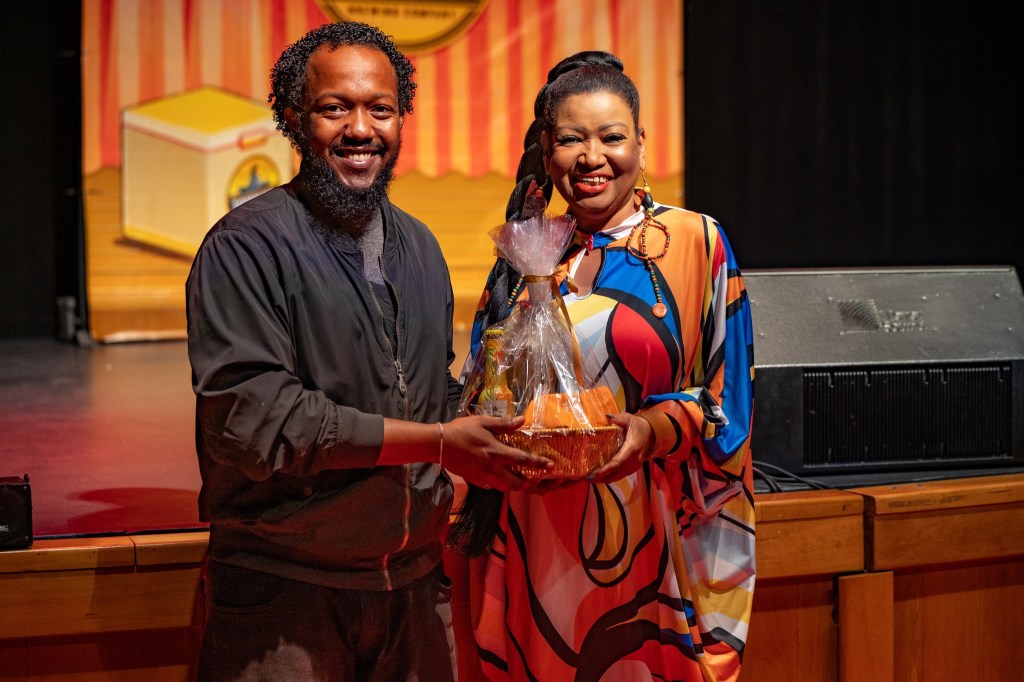
I can only do so much. I am fortunate in that people now reach out to me to donate grocery gift cards or vouchers for places like Pennywise and practical items to help moms in need of assistance. If I have to give, I give. If I don’t, I let people know and try to direct them to NGOs or Members of Parliament (MPs) who may have more access to resources than I do. And to be clear – sometimes, what is gifted is people giving to me for my use, but how much Pennywise gift cards would me and my boys really use? And ah mean – I know is teenage boys I have but what are we going to do with food excess from hampers gifted to me after shows?
After my last show at SAPA, I had 13 gift boxes with snacks for my sons from patrons who wanted to give me birthday presents and we appreciate it. I just don’t like hoarding or stockpiling like I am preparing for hurricane season right through. So once I have extra to give, whether that is food or funds, it doesn’t strain me to be a gracious giver. And I’ve found the more I give – without wanting or needing or expecting anything in return – more just comes my way. So it’s just second nature to me, and I noticed it’s something my sons have picked up as well. Kinda proud of that actually and I love knowing they are growing up as young men seeing the hardships single moms are facing for basics like food and shelter.
13. On your platforms, comedy often meets advocacy—sharing resources, raising issues. How do you decide when to step in as a citizen, and when to keep it strictly entertainment?
I have passion points and triggers that will likely get a step-in response coming out of my own lived experiences. As a DV survivor, as a neurodivergent woman who is Autistic with ADHD, as a single mother with two sons with one also having ADHD, as someone who has experienced abject poverty and had to fight my way out of it, battling inefficient systems that were designed for vulnerable women and single mothers in particular to fail….
I use my voice where I feel it is needed. But I also compartmentalize it in that… some things don’t work for comedy. Domestic violence for example can be triggering. If someone comes out for a night to laugh and be light and release their heavy vibes, they deserve to have that escape through comedy. Time and place.
14. If a 16-year-old girl from Arima, Chaguanas, or Point Fortin wants to try stand-up this year, what’s the mini toolkit you’d hand her?
Sixteen?! I would encourage her to get into theatre first. Aunty Penelope Spencer has her school for acting classes. There are critical stage skills that will give her the tools needed to have a strong foundation. Building confidence on stage took me some time and I studied Theatre Arts at the tertiary level and did the Mentorship with the Masters programme with Raymond Choo Kong.
Beyond that – write down your jokes and stories. It is easy to forget them so recording the ideas is also important. Most comedians have notebooks and jokebooks and collections of bits of paper with things scribbled on them.

