Some comedies arrive with one mission: to make an audience laugh. Others carry the heavier task of interrogating why we laugh, who pays for that laughter, and what exactly is being exposed when humour peels back the skin of shame, desire, self-doubt and longing.
From my experience at Queen’s Hall on Saturday 7th March, CPR Productions’ 2 Fat Fellas does both.
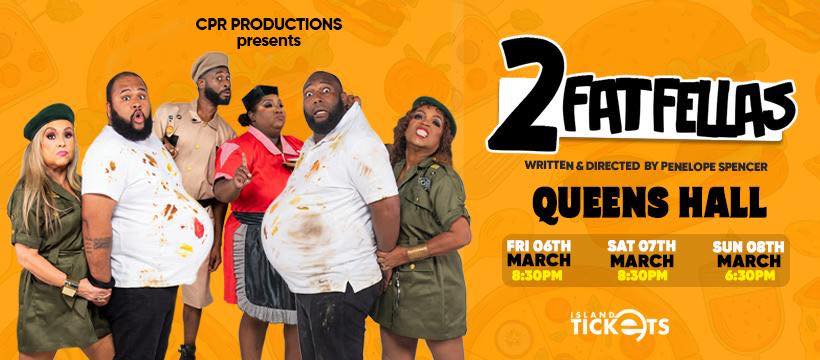
Written and directed by Spencer, this production is layered, playful, riotously funny and undeniably Trinbagonian. But beneath the easy laughter and the boldness of its punchlines is a tender and quietly confronting work that is interested in the emotional architecture of being overweight in public, of being bullied in plain sight, of performing confidence while privately battling self-worth, self-sabotage, and the exhausting prison of public opinion.
The story follows best friends Marcus (Zachary Sosa) and Carl (Kevon Brooks), men navigating weight loss, romance, the memories of humiliation, and the deep-rooted scars that come from often being made into a joke before being given the chance to show up as fully human. Around them orbit Gloria (Rachel Bascombe), Carl’s estranged partner; Maddison, Marcus’ long-held crush, and the airy Daisy (both played by Cecilia Salazar); Joyce, the gym’s sharp-tongued cleaning lady and Carl’s lingering tormentor, and JJ, her son, a gym instructor whose questionable technique and easy physical confidence become comic fuel and an emotional trigger in Carl’s journey (both played by Rodell Cumberbatch aka Ro’dey). The quietly disruptive Chad (Marcus Nesha); the unforgettable Margie (Penelope Spencer); and a supporting cast who function as comic devices, emotional triggers and social mirrors.
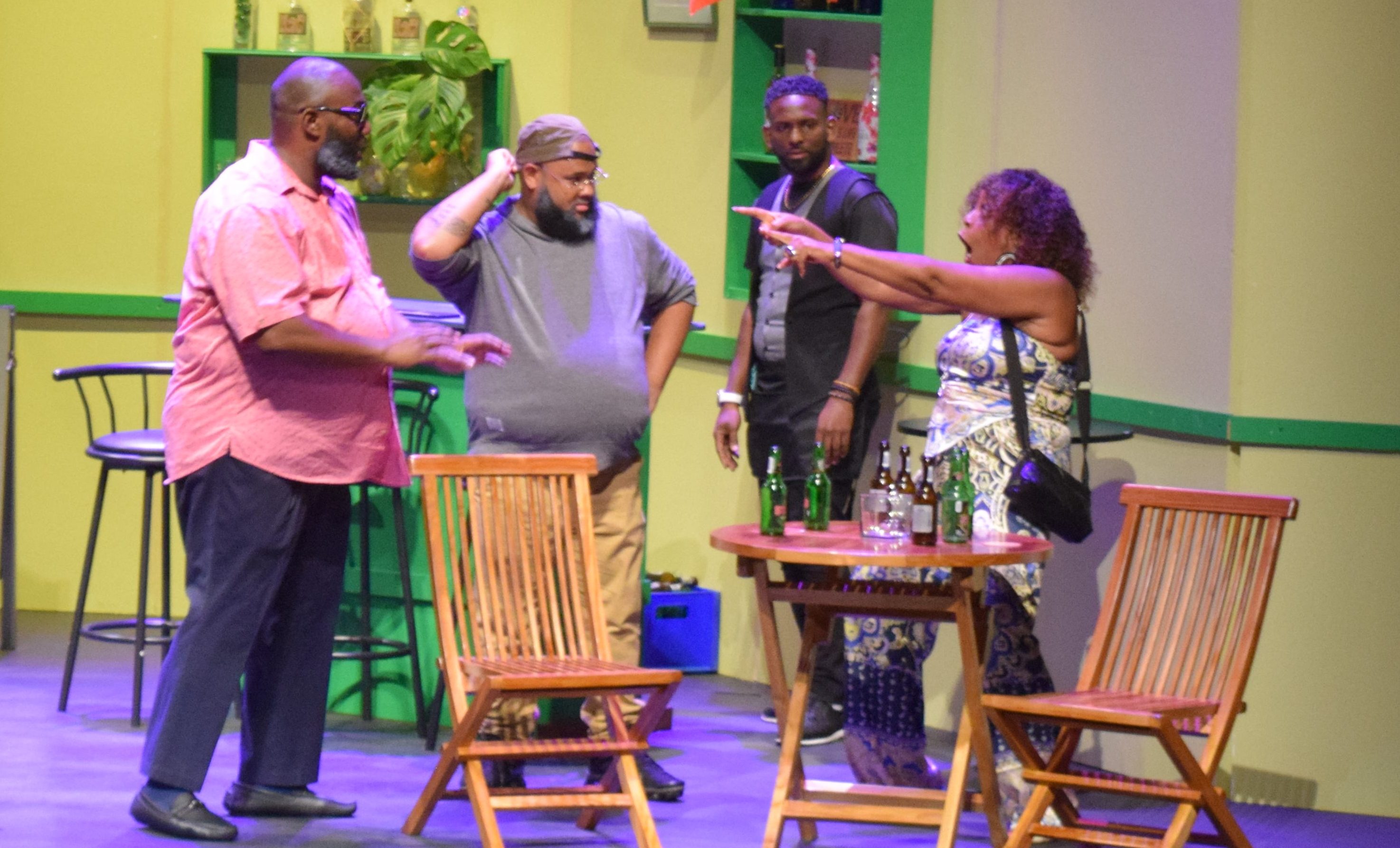
What distinguishes 2 Fat Fellas from being merely another local comedy is its staging. Spencer’s direction makes intelligent use of asides, tableaus, interwoven monologues and parallel scene construction—not simply to move the plot along, but to give the audience insight into the psyche of the characters. The players move between speaking to each other, speaking around each other, and addressing the audience directly. It is the use of these theatrical conventions that gives the production an intimacy that feels playful and unique, adding rhythm and dimension to what could otherwise have been a far more conventional comedy.
The script itself is layered. At times the text gleefully pushes the envelope toward the crass and the cringe, yet still offers a comedic menu diverse enough to satisfy audiences with more conservative palates. It understands that a joke can do more than provoke laughter. It can expose social hierarchy. It can unveil character. It can reveal who is privileged enough to laugh at that joke, and who has long been forced to survive as the butt of it.
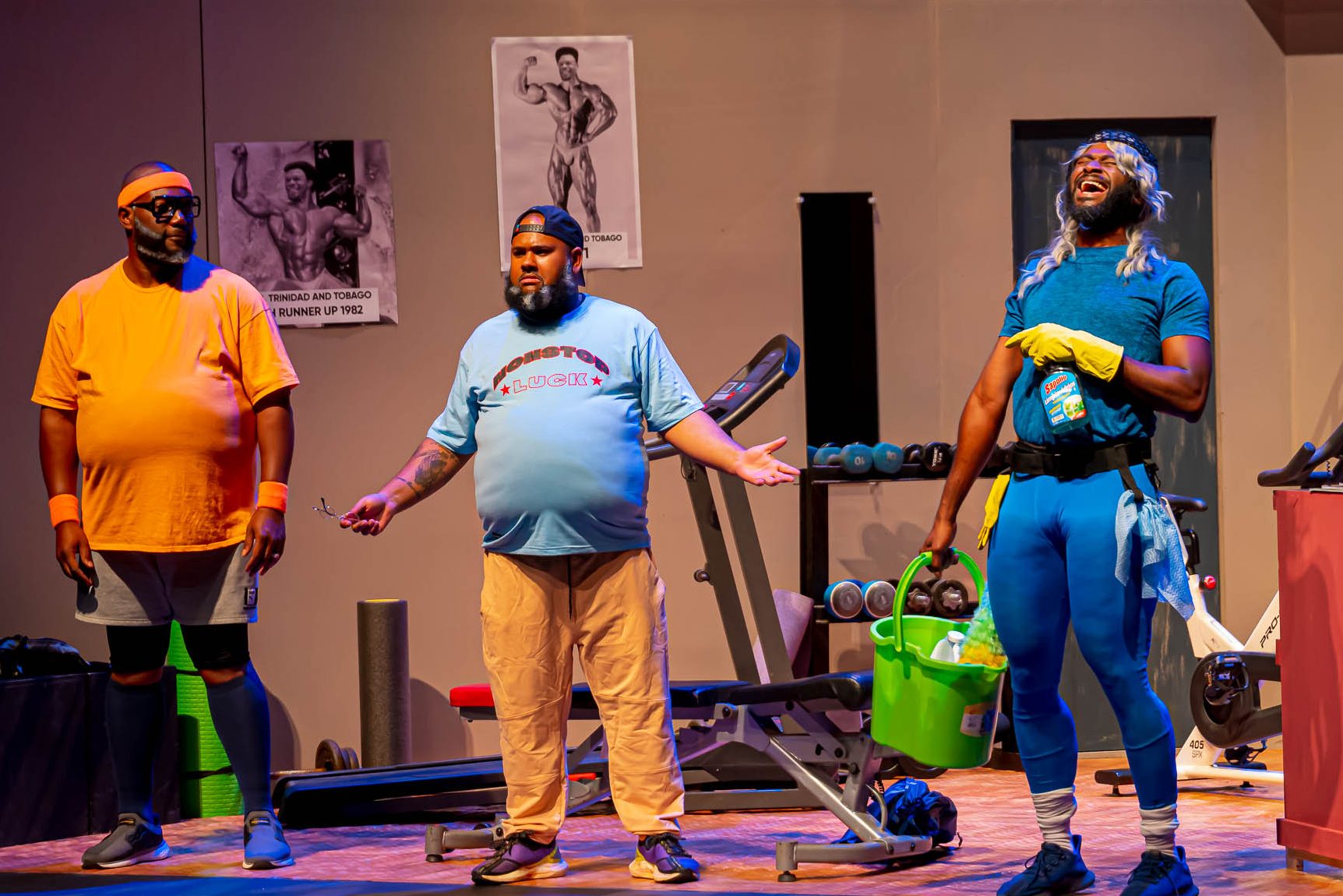
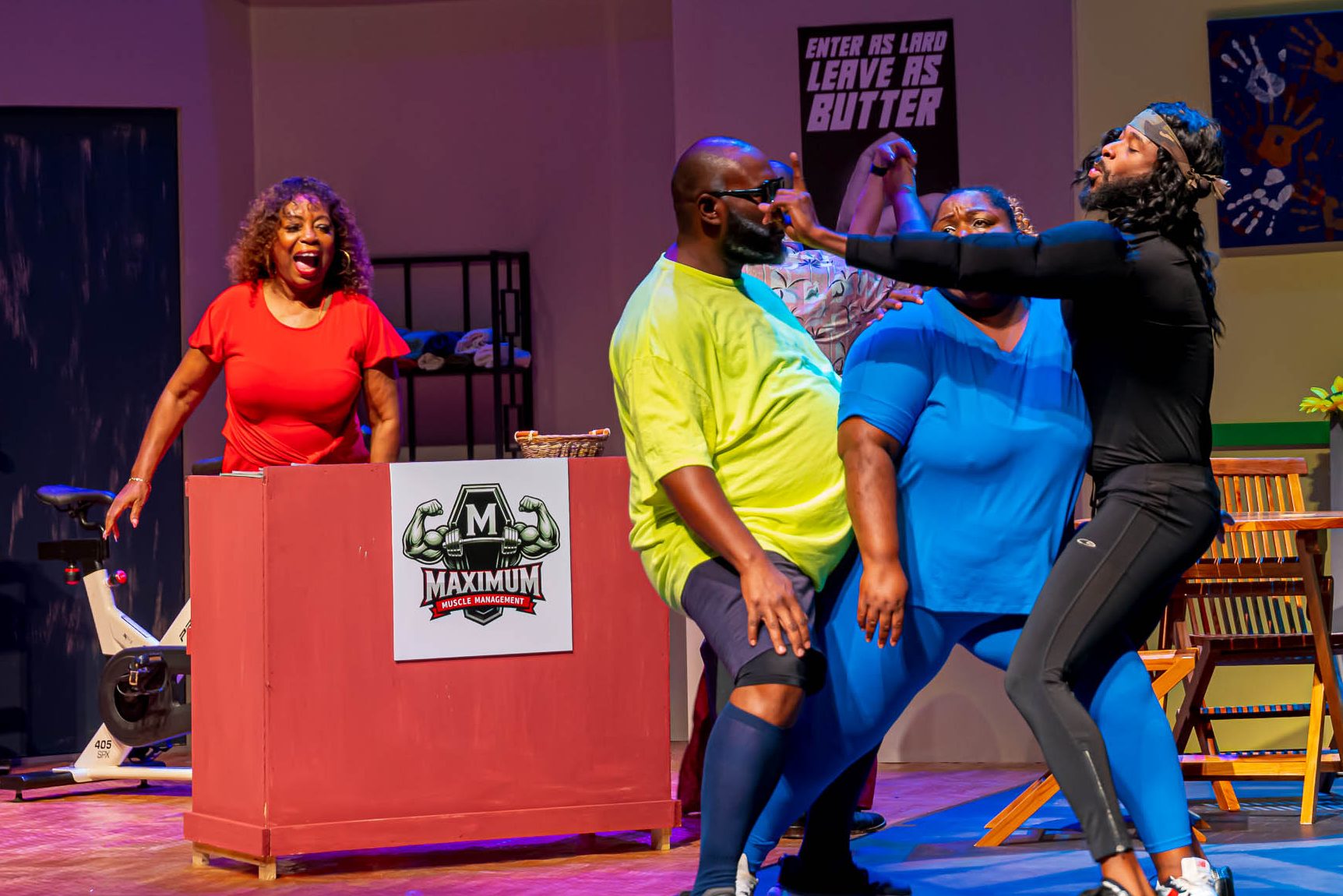
The writing is complemented by the performers’ use of physical comedy, which becomes one of the production’s most effective devices. Across the board, the actors demonstrate an understanding that in a play of this nature the humour does not exist in dialogue alone; it is further realised in gesture, timing, hesitation, reaction, posture, proximity and the willingness to look ridiculous without sacrificing emotional depth. That commitment is vital to the play’s entertainment value. It keeps the production buoyant, sharpens the pacing of exchanges, and allows the comedy to land with a kind of playful self-abandon that never feels careless.
At the same time, much of the play’s success rests on the chemistry between Zachary Sosa and Kevon Brooks.
Sosa gives Marcus a rough-edged comic presence, leaning fully into the character’s obscenity-laced bravado without losing the hurt beneath it. He understands that Marcus uses vulgarity, wit and clowning not simply for laughs, but as armour. Sosa’s delivery holds that rhythm well. He is exaggerated when necessary, but never so obzokey that the performance feels shallow. Beneath the crude jokes and class-clown energy, he lets us glimpse a man laboured by insecurity, uncomfortable in his own body, and quietly yearning for a serious kind of love he is not yet convinced he deserves. That juxtaposition between crassness and longing gives Marcus far more emotional weight than his buffoonery alone might suggest.
Brooks, as Carl, offers a more modulated performance. He begins with a slightly anxious cadence in the opening scene—one that at moments rushes clarity—but as the play finds its flow, so does he. What follows is a beautifully measured emotional build. Brooks uses softness intelligently. His Carl is coy, trusting and at times almost boyishly open, but he gradually layers in frustration, quiet humiliation and eventually a firmer emotional authority.
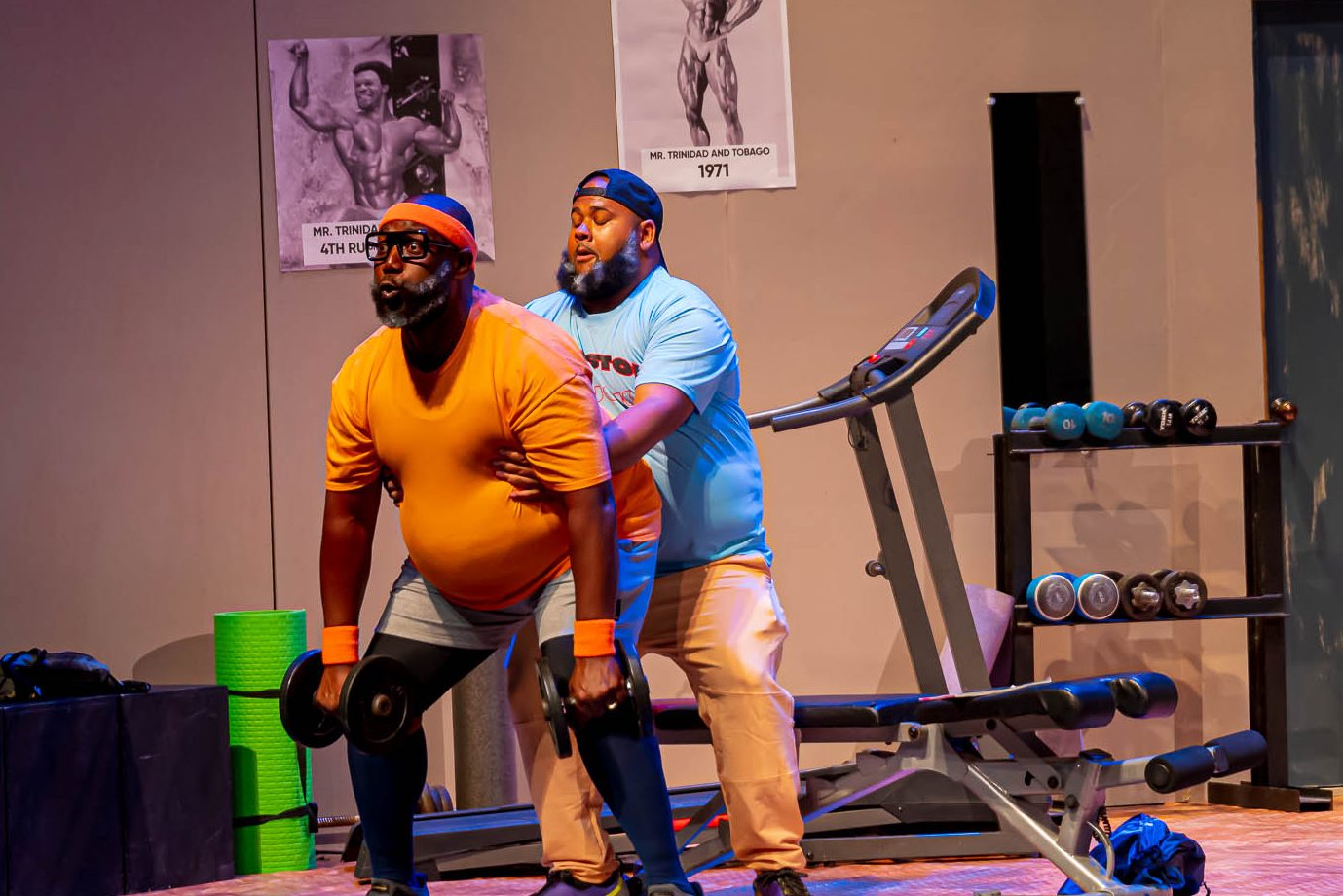
What makes the performance especially effective is that Brooks is unafraid of vulnerability in any register, emotional or physical. He commits just as fully to the play’s bodily humour, allowing awkwardness, discomfort and comic exposure to become part of Carl’s emotional language. That willingness to be humorous without vanity gives the character tremendous humanity. By the time Carl begins asserting himself more forcefully—borrowing some of Marcus’ profanity-laced vocabulary—the shift feels believable because Brooks has prepared the audience for it through restraint, openness and subtle shifts in confidence.
Rachel Bascombe gives Gloria one of the evening’s most grounded portrayals. She intentionally avoids taking the easy route and playing the role for pity, and that restraint is precisely what makes her so effective. Bascombe allows Gloria to arrive with awareness, ownership and emotional intelligence. She does not beg for understanding. Apologetic though she may be, she is not apologetic in spirit. Instead, she holds her ground.
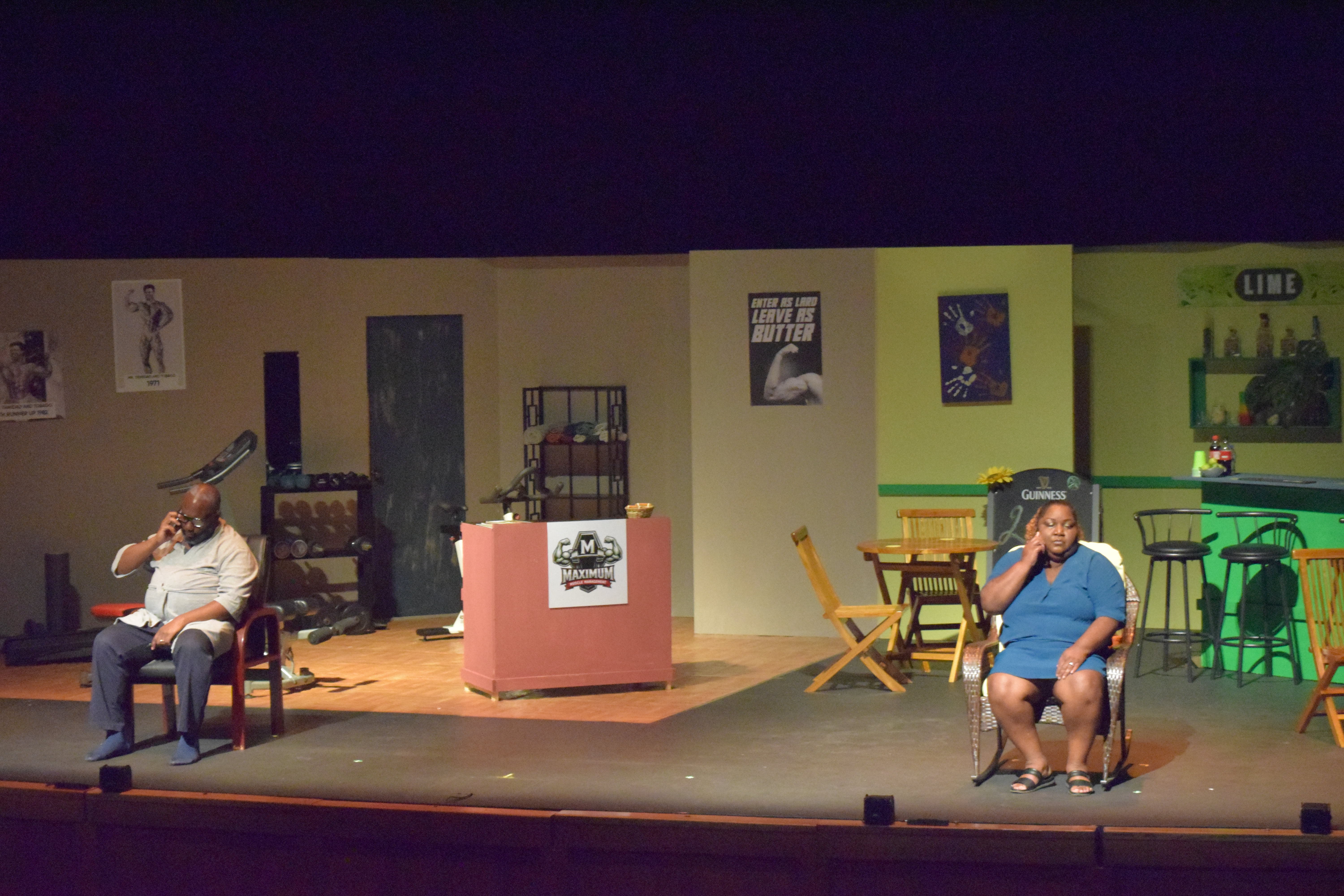
In her more reflective moments, Bascombe commands the room with composure, stillness and honesty. Just as importantly, she is fully game in the play’s physical comedy, giving herself over to those interactions with total self-abandon, especially in moments involving JJ (Ro’dey) where the comedy is heightened through flirtation, suggestive play and social awkwardness. That same willingness feeds her exchanges with Carl, allowing the humour in their dynamic to feel lived rather than staged. The result is a performance that is not only emotionally grounded but theatrically generous. Gloria emerges not as caricature or villain, but as a layered woman navigating the consequences of her choices while refusing to be reduced by them.
That same sense of complexity extends into Cecilia Salazar’s dual performance as Daisy and Maddison. As Daisy, Salazar brings buoyancy, lightness and a welcome comic air that helps release tension in the gym scenes. As Maddison, she shifts with notable control into something more polished, measured and socially composed. The distinction between the two lives not in costume alone but in voice, posture, cadence and presence.
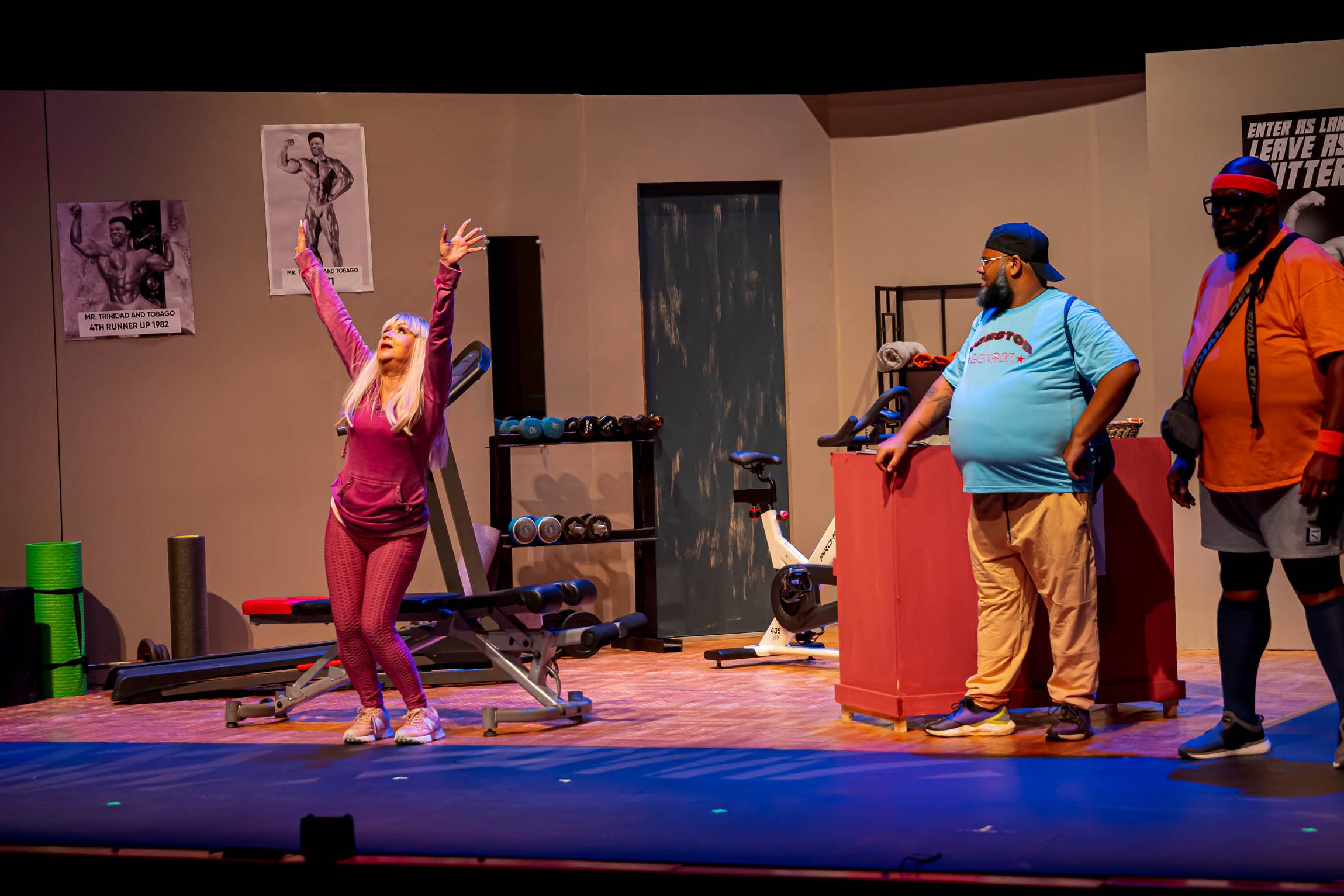
Her Maddison carries poise and standards, but also enough vulnerability to make the dynamic with Marcus feel more than decorative. Salazar makes both women distinct, and in doing so strengthens the production’s emotional and comic range.
The dynamic between Salazar’s Maddison and Sosa’s Marcus also allows the play to probe social expectations around image, beauty, age and class. Their interactions touch the old wound of being someone’s punching bag, someone’s joke, someone’s possibility only in private—never proudly in public. There is something quietly potent in the way the play allows Marcus to wonder whether he is truly being seen or merely re-entering a familiar role in somebody else’s story. Sosa and Salazar handle that tension with enough care that it lands as more than a simple crush subplot.
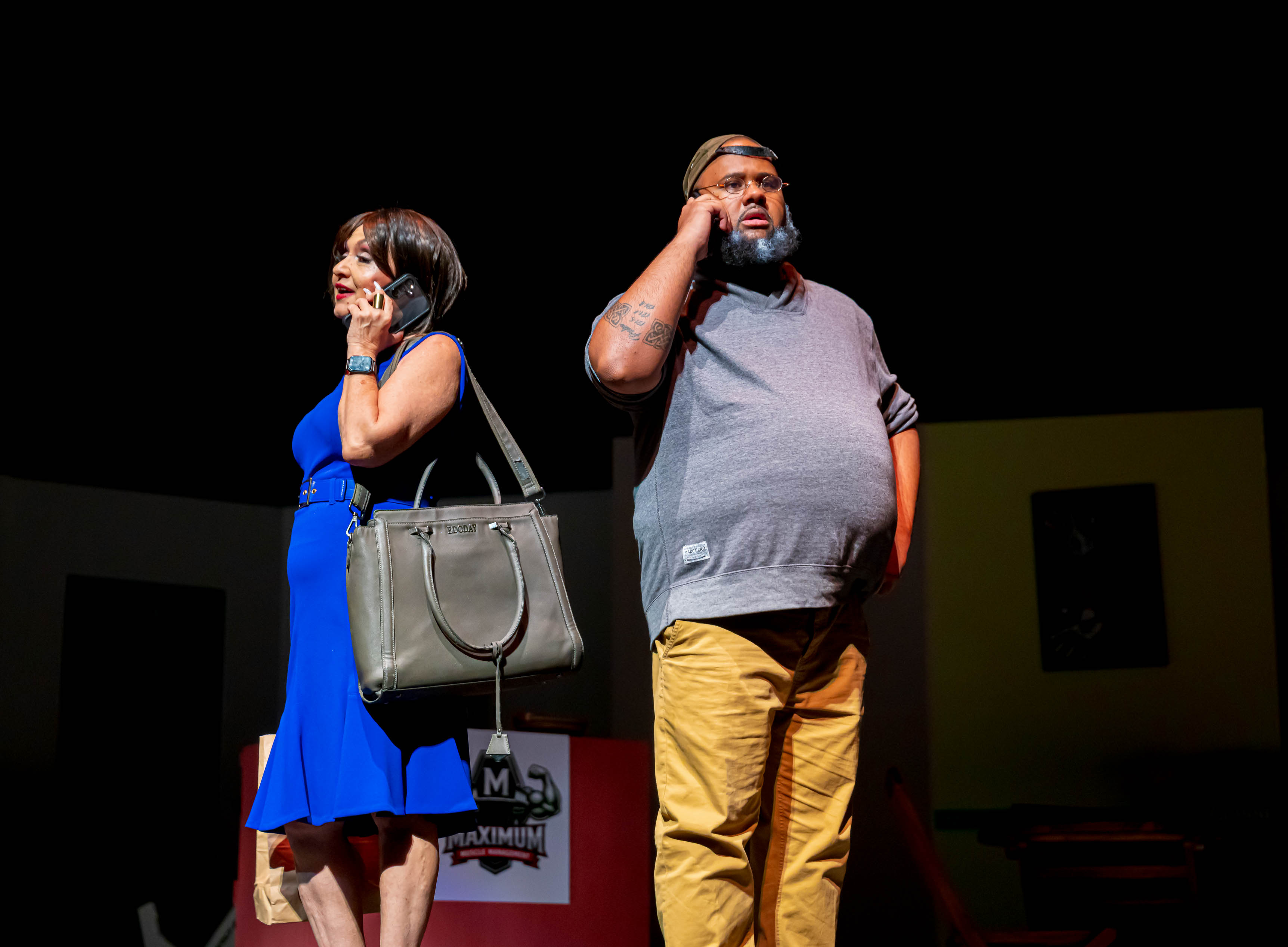
Penelope Spencer is sharply entertaining as Margie, entering the stage as a burst of comic disruption precisely when tension needs release. Her timing is strong, her exits memorable, and she plays the uncertainty of Margie’s drunkenness with wit rather than exaggeration while still keeping the audience alert to the loneliness and self-inflicted damage that can sit beneath spectacle.
Ro’dey, in the dual roles of Joyce and JJ, brings two distinctly different energies to the stage. As Joyce there is a needling, socially invasive quality to the performance that allows the humour to land with discomfort beneath it. That is important, because Joyce cannot simply be funny; she must also register as the embodiment of the public ridicule the play quietly critiques. Ro’dey makes that tension legible.
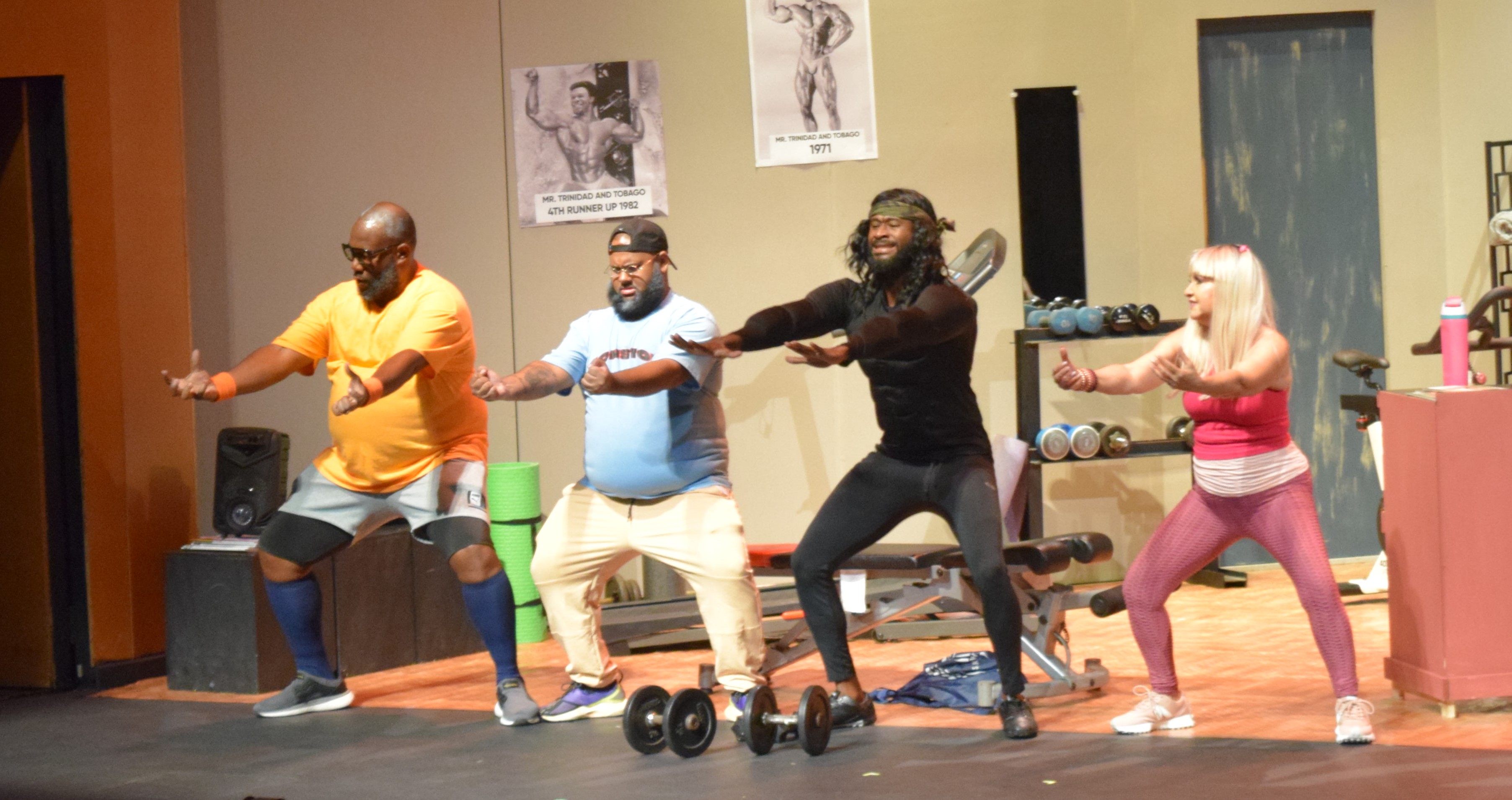
As JJ, the performance shifts into an entirely different register. Here Ro’dey embodies a kind of easy physical confidence and masculine polish that makes him an effective trigger for Carl’s insecurity. In JJ, the play stages a familiar anxiety: the fitter man, the smoother man, the man against whom someone else fears they are being measured.
Special mention must be made of Marcus Nesha, who makes Chad one of the evening’s stealth comic pleasures. His timing, use of beats and exploitation of silence allow Chad the character to generate laughter without it feeling forced.
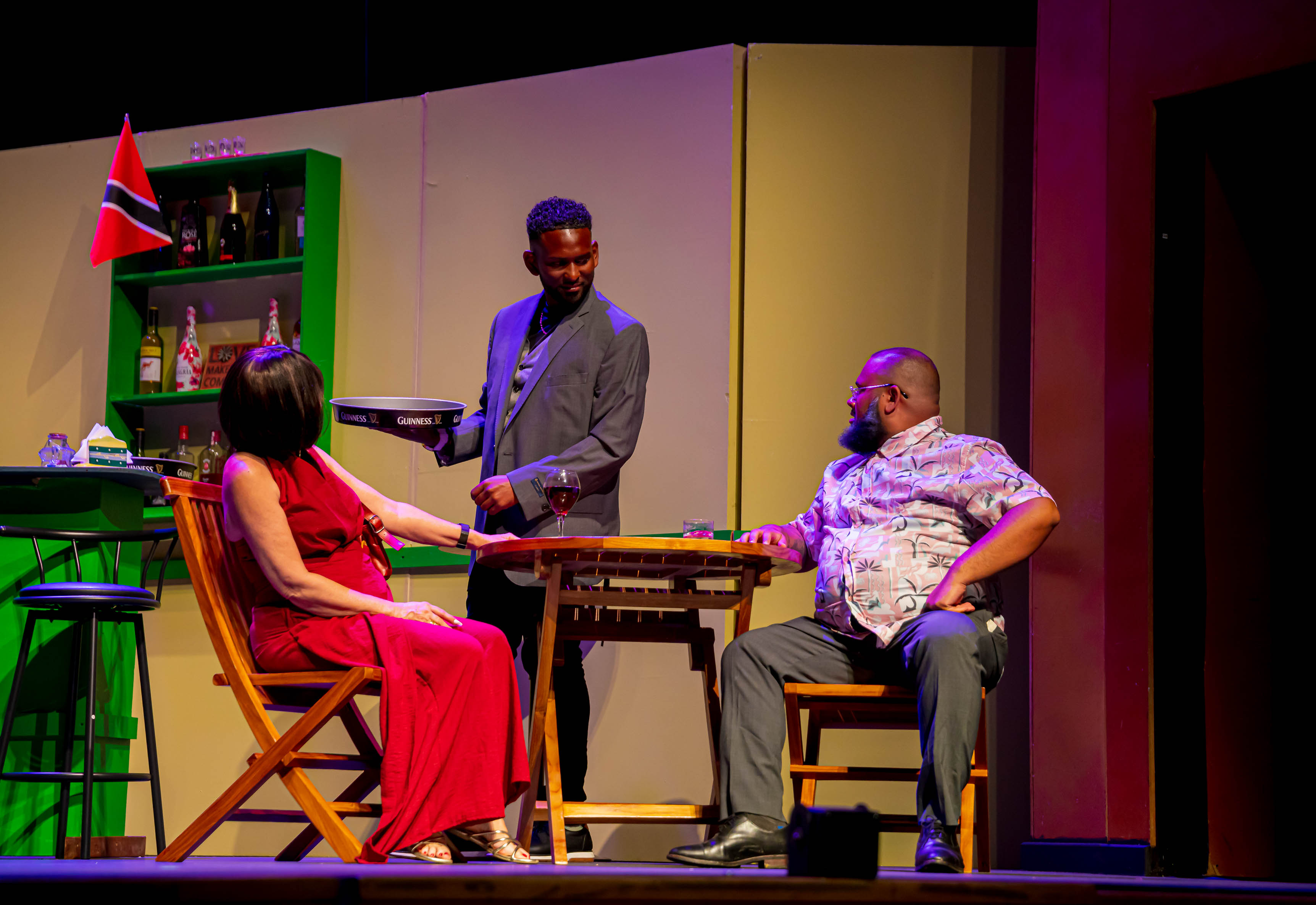
Technically, the production is sound. The set is clean, sensible and highly workable for scene changes. Lighting is particularly effective, especially in the more stylised isolated moments, and transitions are helped along by music that grounds the blackouts. There was one staging choice in particular involving the visual and emotional isolation of four key characters that felt so visually captivating I found myself wishing all four figures had remained onstage until the final monologue concluded, instead of exiting when they did. The moment was so potent that it left me wanting it extended.
If there is a critique to be made, it is mostly in those early pacing moments. The first scene carries a slight urgency that occasionally rushes clarity before the performances settle into their full rhythm. But this is short-lived, and once the production finds its breath, it holds it with assurance.
What 2 Fat Fellas does well is something many comedies fail to do: it earns its emotional weight. It does not simply ask us to laugh at big bodies, awkward dating, cheating, insecurity or social discomfort. It uses those things to probe the familiar and often unspoken wounds beneath them. It reflects Caribbean life with wit and sharpness, yes, but it also reflects the familiar culture of picong—how casually that culture can become vituperative—and the silent ways people build whole personalities around guarding against embarrassment. And it does all of this without becoming lecturous. It remains entertaining.
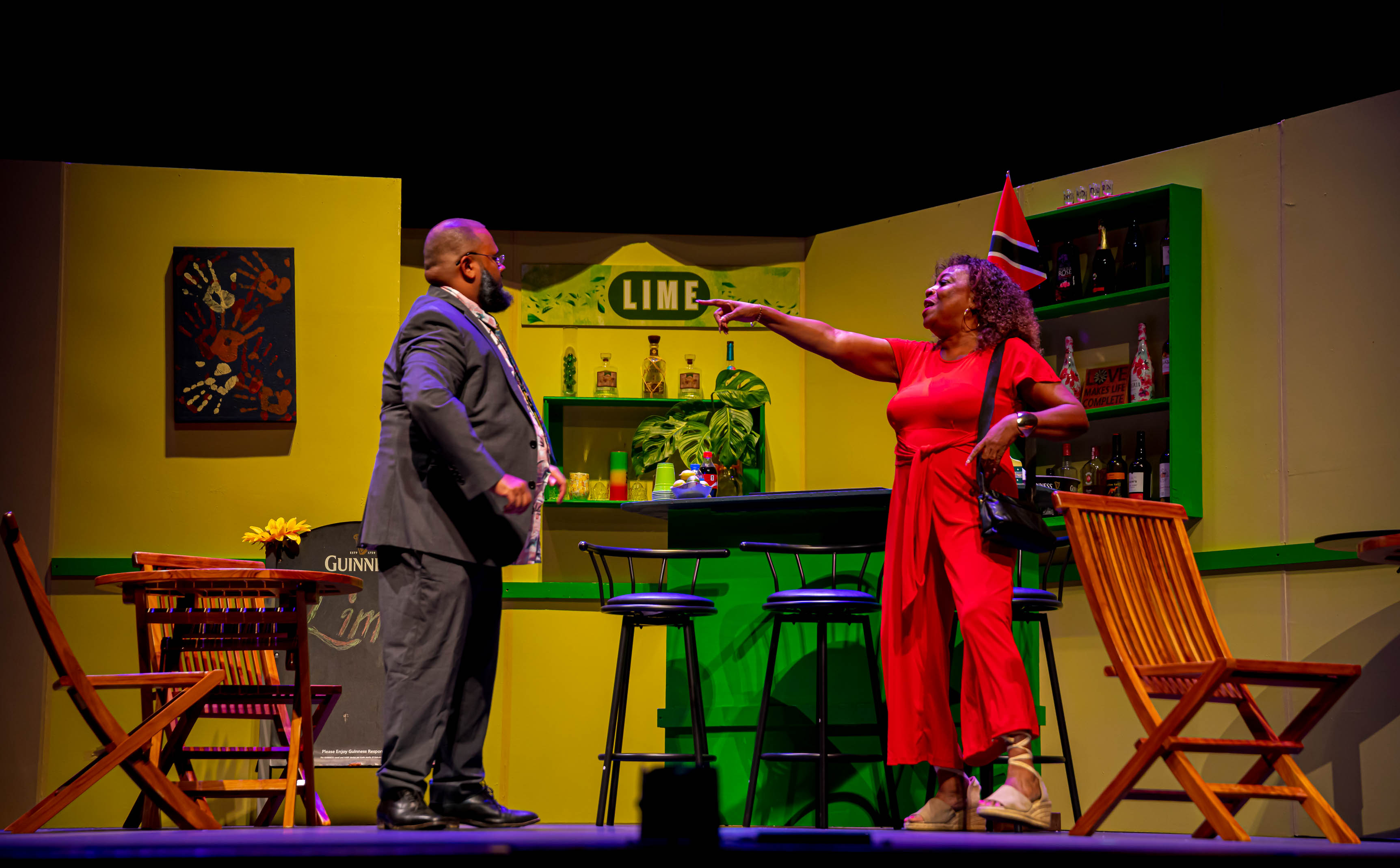
2 Fat Fellas is one of those works that reminds you why live theatre is so special. It cannot be fully realised without an audience. It is willing to be funny, messy, crass, tender, reflective and bold all in one sitting, and it trusts the audience to hold those contradictions—to laugh and then reconsider the laughter, to recognise themselves somewhere in the shame, somewhere in the longing, somewhere in the ache to be loved without judgement.
Penelope Spencer has crafted a production that entertains generously while still managing to provoke. That is no small feat, and it ranks among the strongest works of hers I have seen to date. It is a reminder that local theatre, when handled with this much instinct, wit and emotional attentiveness, can do far more than amuse.
It can reveal.
Note: Reviews are editorially independent and reflect the informed perspective of the assigned writer. Submissions may be edited for clarity, coherence, and publication standards without altering the reviewer’s original viewpoint.
ABOUT THE AUTHOR

 The Trinidad and Tobago Performing Arts Network